The internet and the streets are awash with US Democrat voters moaning about the tyranny they fear will be imposed upon them by Republican voters. As recently highlighted by Larken Rose, their hypocrisy has reached the level of absurdity. If they don’t like mob-rule, why do they keep voting for it?
“Representative democracy” is not democracy. Demokratia is power exercised directly by the people, not a tiny gaggle of oligarch serving toadies who claim to represent the people. “Representative democracy” is just another term for oligarchy.
In a real democracy the legislature, the executive and the judiciary are exclusively formed from or controlled by a random, rotating sortition of the people. The people design legislation, the people enact legislation and, most importantly, the people judge the practical application of statute and precedent law in courts formed and led by randomly selected juries.
In a democracy, the jury is sovereign with the united and annexed power to annul any and all legislation or ruling wherever statute or precedent law is found wanting in a jury-led trials. The legislature, the executive and the judiciary are wholly subservient to the people through trial by jury.
The jury’s only concern is justice. It makes no difference to a democratic jury what the legislature seeks, what the executive deems necessary or what instructions the judiciary tries to assert. Wherever and whenever a human being breaks the written law, but the jury finds them not guilty of any injustice, then the failure lies with the law, as it is written, not with the innocent accused. In such circumstances, any democratic jury can overrule extant statute and precedent in the interest of justice—annulment.
Despite the existence of Common Law jurisdictions, which technically allow juries to annul, on neither side of the Atlantic does anyone live in a democracy. Democracy is not the model of government we allow to persist. Whether we call it a constitutional monarchy, a supranational political union or constitutional federal republic, democracy is exercised nowhere.
Democracy is governance by trial by jury and we don’t need any form of government to establish a democracy. Any other political system, no matter how vociferously its proponents demand we call it a democracy, is not democracy.
Instead of democracy, which demands that we each take full responsibility for every aspect of our society and serve justice, we prefer representative democracy—oligarchy. We take responsibility for nothing and are the willing slaves of oligarchs who we passively allow to rule us unjustly under the guise of government.
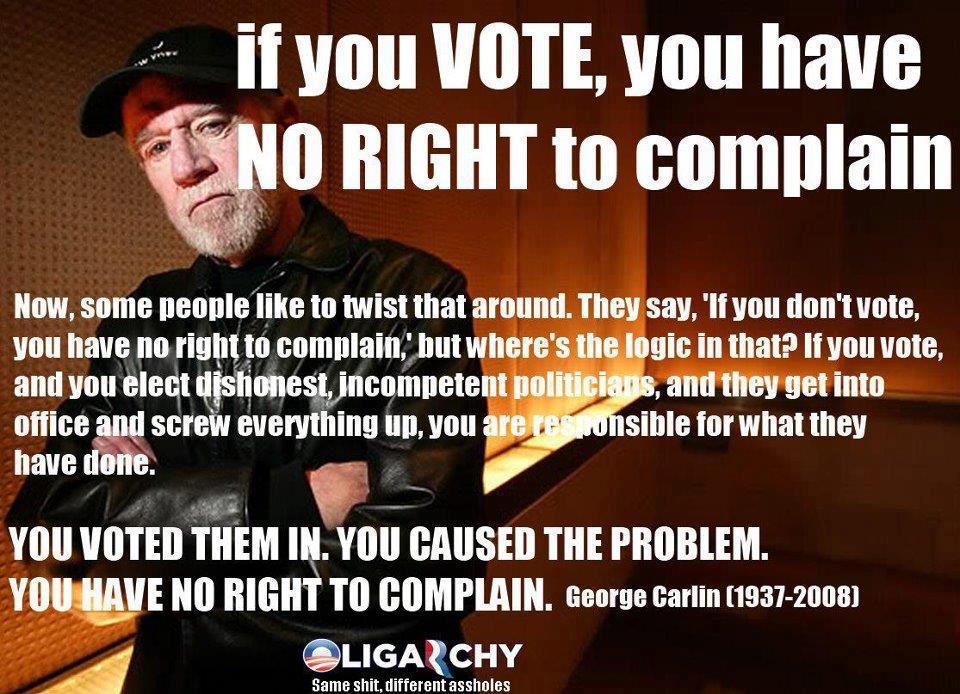
Every four of five years we participate in anointment ceremonies we call national elections. We reaffirm our slavery to the will of the oligarchs because we wrongly imagine, by choosing a different oligarch aligned mob, we are exercising some sort of sociopolitical choice. Assuming the election isn’t rigged—and they clearly are from time to time—the full scope of our so-called political choice is to determine which oligarch faction will rule us unjustly for the next few years.
While oligarch gangs vie for supremacy, they all agree on the policy trajectory they want to force us down. In our “representative democracies” we will all submit to Sustainable Development-based global governance—Technocracy; programmable digital currency, in one form or another, is inevitable; digital ID will be enforced somehow, whether we want it or not; the bio-security state and polycrisis state of exception are permanently fixed; construction of the digital gulag will be completed, either by deception or force; the new monetary system, that will be foisted upon us, will accelerate the transfer of wealth—of all kinds—from us to the oligarchs and terrorism, genocide, democide, war, propaganda and deception will remain the oligarch’s favoured tools to instill fear in us as they continue to rule us using the strategy of tension.
We can’t vote harder with any rational expectation of changing any of this. We have been comprehensively deceived and it is about time we recognised it.
None of us have the right to force anyone else to do anything. The only exception is our duty to ensure justice prevails when one among us causes harm or loss to others. While others live in peace and practice justice, our right to control others simply does not exist.
The oligarchs have convinced us we can elect their representative puppets to exercise authority, not just over ourselves, but over everyone else. The resultant governments claim they rule by consent, but it isn’t informed consent and therefore no consent at all. If it were, we would all realise that we cannot devolve to government authoritarian rule that none of us can exert in the first place. We cannot bestow upon government that which we do not possess.
The consent of the governed and the social contract are propagandist’s myths. We have never given our informed consent to be ruled and no one has even seen, let alone signed, any contract whereby they agreed to be ruled. The oligarchs deem that we have consented to their mythical authority and have agreed to their invisible social contract simply by virtue of the fact we were born or live in the jurisdictions they illegitimately claim for themselves.
The oligarch owned legacy media hammers home the illusion of the requisite choice in the run up to every anointment ceremony. They promote the fiction that it is our duty to impose the rule of our preferred mob on the people we don’t agree with.
Our only duty is to live in peace by safeguarding justice. The notion that we can do this by absolving ourselves of all responsibility and handing over all decision making power to a handful of corrupt, self-serving robber-baron sycophants is ludicrous. That, in any event, none of us has any right to do so only emphasises the insanity.
Having realised they have just lost the representative democracy game, what is most remarkable about the Democrat’s angst is their envisaged solution. They are determined to regain representative political power, despite recognising that losing power means they have to accept the diktats of what they consider a tyranny.
Keep reading





You must be logged in to post a comment.