
Sanctuary State Illinois: Illegal Alien Accused of Killing GOP Elected Official and His Wife in Fatal Crash

In the sanctuary state of Illinois, where Gov. J.B. Pritzker (D) has attempted to impede federal immigration enforcement, an illegal alien is accused of killing a Republican elected official and his wife in Coles County.

Police say that 34-year-old illegal alien Edwin Pacheco-Meza of Honduras was driving a van on Oct. 24 when he crossed the center lane and struck 71-year-old Michael Clayton and his wife, 66-year-old Gail Clayton — killing them instantly.

Michael Clayton was a Republican elected official who served on the Coles County Board.

“Mike and Gail were a team in every sense. Together, they lived their lives with strong values, unwavering love for family, and a deep dedication to their hometown,” the couple’s obituary reads:

They believed in supporting the Charleston community and keeping their business local whenever possible. Whether it was groceries, gifts, or meals, they always chose local shops and markets, proudly supporting small businesses and encouraging others to do the same. They were familiar faces at the Charleston Farmer’s Market, always taking time to visit with neighbors and friends.
[Emphasis added]

Pacheco-Meza, who crossed the southern border as an unknown got-away, was in his vehicle with 18-year-old illegal alien Juan Morales-Martinez of Guatemala, who crossed the border in December 2023 and was released into the United States interior by the Biden administration.

The illegal aliens were found with an extended magazine, firearm ammunition, drugs, and an open container of alcohol in their vehicle, police say.

Pacheco-Meza was charged with reckless homicide and drunk driving, while Morales-Martinez was charged with drug possession and weapons violations.

After they were arrested, Immigration and Customs Enforcement (ICE) lodged detainers against the illegal aliens, seeking custody of them, but the detainers were ignored by the Clark County Jail thanks to Pritzker’s sanctuary state policy.

Still, ICE agents waited for Morales-Martinez to be released from jail and arrested him outside of the jail. Pacheco-Meza remains in Clark County Jail.
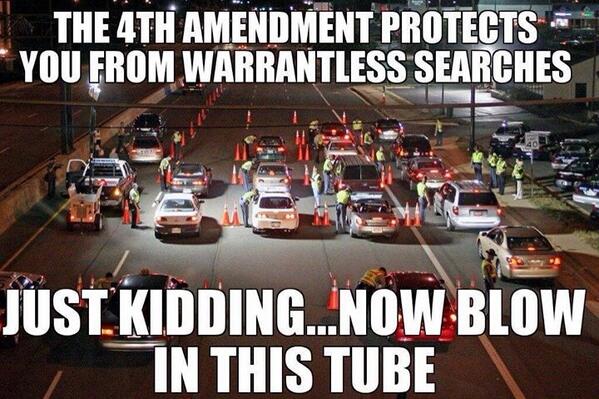
Keep reading

Maryland Police Get ‘Overwhelming’ Number Of Volunteers To Smoke Marijuana And Eat Free Lunch At DUI Training For Officers

Police in Ocean City, Maryland say they received an “overwhelming” number people who want to volunteer to smoke marijuana and drive a vehicle in a controlled setting for DUI recognition training purposes—with the added promise of a free lunch for participants.

Just seven hours after the Ocean City Police Department (OCPD) posted on Facebook that they were soliciting volunteers for the cannabis-impaired driving exercise, the agency on Tuesday followed up by advising the public that they had more than enough sign-ups and would not be accepting additional applications.

The department’s original post said they would be partnering with Cannabis Green Lab for the annual Maryland Highway Safety Office (MHSO) Zero Deaths DUI Conference. OCPD said it was looking to recruit 12-14 volunteers “to smoke cannabis for educational purposes while officers learn to recognize cannabis impairment.”

“The Green Lab helps both officers and participants better understand the effects and levels of impairment caused by cannabis, all in a safe, controlled setting,” it said.

Participants who are ultimately selected will need to bring their own cannabis to smoke prior to the driving exercise—but OCPD said the department will be providing free lunch to volunteers courtesy of MHSO.

Of course, driving while impaired is illegal in states that have legalized cannabis and in those that still maintain criminalization, so OCPD advised that a shuttle service will be available for participants when the exercise (and lunch time) is over.

“We’ll have about 40 student officers participating, so it’s a great way to help train the next generation of law enforcement safely and responsibly,” the department said.

Marijuana Moment reached out to OCPD for an estimate of how many sign-ups it received prior to closing the application window, but a representative was not immediately available.

Keep reading

Ohio Senate Passes Marijuana DUI Bill Aimed At Protecting Drivers Who Aren’t High Behind The Wheel From Prosecution

The Ohio Senate unanimously passed legislation last week to overhaul the way that prosecutors must prove whether a person was driving under the influence of marijuana.

Ohio, like most the rest of the nation, has liberalized its marijuana laws over the past decade, now allowing recreational and medical use of the drug in a variety of forms.

This has posed a tricky challenge of setting a legal standard that prohibits driving while under the influence of marijuana, while not ensnaring people who are sober on the road but have used the drug in the past few days.

And unlike with alcohol’s well established limit of .08 percent of blood alcohol content as the legal threshold for impaired driving, the science around cannabis concentration in the blood is far murkier. Some people with high concentrations wouldn’t exhibit behavioral signs of impairment, while some people with low concentrations would, studies show.

“The current law allows for the conviction of innocent people, 100 percent straight out,” said Tim Huey in an interview, who lobbied for the bill on behalf of fellow DUI defense attorneys.

What the bill would do for drivers of accused of being high

Senate Bill 55, if agreed to by the Ohio House and the governor, would bring two big changes for people accused of driving while high. For one, it ends prosecutors’ current ability to convict drivers for driving under the influence based solely on the presence of marijuana “metabolites” in a person’s system.

Metabolites are the non-psychoactive byproduct of marijuana produced as the body breaks down (metabolizes) marijuana. Those metabolites can linger in a person’s system as long as 30 days after use, according to researchers and defense attorneys who support the bill.

Instead, police and prosecutors must show the presence of Delta 9-THC, the active ingredient that produces the high sensation.

The legislation also gives people accused of driving while high an opportunity to rebut the evidence against them if a comparatively lower concentration of marijuana is detected in their systems. That’s opposed to the “per se” system in current law, where a positive drug test almost guarantees a conviction.

“Basically right now we’re testing inactive metabolites, mostly through urine, and it’s really not accurate,” said Sen. Nathan Manning, a Lorain County Republican and former prosecutor who has pushed the legal change for years. “The inactive metabolites don’t show impairment, it just shows whether or not you used it [in the past].”

Several sources described the legal thresholds set in the legislation as the product of more art than science, and a compromise between prosecutors and defense attorneys who lobbied the bill.

Keep reading

Pennsylvania Lawmaker Files Bill To Protect Medical Marijuana Patients From DUI Charges

A Pennsylvania lawmaker has reintroduced a bill meant to protect medical marijuana patients from facing DUI charges when there is no proof they are actually impaired behind the wheel.

Rep. Chris Rabb (D) filed the legislation and circulated a cosponsorship memo this week, urging his colleagues to join him in this latest effort to enact the reform.

The memo says that, since the state legalized medical marijuana, many patients have “shared their horror stories about being arrested and convicted of driving under the influence of cannabis without any proof of impairment.”

“That is why this legislation…is being introduced yet again, as the current law must be amended to allow responsible drivers who are also medical cannabis patients to operate a motor vehicle legally,” Raab wrote, emphasizing that the legislation “does not extend to any illegal cannabis use–nor does it protect impaired drivers.”

The bill would amend the current state statute to make it so the presence of cannabis metabolites in a drug test alone could not be used as evidence of impaired driving if the person is a registered medical marijuana patient.

However, that protection would not extend to those who hold a commercial driver’s license.

Keep reading

Arizona Court Says Marijuana Users Must Actually Be Impaired To Be Punished For DUI

The state can’t suspend someone’s driver’s license because they have THC in their bloodstream unless they are actually impaired while behind the wheel, the Arizona Court of Appeals ruled, upholding a provision in a marijuana legalization law that voters passed in 2020.

Aaron Kirsten was pulled over for speeding in Sedona in October 2022, and the police officer saw that he had bloodshot eyes, slurred speech and was unsteady on his feet. Kirsten refused a field sobriety test, but when he did a breathalyzer test, he blew a 0.083, slightly above the legal limit, and he was arrested.

While in custody, Kirsten consented to a blood draw, but the Department of Public Safety’s analysis showed his blood alcohol content was just 0.063, less than the 0.08 maximum BAC allowed under state law.

But DPS also tested Kirsten’s blood for drugs and found he had tetrahydrocannabinol metabolites. As a result, the Arizona Department of Transportation suspended his license for 90 days, citing a state law that bars driving if THC metabolites are present.

At an administrative appeal, Kirsten testified that he hadn’t consumed THC in the 24 hours prior to his arrest, and any effects from the THC he had consumed had long ago passed. A family member who is a nurse and chiropractor also testified on Kirsten’s behalf, telling the administrative law judge that THC metabolites—the compounds that form as the body breaks down a substance—can stay in the blood for weeks after consumption.

But the administrative law judge said it was “irrelevant” whether Kirsten had smoked marijuana within 24 hours of his arrest and sided with ADOT, ruling that the agency didn’t need to prove he was impaired by THC to suspend his license for using it previously.

Kirsten appealed the ruling to the Maricopa County Superior Court, which upheld the administrative judge’s reasoning.

But the appellate court said both got it wrong and effectively ignored voter-created laws that bars the state from punishing drivers who have legally used marijuana products but are not impaired while driving.

Keep reading

A 5th Albuquerque Cop Resigns Amid Widening DWI Corruption Scandal

Another Albuquerque police officer resigned last week amid a widening scandal involving cops who allegedly conspired with a local defense attorney to make drunk driving cases disappear in exchange for payoffs. Joshua Montaño, who had been employed by the Albuquerque Police Department (APD) for 19 years, is the fifth officer to quit after being placed on administrative leave. His March 20 resignation letter, which City Desk ABQ obtained through a public records request, sheds light on the extent of the alleged corruption within the APD’s DWI unit, the subject of an ongoing FBI investigation as well as an APD probe.

“When I was put on administrative leave, I thought there would be an opportunity for me to talk to the department about what I knew regarding the FBI’s investigation,” writes Montaño, who missed several scheduled interviews with APD investigators prior to his resignation. “I thought there would be a time [when] I could disclose what I knew from within APD and how the issues I let myself get caught up in within the DWI Unit were generational. I thought there would be a time where I could talk about all the other people who should be on administrative leave as well, but aren’t.”

Montaño says he ultimately decided against cooperating with APD investigators. “In order for me to talk to the City about what I knew,” he writes, “I needed to not be the City’s scapegoat for its own failures.” He complains that Albuquerque Police Chief Harold Medina, who has promised to “make sure that we get to the bottom of this” but is himself under investigation for causing a February 17 accident that severely injured a driver whose car he broadsided, “has made it seem like there are just a few bad officers acting on their own.” That is “far from the truth,” Montaño says.

Among other things, the FBI reportedly is investigating claims that officers deliberately missed court dates, resulting in the dismissal of DWI cases. But according to Montaño, “officers all know that our attendance, or non-attendance, at Court is watched over and monitored.” While “I take responsibility for my actions,” he says, the responsibility for the alleged misconduct extends up the chain of command and more than a few years back in time.

Medina “has made numerous public statements concerning APD’s knowledge of the FBI’s investigation of various APD personnel and made commitments to complete parallel investigations,” Montaño’s lawyer, Thomas Grover, writes in a separate letter to the department. “However, as is evident in the investigations of Ofc. Montano, the department responded to the FBI’ s inquiries in a manner that is haphazard at best and artificial at worst.”

Although Montaño wanted to share “his knowledge of how widespread the issues of concern to the FBI are, how far up the supervisory chain they go, and other personnel they involve,” Grover says, he “could not provide such a statement because of the myriad of deficiencies APD plagued its investigations of him, and presumably others, with. From procedural errors concerning notice requirements to police officers, to timeline violations by APD, it seems at every turn, the department could not follow basic practices for internal affairs investigations.”

Keep reading

New Jersey cop rushed to help Bob Menendez’s wife after Mercedes crash despite being retired and convinced patrolman on duty to let her go without a sobriety test or having to hand over her phone

A top New Jersey cop rushed to be by Bob Menendez’s wife’s side after she killed a man with her Mercedes in a 2018 crash, and quizzed the patrolmen on scene until she was allowed to walk away without a sobriety test or having to hand over her phone. 

Menendez’s wife Nadine Arslanian fatally struck 49-year-old Richard Koop in Bogota, New Jersey, on December 12, 2018. She was dating the New Jersey Democratic Senator at the time but they were not yet married. They are now both charged with felony bribery and corruption crimes. 

After the 2018 crash, Bogota Police rushed to the scene of the crash to quiz Arslanian. 

She told them Hoop had been jaywalking and put himself in the path of her car. 

Also there was Michael Mordaga, the former director of Hackensack Police and an ex-chief of detectives in the Bergen County Prosecutor’s Office, according to The New York Post. 

Mordaga is the man who can be heard asking the patrolmen if they took a statement from Arslanian.

‘That’s my buddy’s wife who’s friends with her. 

He said could you do me a favor and take her up there because her friend just got in a car accident,’ he said, explaining why he’d shown up, before asking: ‘Are you guys getting a statement that you’re going to give to the prosecutor’s office?’ 

The cops let Arslanian walk away from the scene without a sobriety test or giving over her phone records. 

She was never charged, and was later gifted a new convertible Mercedes to replace the vehicle that was damaged in the crash. 

According to federal charging documents, about a month after the crash, Arslanian texted Wael Hana, an Egyptian American businessman also indicted in the bribery scheme, lamenting her lack of a car.

Keep reading

California cop who won award for ‘most DUI arrests’ is arrested for DUI

A Sacramento police officer arrested for driving under the influence had previously been given an award for arresting drunk drivers, KCRA 3 reported Wednesday.

Raymond Barrantes was arrested last weekend after California Highway Patrol pulled him over. He has since been bailed out of the San Joaquin County Jail.

According to the report, the West Sacramento Police Department confirmed that in 2015, Barrantes was given an award by the national organization Mothers Against Drunk Driving (MADD), along with a Facebook post with the caption that Barrantes and another officer had “the most DUI arrests for our Agency in 2014.”

Keep reading

New Law Mandates Interlocks on All New Cars, but Drunk Driving Tech Isn’t Ready Yet

Buried deep on Page 135 of a $1 trillion spending bill that mainly adds EV charging infrastructure is a small provision that could make a big deal for automakers. Passed last year, the Infrastructure Investment and Jobs Act asks that within three years, new cars would be equipped with drunk-driving deterrents automakers don’t yet know how to comply with. 

As reported by Automotive News, the technology to passively detect if drivers may be drunk could be years away, although efforts are underway to offer the tech as soon as 2026. 

“To be honest, I think it took everybody by surprise, not only in our company, but at all the OEMs and Tier 1’s that this legislation appeared,” Mike Franchy, North American director of supplier Asahi Kasei told Automotive News. 

His company is working on a detector like a breathalyzer to monitor the ethyl alcohol content in the driver’s breath. Similar to an interlock device already on the market, the system could be embedded in a door or steering column. Interlocks on cars have been around for several years and cost thousands to purchase or can be leased for $100 or more per month. Smaller breathalyzer systems are available and can cost as little as $50, although those are portable machines that can’t disable a car’s ignition. Researchers say they may have systems to detect blood-alcohol levels via touch soon, although it’s unclear when that could be available. 

Keep reading