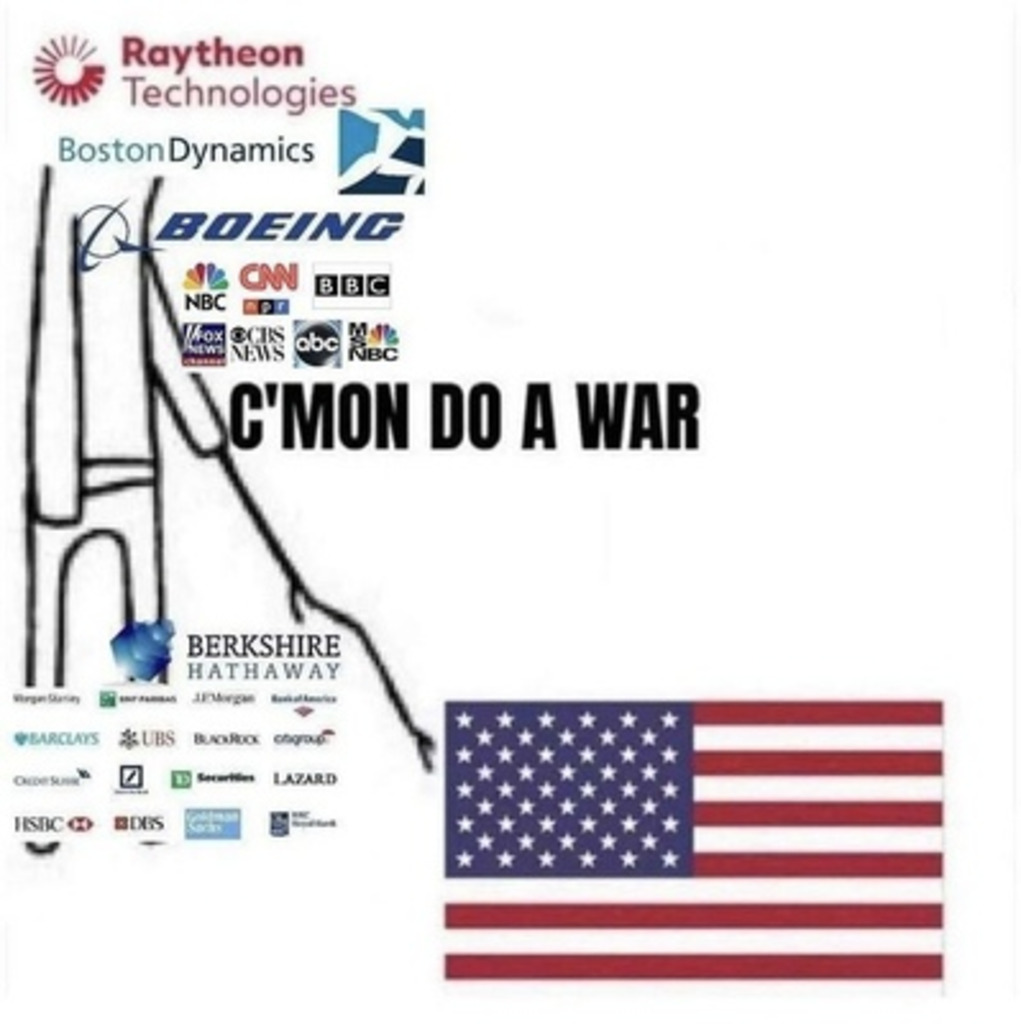
Calling all weapons makers: Pentagon seeks new ideas to arm Ukraine

In its effort to quickly arm Ukraine against Russia, the Pentagon has announced the equivalent of an open casting call for companies to offer weapons and commercial systems that can be rushed to the fight.

The Defense Department on Friday posted a broad request for information from industry on the federal contracting website sam.gov. The move is part of a stepped-up dialogue between the Pentagon and industry, and a sign of the challenge of boosting arms production in response to the ongoing conflict.

The RFI, on behalf of the new undersecretary of defense for acquisitions and sustainment, Bill LaPlante, is seeking input “from across industry” about air defense, anti-armor, anti-personnel, coastal defense, counter battery, unmanned aerial systems, and communications equipment, such as secure radios and satellite internet gear.

To that end, the DoD asks that responding companies describe their weapon, product or system in 100 words or less, and ― in the case of munitions ― check off “appropriate target type(s),” such as area, fixed, airborne/missile, maritime, mine, moving, hard or soft. The RFI says information received will be used to develop requirements for an actual solicitation at a later date.

Keep reading

Banning lawmakers from owning stocks would stymie war profiteering

Yesterday, a bipartisan group of lawmakers sent a letter to the chairs of the Committee on House Administration urging them to advance legislation banning members of Congress from directly owning or trading stocks while in office.

The letter, sent by 19 lawmakers ranging from Mark Pocan (D-WI) to Matt Gaetz (R-FL) outlined three key provisions: preventing family members and children from owning stock, banning exceptions for stock owned prior to entering office, and backing up any legislation with effective enforcement. 

Congressional stock trading restrictions would disproportionately impact the national security space; A Sludge 2021 analysis of financial holdings found that “The maximum value of the investments held by federal lawmakers in the ‘Big Five’ contractors — Lockheed Martin, Raytheon, Boeing, Northrop Grumman, and General Dynamics — is over $2.6 million, making up nearly 39% of the total stock holdings identified.” 

Several members of Congress snapped up new shares of defense company stock just before the invasion of Ukraine. Marjorie Taylor Greene (R-GA) bought shares of Lockheed Martin the day before the invasion, while John Rutherford (R-FL) secured valuable Raytheon stock the day of the invasion itself. Between December 1, 2021, and April 13, 2022, the stock price of Lockheed Martin skyrocketed by 42.8 percent while Raytheon increased by over 24 percent, both well out-pacing the S&P 500 which actually decreased in the same time period.

Some of those lawmakers even have an outsized role in creating national security policy itself. A recent Business Insider analysis found that 15 members of the House and Senate Armed Services Committee Congress who own stock in defense giants Raytheon and Lockheed Martin.

Another analysis found that four members of the House Foreign Affairs Committee, which oversees arms control, had at least four members invested in defense companies. One member of the Committee, Gerry Connolly (D-VA), alone owned $498,000 worth of stock of Leidos — a military contractor that merged with Lockheed Martin in 2016 — as of last year. Leidos’ stock jumped over 27 percent from mid-February to early March. 

Keep reading

US TAX DAY: Americans Send Average of $2K to Military

Most of us want our tax dollars to be wisely used — especially around tax time.

You’ve probably heard a lot about corporations not paying taxes. Last year, individual Americans contributed six times more in income tax than corporations did.

But have you heard about how many of citizens’ tax dollars then end up in corporate pockets? It’s a lot — especially for corporations that contract with the Pentagon. They collect nearly half of all military spending.

The average U.S. taxpayer contributed about $2,000 to the military last year, according to a breakdown my colleagues and I prepared for the Institute for Policy Studies. More than $900 of that went to corporate military contractors.

In 2020, the largest Pentagon contractor, Lockheed Martin, took in $75 billion from taxpayers — and paid its CEO more than $23 million.

Unfortunately, this spending isn’t buying us a more secure world.

Last year, Congress added $25 billion the Pentagon didn’t ask for to its already gargantuan budget. Lawmakers even refused to let military leaders retire weapons systems they couldn’t use anymore. The extra money favored top military contractors that gave campaign money to a group of lawmakers, who refused to comment on it.

Then there’s simple price-gouging.

There’s the infamous case of TransDigm, a Pentagon contractor that charged the government $4,361 for a metal pin that should’ve cost $46 — and then refused to share cost data. Congress recently asked TransDigm to repay some of its misbegotten profits, but the Pentagon hasn’t cut off its business.

Somewhere between price-gouging and incompetence lies the F-35 jet fighter, an embarrassment the late Sen. John McCain, a Pentagon booster, called “a scandal and a tragedy.”

Keep reading

‘War is a Racket’: Biden Using Ukraine Crisis to Ram Through Record-Breaking Military Budget

Rebuffing progressive lawmakers’ calls for Pentagon spending cuts, President Joe Biden on Monday is set to unveil a budget blueprint for the next fiscal year that includes a record $813.3 billion in funds for the U.S. military apparatus, a $31 billion increase from the current level.

“We’re being robbed of resources to feed the endless hunger of the military-industrial complex.”

The president’s Fiscal Year 2023 budget request, which must be approved by Congress, is expected to contain $773 billion for the Pentagon alone as well as billions in funding for the Energy Department’s maintenance of the country’s nuclear arsenal.

The New York Times reported Monday that Biden’s funding request for the Pentagon—the only federal agency that has not passed an independent audit—will “include $4.1 billion to conduct research and develop defense capabilities, nearly $5 billion for a space-based missile warning system to detect global threats, and nearly $2 billion for a missile defense interceptor.”

According to Bloomberg, the White House is urging Congress to approve $145.9 billion for procurement, funding that will allow the military to purchase “61 F-35 jet fighters from Lockheed Martin Corp., fewer than previously planned, as well as… the B-21 bomber from Northrop Grumman Corp. and two Virginia-class submarines from General Dynamics Corp. and Huntington Ingalls Industries Corp.”

The president’s latest budget proposal will land on Capitol Hill amid Russia’s deadly invasion of Ukraine, which has thus far proven to be a major boon for the U.S. weapons industry as the Biden administration pours arms into the besieged country.

“The hawks in Washington want to jack up the military budget and use Ukraine as an excuse,” William Hartung, a senior research fellow at the Quincy Institute for Responsible Statecraft, argued in a recent interview on Democracy Now!, noting that Biden’s new military budget request amounts to $100 billion more than was spent at the height of the Cold War.

Keep reading

Biden announces $800M in aid for Ukraine hours after Zelenskyy’s plea to Congress

President Biden today announced an additional $800 million in security assistance to Ukraine, bringing the total U.S. security assistance committed to Ukraine to $1 billion in just the past week, and a total of $2 billion since the start of the Biden Administration. The assistance will take the form of direct transfers of equipment from the Department of Defense to the Ukrainian military to help them defend their country against Russia’s unprovoked and unjustified invasion.

The new $800 million assistance package includes:

  • 800 Stinger anti-aircraft systems;
  • 2,000 Javelin, 1,000 light anti-armor weapons, and 6,000 AT-4 anti-armor systems;
  • 100 Tactical Unmanned Aerial Systems;
  • 100 grenade launchers, 5,000 rifles, 1,000 pistols, 400 machine guns, and 400 shotguns;
  • Over 20 million rounds of small arms ammunition and grenade launcher and mortar rounds;
  • 25,000 sets of body armor; and
  • 25,000 helmets.

In addition to the weapons listed above, previous United States assistance committed to Ukraine includes:

  • Over 600 Stinger anti-aircraft systems;
  • Approximately 2,600 Javelin anti-armor systems;
  • Five Mi-17 helicopters;
  • Three patrol boats;
  • Four counter-artillery and counter-unmanned aerial system tracking radars;
  • Four counter-mortar radar systems;
  • 200 grenade launchers and ammunition;
  • 200 shotguns and 200 machine guns;
  • Nearly 40 million rounds of small arms ammunition and over 1 million grenade, mortar, and artillery rounds;
  • 70 High Mobility Multipurpose Wheeled Vehicles (HMMWVs) and other vehicles;
  • Secure communications, electronic warfare detection systems, body armor, helmets, and other tactical gear;
  • Military medical equipment to support treatment and combat evacuation;
  • Explosive ordnance disposal and demining equipment; and
  • Satellite imagery and analysis capability.

Keep reading