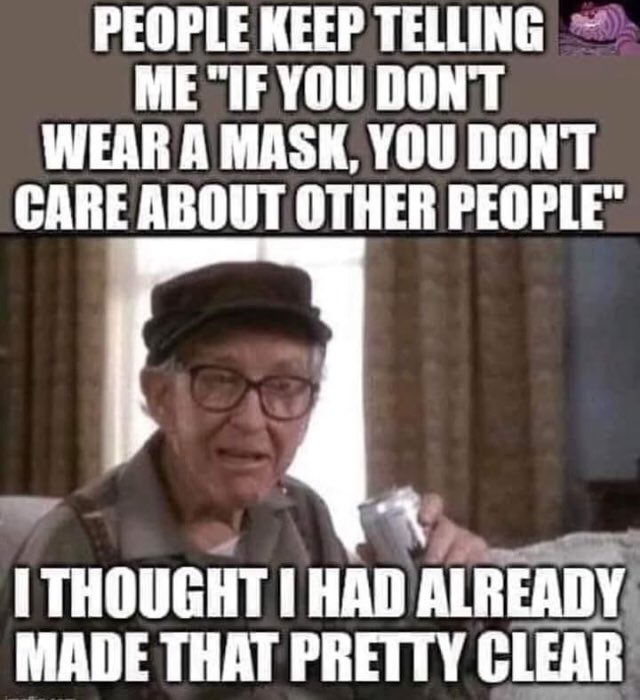
Right?


There has been no recorded case of a teacher catching the coronavirus from a pupil anywhere in the world, according to one of the government’s leading scientific advisers.
Mark Woolhouse, a leading epidemiologist and member of the government’s Sage committee, told The Times that it may have been a mistake to close schools in March given the limited role children play in spreading the virus.
The anti-malaria drug hydroxychloroquine helped lower the death rate in Covid-19 patients in the most recent study of the drug conducted by Henry Ford Health System.
Cardiologist Dr. William O’Neill, a medical director at the Henry Ford Health System in Detroit, Michigan, first spoke with “Full Measure” about the study while it was underway in May. The findings have just been published in the peer-reviewed International Journal of Infectious Diseases.
The large scale analysis examined 2,541 patients who had been hospitalized in six hospitals between March 10 and May 2, 2020.
More than twenty-six percent (26.4%) of patients who did not receive hydroxychloroquine died. Nearly seventy-four percent (73.6%) survived.
But among those who received hydroxychloroquine: 13% died and 87% survived.
One suggested concern flagged in previous studies of hydroxychloroquine did not materialize in the Henry Ford Health System Study: heart-related adverse events.
The positive results compared to some other studies of hydroxychoroquine could be attributed, in part, to the timing of treatment say the study’s scientists. Ninety-one percent (91%) of the patients in the study were given hydroxychloroquine within 48 hours of admission.
Amid fears over a potential second wave of the novel coronavirus across Europe, new infections in Sweden, where full lockdown measures were not implemented, have mostly declined since late June.
The number of new cases per 100,000 people in Sweden reported over the last 14 days since July 29 dropped by 54 percent from the figure reported over 14 days prior to then, according to the latest report Wednesday from the World Health Organization (WHO).
Meanwhile, other parts of Europe have reported large spikes in new cases over the same period, including Spain, France, Germany, Belgium and The Netherlands, which have seen increases between 40 and 200 percent over the last month, according to the latest WHO report Wednesday.
According to police, Douglas Marks, 29, has a curious method for reinforcing social distancing.
After he spotted people without masks, he allegedly fired “four warning shots” at the Crystal Beach Suites Hotel. The criminal charges contained one interesting element. While Marks did not reportedly aim at anyone, he was still charged with assault.
This follows an incident in California where a woman maced a couple who was eating with their child at a park without masks.
Coronavirus testing has been a hot-button issue since the beginning of the pandemic. First, there weren’t enough coronavirus tests to go around. Now, a new issue has emerged—just how accurate the tests people are getting actually are. According to a July 17 study published in the International Journal of Geriatrics and Rehabilitation, 50 percent of nucleic acid coronavirus tests distributed by the Centers for Disease Control and Prevention (CDC) provided inaccurate results.
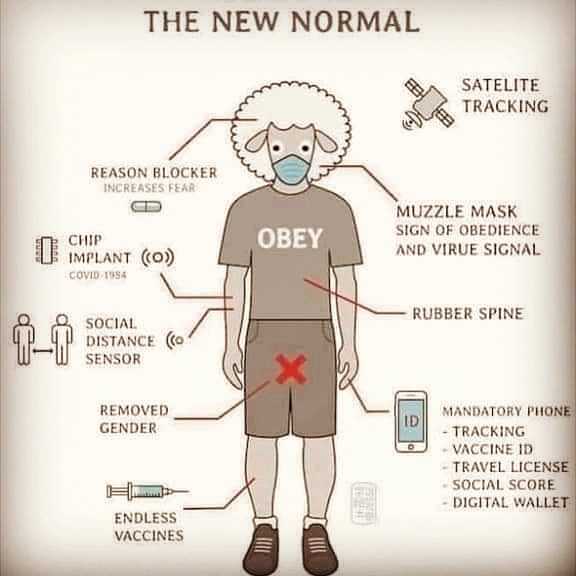
As students, parents, and schools prepare the new school year, universities are considering ways to make returning to campus safer. Some are considering and even mandating that students install COVID-related technology on their personal devices, but this is the wrong call. Exposure notification apps, quarantine enforcement programs, and similar new technologies are untested and unproven, and mandating them risks exacerbating existing inequalities in access to technology and education. Schools must remove any such mandates from student agreements or commitments, and further should pledge not to mandate installation of any technology.
Even worse, many schools—including Indiana University, UMass Amherst, and University of New Hampshire—are requiring students to make a general blanket commitment to installing an unspecified tracking app of the university’s choosing in the future. This gives students no opportunity to assess or engage with the privacy practices or other characteristics of this technology. This is important because not all COVID exposure notification and contact tracing apps, for example, are the same. For instance, Utah’s Healthy Together app until recently collected not only Bluetooth proximity data but also GPS location data, an unnecessary privacy intrusion that was later rolled back. Google and Apple’s framework for exposure notification based on Bluetooth is more privacy-protective than a GPS-based solution, but the decision to install it or any other app must still be in the hands of the individuals affected.
The trope of “just shut up and wear a mask” is not science, ordered liberty, or constitutional governance. It’s what they do in North Korea. We need real debate on the effectiveness of masks, the type of masks, the situations in which they are worn, the duration of time, the benchmarks that need to be met to measure effectiveness, and the process for promulgating these rules. We are no longer 24 hours into an emergency. We are four months into this virus, and it’s time to function like the representative republic that we are.
 Hellbound and Down
You must be logged in to post a comment.