
Project MKULTRA…

This has been a personal bugbear of mine since I grew old enough to detect subtext, but long before I could articulate exactly why: The pervasive and destructive idea that there are too many people.
A propaganda construct that seeks to create contempt for masses of ordinary people, whilst excusing hubristic and inhumane practices by institutions and elites.
These destructive belief systems have come to the fore during this “pandemic”, made obvious by the fevered gleeful enthusiasm with which so many took up the narrative. One UN representative claimed the coronavirus was Earth “sending us a message”.

Former Honolulu Police Chief Louis Kealoha and his wife, former Honolulu prosecutor Katherine Kealoha, were sentenced in federal court this week to 84 months and 156 months in prison, respectively, for a range of criminal conduct, including framing their relative with a crime to conceal their own fraud. Additionally, the Kealohas’ co-conspirators, former Honolulu police officers Derek Wayne Hahn and Minh-Hung “Bobby” Nguyen, received 42 months and 54 months, respectively, for their involvement in the conspiracy.
Chief U.S. District Judge J. Michael Seabright of the District of Hawaii handed down the sentences, remarking that the conspiracy was “staggering in its breadth, its scope, and its audacity.” He stated further that “the impact on the community is clear: The conduct of the defendants has shaken the community and its trust in the Honolulu Police Department.”
The sentences mark the end of one of the largest public corruption cases in Hawaii history. In June 2019, after six weeks of trial and one day of deliberation, a federal jury in Honolulu convicted the Kealohas, Hahn, and Nguyen of conspiracy and attempted obstruction of justice pertaining to the false arrest and prosecution of Katherine’s uncle, Gerard Puana. The evidence at trial established that the conspirators used their considerable power, including commandeering the Honolulu Police Department’s elite Criminal Intelligence Unit (CIU), to frame Gerard with stealing the Kealohas’ mailbox. Hahn and Nguyen were both members of CIU, which acted directly at the behest of Louis Kealoha. The Kealohas’ motive for framing Gerard was to discredit and intimidate him after he accused Katherine of stealing money from him and his elderly mother—Katherine’s grandmother. The evidence at trial demonstrated that the Kealohas took and spent over $148,000 of the grandmother’s money in just a six-month period, with payments going towards expenses such as mortgage payments, Elton John concert tickets, Mercedes and Maserati car payments, a trip to Disneyland, and a $23,976 brunch tab at the Sheraton Waikiki to celebrate Louis Kealoha’s induction as Honolulu Police Chief in 2009.
Once Gerard started voicing claims of fraud, the Kealohas moved to silence him by falsely accusing him of a felony offense. To frame Gerard, the conspirators prepped the Kealohas’ mailbox to be “stolen,” selectively edited grainy surveillance video to conceal their preparatory acts, falsely identified Gerard as the culprit captured by the video, falsified police reports, withheld and destroyed evidence, and repeatedly lied about their activity to investigators, the federal grand jury, and the District Court for the District of Hawaii. This all occurred while Louis Kealoha was Honolulu’s Police Chief and while Katherine Kealoha was a high-ranking Honolulu prosecutor.
“This was a flagrant and stunning abuse of power that victimized an entire community by undermining public confidence in its leaders and the rule of law,” said U.S. Attorney Robert Brewer. “After years of manipulating the levers of justice to shroud their own crimes, justice has been delivered to these defendants.” Brewer praised FBI agents and Special Attorneys Michael Wheat, Joseph Orabona, Janaki Chopra, and Colin McDonald for achieving justice in this case after many years of tenacious investigation and skillful litigation.

Read “Wagging the Moon Doggie” HERE for free!
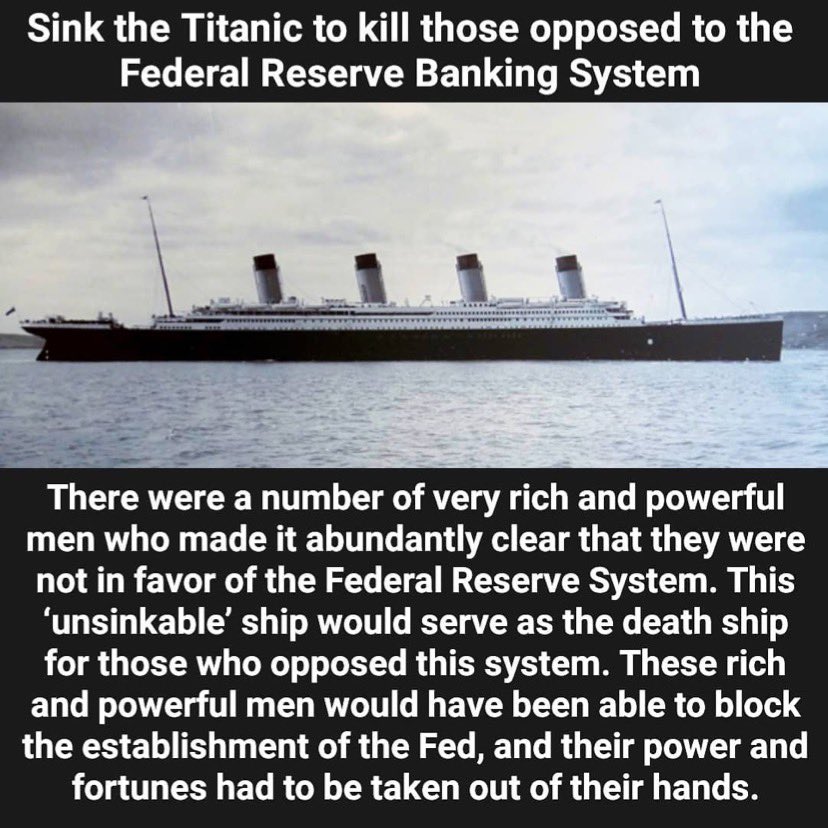
Johns Hopkins published this study on Sunday which posits that Covid is nowhere near the disaster we’re being told it is. I would summarize it for you or offer pull-quotes but honestly you just have to read it yourself because it’s mind-blowing. The original article is now deleted from the Johns Hopkins website … for some reason. Luckily the internet is forever and it’s available via the Wayback Machine.

The one story that still haunts Barbour decades later is former New Orleans District Attorney Jim Garrison’s probe of the JFK murder.
Barbour twice tried to get Jim Garrison’s story told to a wide audience. Both times he was thwarted.
He ended producing his own documentary based on the most intensive interview Garrison ever gave. Garrison came to focus on the assassination simply because so many of the key figures had operated in Las Vegas, his hometown, prior to the dark events of November 22nd.
Barbour studied the Warren Commission report which put the sole blame on Lee Harvey Oswald. “He realized that, to believe the Warren Report, you couldn’t read it, so he reopened the investigation into the assassination,” Barbour said during a 2009 interview.
Garrison focused on a CIA connected New Orleans businessman named Clay Shaw. His prosecution of Shaw was portrayed in Oliver Stone’s controversial movie, JFK.
Shaw was not convicted, in large part because of overt interference from the CIA, including a smear campaign against Garrison and the infiltration of his office by government agents. “If he had nothing, they would have just stepped aside and let him fall on his face,” Barbour said. “Instead, they spent two years throwing roadblocks in the way.”
Among the most compelling arguments developed by Garrison was the absurdity of the so-called magic bullet theory. More importantly, Garrison used the FBI’s own files to prove that Oswald wasn’t the shooter.
Barbour says the mafia was involved, but only at the direction of those in the government who wanted Kennedy dead. “If the federal government thought that the Mafia had killed Kennedy, there wouldn’t be a pizza parlor in America.”
He believes the plot has its roots in Las Vegas. It began when the CIA asked the late Robert Maheu to recruit mobsters to kill Fidel Castro.


You must be logged in to post a comment.