Washington Post: Russians Are ‘Hacking Our Minds’

The Washington Post has published another article warning its readers that the Russians are “hacking our minds”, this one authored by CNN’s Fareed Zakaria.

Russia hasn’t just hacked our computer systems. It’s hacked our minds.” blares the ridiculous, propagandistic headline for an article about “the Russian model” of propaganda which “rests on the principle that people get convinced when they hear the same message many times from a variety of sources, no matter how biased.”

Which is funny, since this is not the first time WaPo itself has repeated this cartoonish narrative about Russian mind-hackers.

Keep reading

A Pandemic of ‘Russian Hacking’

The hyperbolic, evidence-free media reports on the “fresh outbreak” of the Russian-hacking disease seems an obvious attempt by intelligence to handcuff President-elect Joe Biden into a strong anti-Russian posture as he prepares to enter the White House.

Biden might well need to be inoculated against the Russophobe fever.

There are obvious Biden intentions worrying the intelligence agencies, such as renewing the Iran nuclear deal and restarting talks on strategic arms limitation with Russia. Both carry the inherent “risk” of thawing the new Cold War.

Instead, New Cold Warriors are bent on preventing any such rapprochement with strong support from the intelligence community’s mouthpiece media. U.S. hardliners are clearly still on the rise.

Interestingly, this latest hack story came out a day before the Electoral College formally elected Biden, and after the intelligence community, despite numerous previous warnings, said nothing about Russia interfering in the election. One wonders whether that would have been the assessment had Trump won.

Instead Russia decided to hack the U.S. government.

Except there is (typically) no hard evidence pinning it on Moscow.

Keep reading

QAnon Legal Battle Against YouTube Could Transform Free Speech Online

The welding of American politics with social media may be the defining moment of a sea change that is taking place at the very top echelons of power in the United States and the world. In the run-up to the 2020 U.S. elections, Facebook, Twitter, and YouTube all revealed their inescapable ties to the establishment when they launched an information warfare campaign against their own users and content creators in a bid to shape perceptions and control national discourse on the government’s behalf.

As the most contentious election in living memory drags on days after the vote, itself, the massive purge of profiles and content deemed politically dangerous carried out by the most popular social media platforms just over two weeks before Election Day, went practically unnoticed by everyone other than those who were actually de-platformed and their followers.

In mid-October, Google-owned YouTube and other social media giants purged the accounts of the most popular QAnon channels, spurring a class-action lawsuit against the video streaming platform filed in the Northern District of California later that month.

Keep reading

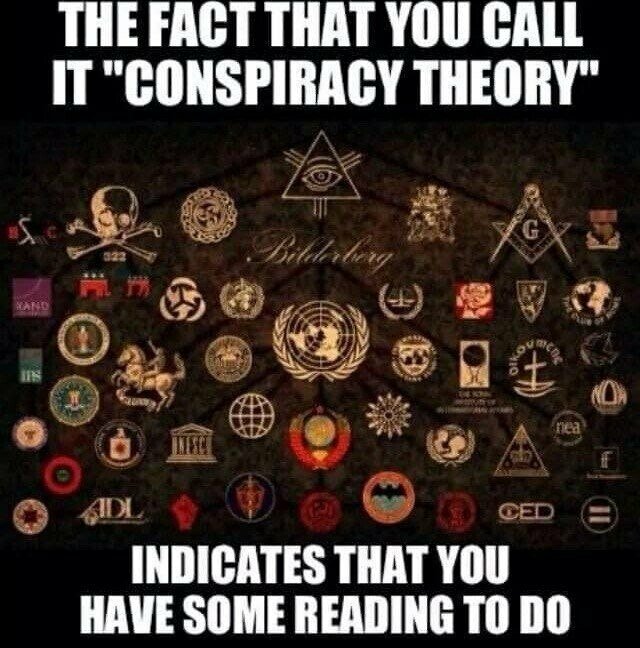
7 Things That Used to Be “Crazy Conspiracy Theories” Until 2020 Happened

Remember back in the old days of, say, 2019, when anyone who talked about microchip implants, Americans being forced to show travel papers, and re-education camps was thought to be a crazy conspiracy theorist? And then 2020 rolled around and voila! It turns out those conspiracy theories weren’t so “crazy” after all.

And I’m not just talking about the government releasing info about UFOs.

We’re living in a time when someone will attempt to beat the crap out of you, burn your house down, or even kill you if you voted for the “wrong” presidential candidate. We’re being subjected to curfews, our movement is restricted, and our businesses have been forcibly shut down. One day, people will look back on this as the year that everything changed – or depending on how Americans respond to the mandates – the year we finally said enough.

Here are seven things that were considered crazy conspiracy theories…until now, when they’re becoming far too real.

Keep reading