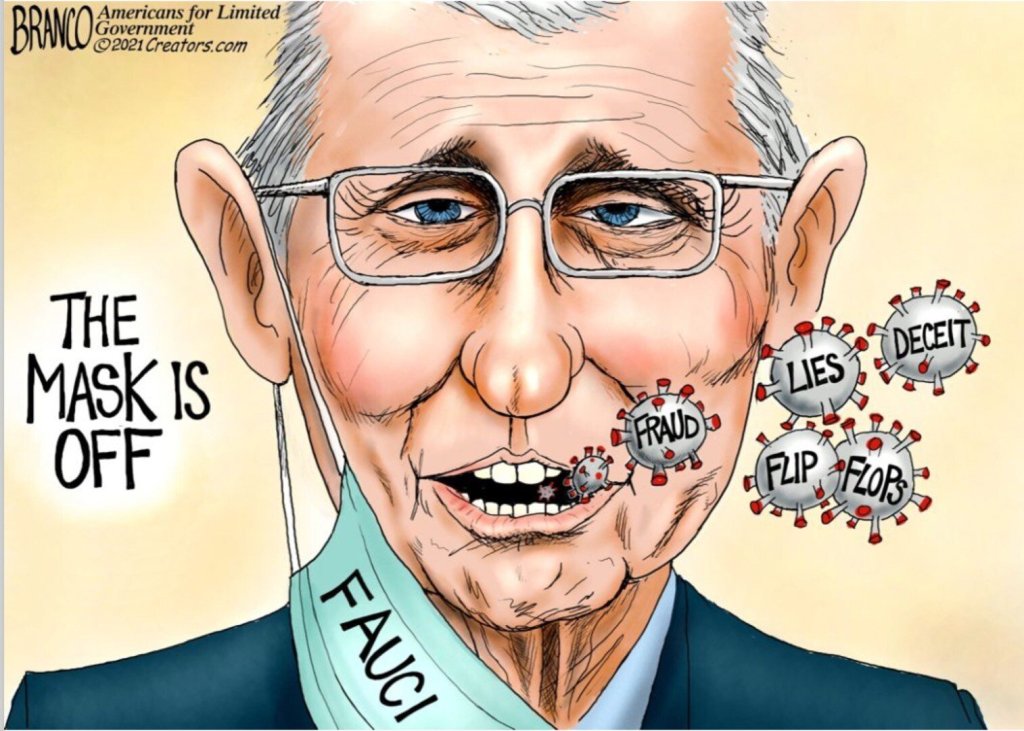
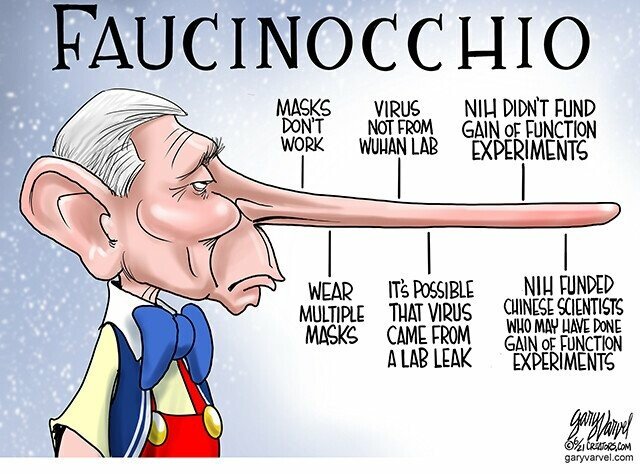
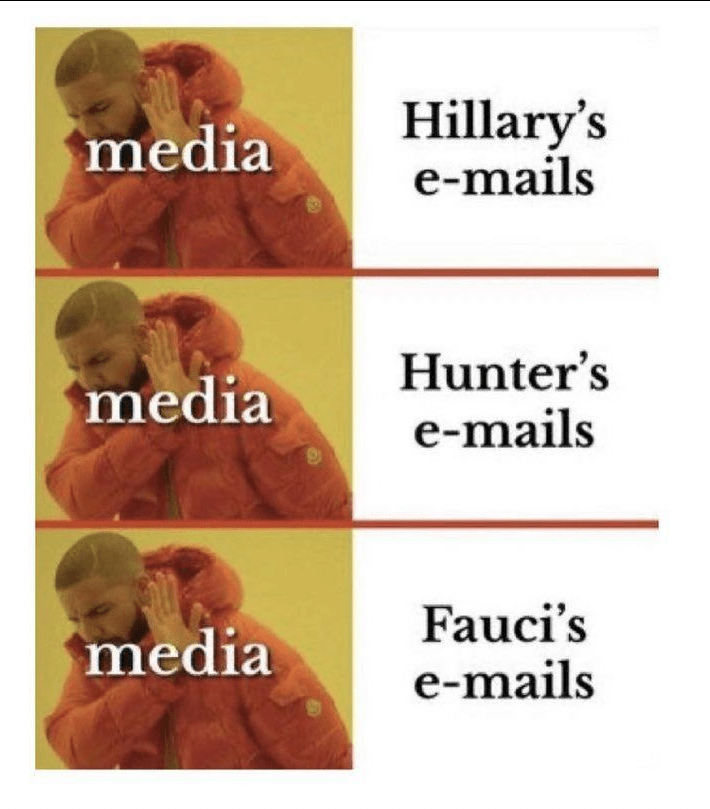
Notice a trend here?


One of the most significant events of the last two decades has been largely memory-holed: the October, 2001 anthrax attacks in the U.S. Beginning just one week after 9/11 and extending for another three weeks, a highly weaponized and sophisticated strain of anthrax had been sent around the country through the U.S. Postal Service addressed to some of the country’s most prominent political and media figures. As Americans were still reeling from the devastation of 9/11, the anthrax killed five Americans and sickened another seventeen.
As part of the extensive reporting I did on the subsequent FBI investigation to find the perpetrator(s), I documented how significant these attacks were in the public consciousness. ABC News, led by investigative reporter Brian Ross, spent a full week claiming that unnamed government sources told them that government tests demonstrated a high likelihood that the anthrax came from Saddam Hussein’s biological weapons program. The Washington Post, in November, 2001, also raised “the possibility that [this weaponized strain of anthrax] may have slipped through an informal network of scientists to Iraq.” Sen. John McCain (R-AZ) appeared on The David Letterman Show on October 18, 2001, and said: “There is some indication, and I don’t have the conclusions, but some of this anthrax may — and I emphasize may — have come from Iraq.” Three days later, McCain appeared on Meet the Press with Sen. Joe Lieberman (D-CT) and said of the anthrax perpetrators: “perhaps this is an international organization and not one within the United States of America,” while Lieberman said the anthrax was so finely weaponized that “there’s either a significant amount of money behind this, or this is state-sponsored, or this is stuff that was stolen from the former Soviet program” (Lieberman added: “Dr. Fauci can tell you more detail on that”).
In many ways, the prospect of a lethal, engineered biological agent randomly showing up in one’s mailbox or contaminating local communities was more terrifying than the extraordinary 9/11 attack itself. All sorts of oddities shrouded the anthrax mailings, including this bizarre admission in 2008 by long-time Washington Post columnist Richard Cohen: “I had been told soon after Sept. 11 to secure Cipro, the antidote to anthrax. The tip had come in a roundabout way from a high government official. I was carrying Cipro way before most people had ever heard of it.” At the very least, those anthrax attacks played a vital role in heightening fear levels and a foundational sense of uncertainty that shaped U.S. discourse and politics for years to come. It meant that not just Americans living near key power centers such as Manhattan and Washington were endangered, but all Americans everywhere were: even from their own mailboxes.
The 2011 event – Continuing the Global Dialogue with the Scientific and Science Policy Community with a Focus on Asia and the Western Pacific – was sponsored by the U.S. government’s National Institutes of Health (NIH) and sought to provide participants with a “greater understanding” of Dual Use Research of Concern (DURC).
Defined by the NIH as research “that could be directly misapplied to pose a significant threat with broad potential consequences to public health and safety,” DURC encompasses gain-of-function studies, which have come under increased scrutiny due to their role in potentially spawning COVID-19.
Among the event participants were Wuhan Institute of Virology Deputy Director Yuan Zhiming, NIH Associate Director for Science Policy Amy Patterson, and top American researchers and scientific advisory board members. The NIH’s unearthed role in hosting the event follows National Institute of Allergy and Infectious Disease (NIAID) Director Anthony Fauci denying his agency’s relationship to the Wuhan lab.
Inside the Fauci emails there is one that stands out for many reasons. On February 1st NIH scientists were telling Anthony Fauci the COVID-19 (SARS-CoV-2) has “unusual features” that “potentially look engineered”. Later in the email they highlight the genome of SARS-CoV-2 appears “inconsistent with expectations from evolutionary theory”.
Despite this analysis, only a few days later Anthony Fauci vehemently proclaimed the SARS-CoV-2 strain was a naturally occurring Bat virus, and anyone questioning the natural creation of the virus was ridiculed, marginalized and dismissed; some even lost their jobs.
We understand in hindsight a motive for Anthony Fauci to want to hide the origin of COVID-19 as he was personally invested in “gain of function research” (the weaponization of viruses) which he restarted in 2017. However, there’s something more….
Emails show Dr. Anthony Fauci was advised by Erik Nielsen, a physicist and CEO of Bio-Signal Technologies, in March 2020, that two drugs could possibly help battle the coronavirus pandemic, but Fauci ignored it, claiming the email was “too long” for him to read.
Nielsen, in the email, said he had instructed members of his family to get “Alvesco (ciclesonide) for emergency use only.” He claimed that his “colleagues on the front-line in Japan, China, and Korea found several pre-print papers, that it is an effective treatment for late-stage COVID-19 patients.”
The physicist continued, “Some patients on ventilators who were approaching death have fully recovered after treatment with ciclesonide,” noting “ciclesonide has much smaller particles than other corticosteroids, so it reaches deeper into lungs and alveolis.”
Neilsen claimed there was a second drug that could possibly be used, which he advised his family to get. He wrote to Fauci the drug “is called hydroxychloroquine,” which he said, “also seems to be effective and safe.”
However, he noted, “Alvesco is better because it appears to prevent the virus from replicating so infection is wiped out and no longer contagious. Alvesco seems to be two silver bullets in one.”
Two days after this email, Fauci, to whom the media looked for a trusted voice, said,”The answer is no” when he was asked if hydroxychloroquine is an effective coronavirus treatment during one of the coronavirus task force briefings that took place regularly under the Trump administration. Fauci noted that the “signs of the drug’s promise were purely ‘anecdotal evidence.’”
It’s been over a year since the WHO declared the coronavirus a pandemic after originally downplaying the threat. It is no secret that both the disease and the response to combat it following this SARS-CoV-2 outbreak in late 2019 have turned our world upside-down. Mandates, lockdowns, and guidelines seem to change every time Dr. Fauci opens his mouth. All of these unprecedented rules were put into place, we were told, to slow down the spread of a disease that today is linked to the death of over half a million Americans and 3.7 million global citizens in the last year.
You would think that researchers would have concentrated on prophylactic and therapeutic solutions of this disease especially since this disease is a death sentence for the elderly, the obese, those with preexisting conditions. The coronavirus doctors have forced children to avoid school, mask up, and get vaccinated. One would think that after all this time there would be a consensus in the hospitals, in the nursing homes, and in other treatment centers on how to treat a Covid positive patient or resident. This is not the case.
There still is no agreed-upon treatment plan for elderly patients who catch coronavirus to assist in their recovery.
The CDC and Dr. Fauci ignored treatment plans for coronavirus patients unless the person was under severe distress.

Dr Fauci’s emails have been released via a Freedom of Information Act request, and there is some pretty interesting stuff in them, particularly one email where a researcher who funded the Wuhan Institute of Virology thanks Fauci for publicly dismissing the lab leak theory early on during the pandemic.
The email from Dr. Peter Daszak, President of the EcoHealth Alliance, a group that has extensive ties to the Wuhan lab gain of function research, sent the email to Fauci on April 18, 2020, roughly six weeks after the outbreak had taken hold.
The email states:
“As the Pl of the ROl grant publicly targeted by Fox News reporters at the Presidential press briefing last night, I just wanted to say a personal thank you on behalf of our staff and collaborators, for publicly standing up and stating that the scientific evidence supports a natural origin for COVID-19 from a bat-to-human spillover, not a lab release from the Wuhan Institute of Virology.
From my perspective, your comments are brave, and coming from your trusted voice, will help dispel the myths being spun around the virus’ origins. Once this pandemic’s over I look forward thanking you in person and let you know how important your comments are to us all.”
Fauci told The Post that he was getting about 1,000 emails a day from strangers, politicians and medical workers.
In an email dated February of 2020, Dr. Fauci is advising a woman not to wear a face mask because they don’t protect against the virus.
“Masks are really for infected people to prevent them from spreading infection to people who are not infected rather than protecting uninfected people from acquiring infection. The typical mask you buy in the drug store is not really effective in keeping out virus, which is small enough to pass through material. It might, however, provide some slight benefit in keep out gross droplets if someone coughs or sneezes on you,” Fauci wrote. “I do not recommend that you wear a mask, particularly since you are going to a very low risk location. Your instincts are correct, money is best spent on medical countermeasures such as diagnostics and vaccines.”
America’s top virologist, Anthony Fauci, argued in 2012 that the risks of a lab accident sparking a pandemic are outweighed by the potential benefits of manipulating viruses via gain-of-function research, according to previously unsurfaced remarks reported by Sharri Markson via The Australian.
“In an unlikely but conceivable turn of events, what if that scientist becomes infected with the virus, which leads to an outbreak and ultimately triggers a pandemic?” Fauci wrote in the American Society for Microbiology in 2012, adding “Many ask reasonable questions: given the possibility of such a scenario – however remote – should the initial experiments have been performed and/or published in the first place, and what were the processes involved in this decision?”
“Scientists working in this field might say – as indeed I have said – that the benefits of such experiments and the resulting knowledge outweigh the risks,” Fauci continued. “It is more likely that a pandemic would occur in nature, and the need to stay ahead of such a threat is a primary reason for performing an experiment that might appear to be risky.“
You must be logged in to post a comment.