Federal Judge Blocks California Online Age-Checking Law as Unconstitutional

A federal judge has granted an injunction blocking a California law that would force online businesses and social media platforms to estimate the ages of people visiting their sites and protect children from seeing content that might cause harm, stating that the law likely violates the First Amendment and would likely lead to online government-fueled censorship.

The law in question, the California Age-Appropriate Design Code Act (CAADCA), is one of the recent crop of bills seeking to “childproof” the internet by either demanding age verification checks of users or by locking away content. CAADCA, passed in 2022 unanimously by the state legislature and supported by Democratic Gov. Gavin Newsom, requires every business in the state with an online component to create a report showing how any new good or service they provided would be accessed by children and investigate and account for any sort of “harms” children might face. Businesses that are not in compliance with the law face fines of up to $2,500 per violation.

NetChoice, a trade organization representing tech firms, sued earlier this year to try to block the law. In NetChoice v. Bonta, the trade organization argued that this overly broad law violates the Constitution by “enact[ing] a system of prior restraint over protected speech using undefined, vague terms, and creat[ing] a regime of proxy censorship, forcing online services to restrict speech in ways the State could never do directly.” In short, the end result of the law would lead to businesses and online platforms having to censor content in order to keep children from seeing it, even though a lot of this content is likely to be protected First Amendment speech.

On Monday, U.S. District Judge Beth Labson Freeman of the U.S. District Court of the Northern District of California, San Jose Division, agreed and blocked the state from enacting the law, which was scheduled to take effect on July 1, 2024.

Keep reading

There’s no ‘disinformation’ exception to the First Amendment

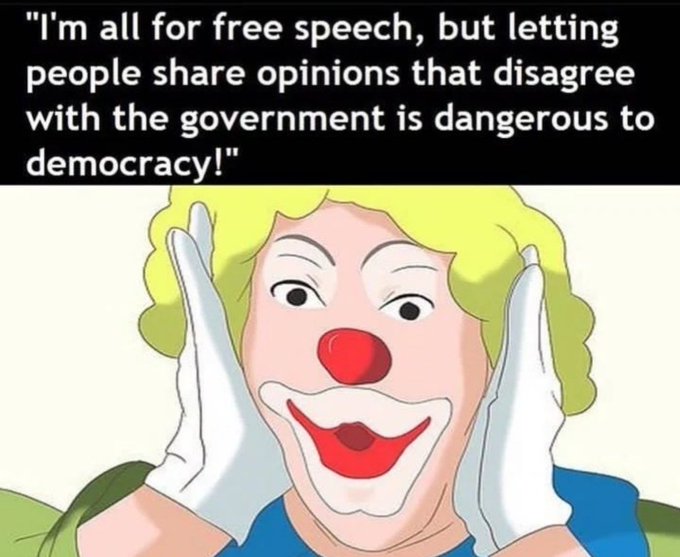
Misinformation and disinformation retain the basic characteristics of speech. Unless they fall into one of very few exceptions, they are protected from censorship under the First Amendment.

Consistent with those very limited exceptions, any effort by the government to prevent the dissemination of ideas or opinions, even if they are based on untruths, is unconstitutional.

A three-judge panel for the Fifth Circuit Court of Appeals recently upheld an injunction that prohibits the government from pressuring social media platforms to de-escalate or remove speech that the government identifies as misinformation or disinformation.

On Thursday, Sept. 14, that injunction was put on pause by the Supreme Court until Sept. 22, to give the Court more time to consider the issue.

The injunction resulted from a lawsuit filed by the attorneys general of Missouri and Louisiana and others accusing the federal government of strong-arming social media companies in order to amplify government-approved points of view and muffle or silence opposing views.

The federal government’s argument was that it did no more than partner with the companies and assist them in rooting out disinformation. Dismissing this argument, the Fifth Circuit held that the government implemented a coordinated campaign of such unrelenting pressure that the content moderation policies implemented by the platforms were no longer independent. Instead, the platforms were functioning as agents of the government, transforming the content moderation decisions into state action.

In other words, the appellate panel found that the social media platforms essentially acted as agents of the federal government when the platforms removed or de-amplified posts based on government-created criteria of truth or falsity. In doing so, the court found that the government unconstitutionally censored the speakers’ and listeners’ First Amendment rights.

Keep reading

Houston Police Arrested an Animal Rights Protester and Detained Him for 16 Hours, Lawsuit Says

Animal rights activists Daraius Dubash and Faraz Harsini were peacefully demonstrating in a Houston, Texas, public park when park employees demanded they leave. When Dubash insisted that the pair had a First Amendment right to protest, officials called the police, who arrested Dubash and charged him with criminal trespass. 

While Dubash’s charge was eventually dismissed, the pair have now filed a First Amendment lawsuit against the city, arguing that city police clearly violated their Constitutional rights.

“No one should be handcuffed and detained for exercising his First Amendment rights,” said JT Morris, an attorney for the Foundation for Individual Rights and Expression, a First Amendment nonprofit group. “We’re suing because public parks belong to all Americans and their expressive rights, not the personal views of a few.” 

From April to July 2022, Dubash and Harsini demonstrated several times in Discovery Green, a Houston public park. According to their lawsuit, the pair—keeping in practice with Anonymous for the Voiceless, the animal-rights activist group the two pertained to—wore Guy Fawkes masks while playing clips from Dominion, a documentary showing the gruesome mistreatment of animals in factory farms. 

On three separate occasions, park employees asked the pair to leave the park, claiming that the park was private property. (Discovery Green is public property, though it is managed by a private company.) According to the complaint, the pair complied, fearing retaliation.

On July 23, 2022, Dubash and Harsini were approached again. This time, they refused to leave, and Dubash calmly told park employees that he had a right to demonstrate peacefully. However, a park security guard told Dubash that protests were allowed on a “case by case” basis, adding that his “manager is going to come and come look at it.”

According to the lawsuit, when the manager, Floyd Willis, arrived, Dubash informed him that, while the park was managed by a private conservancy, the park was still public property, meaning that the First Amendment applied.

Keep reading

Texas school suspends Black student more than two weeks for purportedly lengthy dreadlocks

Barbers Hill High School in Mont Belvieu, Texas punished a Black student named Darryl George with more than two weeks of in-school suspension — for having dreadlocks.

“School officials said his dreadlocks fell below his eyebrows and ear lobes and violated the district’s dress code,” reported Cheyanne Mumphrey and Juan Lozano for the Associated Press. “George, 17, has been suspended since Aug. 31 at the Houston-area school. He was in tears when he was suspended Monday despite his family’s arguments that his hair does not violate the dress code, his mother Darresha George said.”

“He has to sit on a stool for eight hours in a cubicle,” the mother told the AP. “That’s very uncomfortable. Every day he’d come home, he’d say his back hurts because he has to sit on a stool.” She added that her son has grown dreadlocks for over 10 years and the family has never been harassed or received complaints about it until now.

This incident comes just as Texas enacted its own state version of the CROWN Act, a law that prohibits discrimination based on various racially-associated hairstyles like dreadlocks, braids, or Afros. The Georges pointed out the new law to school officials, but the principal and vice principal reportedly said that the law does not protect the length of hair.

Keep reading

California To Drop ‘Medical Misinformation’ Law After Judge Blasts ‘Dramatic Examples’

California has quietly announced it’s ditching Gov. Gavin Newsom’s draconian ‘Covid-19 medical misinformation’ law, which would threaten the licenses of doctors who don’t agree with “scientific consensus” on various issues.

The law, AB 2098, was signed into law by Newsom last year. In response, five doctors alleged it to be unconstitutional under the First and Fourteenth Amendments of the US constitution.

The five doctors, Tracy Hoeg, Ram Duriseti, Aaron Kheriaty, Pete Mazolewski, and Azadeh Khatibi, argued that the law prevents them from providing information to their patients that may contradict what the law permits or prohibits. They also alleged the law was used to intimidate and punish physicians who disagreed with prevailing views on COVID-19.

Keep reading

Ninth Circuit rebukes lawmakers, grants injunction against California law targeting gun marketing

A California law ostensibly aimed at restricting the marketing of firearms to minors infringes on the free speech rights of adults, according to a three-judge panel on the Ninth Circuit Court of Appeals. In its ruling handed down on Thursday morning, the panel vacated a lower court decision denying an injunction against the law’s enforcement and delivered a resounding win for both First and Second Amendment advocates.

Writing for the majority, Judge Kenneth Lee ruled that the law forbidding marketing and advertising firearms that “reasonably appear to be attractive to minors” is likely to infringe on the First Amendment, given that the statute is so broadly written that advertisements aimed at adults who can lawfully purchase a firearm would be swept up in its provisions.

While California has a substantial interest in reducing gun violence and unlawful use of firearms by minors, its law does not “directly” and “materially” further either goal. California cannot straitjacket the First Amendment by, on the one hand, allowing minors to possess and use firearms and then, on the other hand, banning truthful advertisements about that lawful use of firearms. There is no evidence in the record that a minor in California has ever unlawfully bought a gun, let alone because of an ad. Nor has the state produced any evidence that truthful ads about lawful uses of guns—like an ad about hunting rifles in Junior Sports Magazines’ Junior Shooters—encourage illegal or violent gun use among minors. Simply put, California cannot lean on gossamers of speculation to weave an evidence-free narrative that its law curbing the First Amendment “significantly” decreases unlawful gun use among minors. The First Amendment demands more than good intentions and wishful thinking to warrant the government’s muzzling of speech.

California’s law is also more extensive than necessary, as it sweeps in truthful ads about lawful use of firearms for adults and minors alike. For instance, an advertisement directed at adults featuring a camouflage skin on a firearm might be illegal because minors may be attracted to it.

While the state of California had argued that the statute didn’t violate the First Amendment given the broader latitude given to regulations on commercial speech, the panel was unswayed, with Lee writing that even under a lowered standard of intermediate scrutiny the law fails to pass constitutional muster in light of the fact that the “state has made no showing that broadly prohibiting certain truthful firearm-related advertising is sufficiently tailored to significantly advance the state’s goals of preventing gun violence and unlawful firearm possession among minors.”

Keep reading

Police Tore Up His Protest Sign. Now They Owe Him $50,000

Last year, Delaware police prevented 54-year-old Jonathan Guessford from holding a sign warning drivers about a speed trap and wrongfully cited him for “improper hand signal” after he flipped off the officers who seized and tore up his sign. Police have now agreed to pay Guessford $50,000 as part of a settlement reached in a lawsuit alleging that police violated his civil rights.

Following several run-ins with the police, Guessford decided to “stage protests whenever he saw police officers stopping unsuspected vehicles using a radar gun,” according to legal documents. On March 11, 2022, his protest consisted of standing by the side of the road, holding a homemade sign reading, “Radar Ahead!” Guessford was soon confronted by several Delaware State Police officers, who took his sign and tore it up.

As Guessford drove away after the encounter, he flipped off the officers, leading them to eventually cite him for “improper hand signal” under a statute governing hand signals for nonmotorized vehicles like bicycles. However, body camera footage showed that officers knew that the citation was incongruous and would likely be dropped.

“Yeah, you can’t do that. That’ll get dropped,” Officer Christopher Popp said during a phone call to another officer, who replied, referring to a third officer, “I told him that’s going to get thrown out….Eventually, [Guessford is] going to do something really stupid, and then we are going to be able to really lock him up.”

Keep reading

SCOTUS’ Ruling in Gay Wedding Website Case Was a Defeat for Compelled Speech

The government may not compel someone to “create speech she does not believe,” the Supreme Court ruled in June. In a 6–3 opinion authored by Justice Neil Gorsuch, the Court sided with a graphic designer, Lorie Smith, who wanted to expand into the wedding website business without being forced by Colorado law to create products celebrating same-sex marriages.

Back in 2021, the U.S. Court of Appeals for the 10th Circuit found that the planned websites would each constitute “an original, customized creation,” designed by Smith with a goal of celebrating the couple’s “unique love story.” As such, it said, they “qualify as ‘pure speech’ protected by the First Amendment.” The appeals court admitted that Smith was willing to provide her services to anyone as long as the substance of the project did not contradict her values. It also recognized that “Colorado’s ‘very purpose’ in seeking to apply its law to Ms. Smith” was to stamp out dissenting ideas about marriage.

Despite all of that, the 10th Circuit held that the state government was within its authority to compel her to create such websites. Lamenting “an unfortunate tendency by some to defend First Amendment values only when they find the speaker’s message sympathetic,” Gorsuch et al. concluded otherwise.

The ruling in 303 Creative LLC v. Elenis is neither as narrow nor as broad as it (theoretically) could have been. The Court did not do away with public accommodations laws or allow businesses to discriminate against customers on the basis of characteristics such as skin color or national origin. But it did note that “public accommodations statutes can sweep too broadly when deployed to compel speech.”

The high court also did not establish a right for any and every business owner to decline to provide services for same-sex weddings—only those whose services involve expressive activity. Whether a particular service (say, cake baking) is expressive will have to be litigated case by case.

Keep reading

That School Is Still Treading on Jaiden Rodriguez’s Free Speech Rights

The case of 12-year-old Jaiden Rodriguez is not quite closed. While the Vanguard School’s board of directors has declared that he may sport a “don’t tread on me” patch on his backpack, a closer look at the school district’s policies suggests that administrators are still inclined to tread all over Rodriguez’s free speech rights.

That’s according to the Foundation for Individual Rights and Expression (FIRE), a First Amendment advocacy organization. FIRE spoke with Jaiden’s mother, who said that contrary to the board’s public statement, a district official—Mike Claudio, assistant superintendent of Harrison School District Two in Colorado Springs, Colorado—told her that her son would only be allowed to display the Gadsden flag patch as long as no one else complained about it.

Moreover, Rodriguez is still prohibited from displaying a secondary patch that references the Firearms Policy Coalition and expresses support for the Second Amendment. The justification for this restriction is the district’s categorical ban on content having to do with alcohol, drugs, tobacco, and weapons.

Keep reading

FSC Secures Preliminary Injunction Against Unconstitutional Texas Law

Free Speech Coalition and our co-plaintiffs, a coalition of major adult platforms and creators, have been granted a preliminary injunction against the Texas antiporn law, HB1181. Texas is blocked from enforcing the law while the case is litigated.

“This is a huge and important victory against the rising tide of censorship online,” says Alison Boden, Executive Director of Free Speech Coalition. “From the beginning, we have argued that the Texas law, and those like it, are both dangerous and unconstitutional. We’re pleased that the Court agreed with our view that HB1181’s true purpose is not to protect young people, but to prevent Texans from enjoying First Amendment protected expression. The state’s defense of the law was not based in science or technology, but ideology and politics.”

The Court agreed with FSC and our co-plaintiffs on nearly every argument:

  • The law violates First Amendment rights of creators and consumers
  • The law has a chilling effect on legally-protected speech
  • Parental filters are a less restrictive and more effective method of protecting minors
  • The state does not have the right to compel speech in the form of health warnings

HB 1181 required sites with adult content to force their visitors to provide digital IDs or other official proof of age, as well as display pseudoscientific “health” warnings. Free Speech Coalition and our co-plaintiffs argued that the requirements are unconstitutional and expose consumers to significant privacy risks.

Keep reading