Warning…

In an entry dated Thursday 26 March 1992, Valle writes:
I have secured a document confirming that the CIA simulated UFO abductions in Latin America (Brazil and Argentina) as psychological warfare experiments.
Reading this line from his book triggered me back to earlier in his book when he mentions one of many conversations he’s had with Ron Blackburn.
On Monday 16 April 1990, he writes:
Over lunch again with Colonel Ron Blackburn (Air Force) at the Gatehouse in Palo Alto he revealed that the “Secret Onion” group started in 1985 in the classified tank located in his basement at the Lockheed Skunk Works. Colonel John Alexander had brought him a list of the people in the inner circle. They divided the world into layers of concentric trust and ability. John introduced Blackburn to Ed Dames. Blackburn and I have a firmed up our plants to ravel to New Mexico on May 4th, up the high mesa – supposedly to meet some Aliens.
It’s interesting to note that Colonel John Alexander army writes about Blackburn in his book, “UFOs, myths, conspiracies and realities.”
Among the people I met was Dr. Ron Blackburn, a retired U.S. Air Force lieutenant colonel who was then working at the Lockheed Skunk Works in Burbank. It was Blackburn who first asked me if I had ever heard of the infamous Area 51. In the early 1980s, this facility was still not widely known inside the military, let alone the general public, even though it had been functional for decades…Among areas of common interest between Blackburn and me were UFOs. We discussed many possibilities related to who might be in charge of UFO research. We both thought that there was some organization, probably within the U.S. Air Force, which had the responsibility. But we acknowledged that whoever had the ball, there must be a an interagency effort as well. Our assumption was that somebody must be in charge, and we were well aware of all the prevailing stories and rumours. Roswell, we assumed, was a real UFO event.
Fast forward to Friday, May 4th, 1990, Valle writes about Blackburn:
“I’m convinced the government is working on UFOs,” he told me. “What are the chances some witnesses are being fooled by special effects developed by psychological warfare?” I countered. Thinking of cases like Bentwaters in the UK or Cergy-Pontoise in France. “They’re pretty good,” he admitted. “Suppose you shine a week infrared laser into people’s eyes; it won’t hurt them but may induce a hallucinatory state. Experiments have been done where you send a microwave beam through someone’s brain; you pick up the transmitted energy pattern. You can influence people this way, even make them hear things. Holograms have been used too,”
It’s interesting to note the conversation Valle had with Blackburn in 1990, and then in 1992 writes that he had received a document that the CIA had been involved with staging UFO (alien abductions). Combine this information with Blackburn mentioning that holograms have been used, and technology exists to produce “hallucinatory” states.

The minister in charge of managed isolation, Megan Woods, told RNZ’s Morning Report: “At the moment we have 75 rooms available in Jet Park and 100 extra that could be brought on. We’ve certainly got capacity.”
A written response from MBIE’s spokesperson to Newsroom’s query about plans if Jet Park Hotel reached capacity didn’t mention the extra 100 rooms: “We are always working to align capacity with demand and are always looking at what requirements will be necessary to safely accommodate future arrivals.”
The spokesperson said setting up a new quarantine facility would take work.
“Managing more than one quarantine facility will require a significant multi-agency response to ensure the health and safety of the returnees and facility staff. This will involve central and local government officials, along with NZDF, police and security representatives working together to manage the facilities and provide health and wellbeing support, security and assistance to guests, hotel staff and other government agency personnel.”

All confirmed cases of COVID-19 in New Zealand will be placed quarantine facilities from now on.
Director-General of Health Dr Ashley Bloomfield announced the change at a press conference on Thursday, moments after revealing there are 13 new cases of coronavirus linked to an outbreak in south Auckland.
The use of quarantine facilities marks a major departure from how positive cases were managed by health officials when New Zealand was last at level 3, as cases earlier in the year were told to simply self-isolate in their homes.
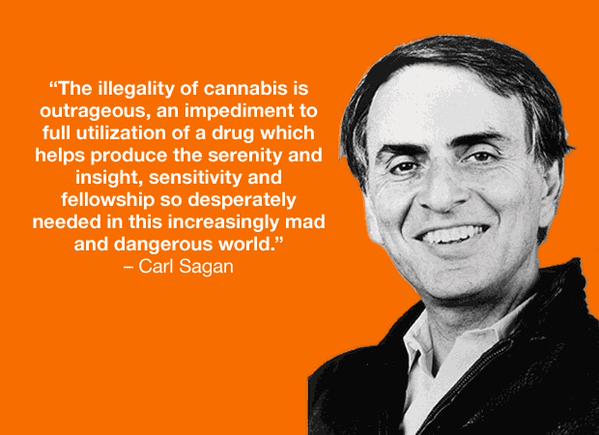


Flu shots will now be required for all students in Massachusetts schools, from child care through colleges, the Department of Public Health announced Wednesday.
Students older than six months will have to be vaccinated by Dec. 31, unless either a medical or religious exemption is provided.
“The new vaccine requirement is an important step to reduce flu-related illness and the overall impact of respiratory illness during the COVID-19 pandemic,” officials wrote in an announcement of the new policy.
Students who are homeschooled are exempt from the policy, but health officials said students at elementary and secondary schools that are using a remote learning model are not exempt.
College or university students who are entirely off-campus will also be exempt from the mandate.
 Hellbound and Down
You must be logged in to post a comment.