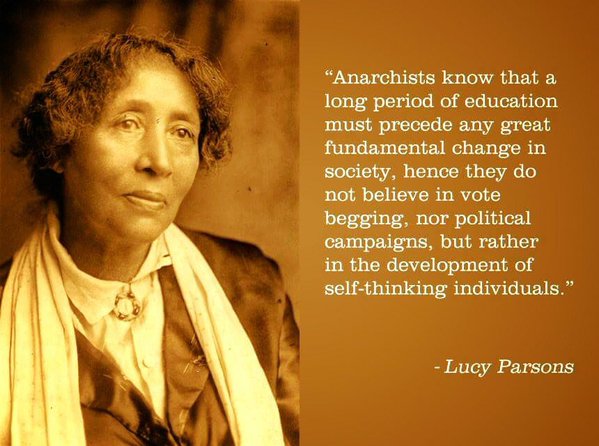
Lucy Parsons on education

The two Senate runoff races under way in Georgia give Democrats a chance to flip seats currently held by Republicans, and some activists on social media have discussed the prospect of moving to the Peach State to vote in the Jan. 5 elections.
Former Democratic presidential candidate Andrew Yang already announced on Twitter that he and his wife are moving to Georgia to campaign for the Democratic candidates, Raphael Warnock and Jon Ossoff, against Republican Sens. David Perdue and Kelly Loeffler. He did not say whether he planned to register to vote in the state.
All the chatter raises the question: Is it legal?
The answer is: yes, but any potential voters would have to move quickly since the last day to be registered for the Jan. 5 contests is Dec. 7. And, the new resident also would have to stay in the state for a while or risk getting into trouble.
Under Georgia law, anyone with a legal primary residence in the state can register to vote with their county board of elections. The law does not specify a specific time limit.
A spokesman for the Georgia Secretary of State’s Office, which oversees voter registrations, declined to comment on how quickly someone could establish legal residency in Georgia, but cited state law that it is a felony to vote in Georgia elections if you are not a legal resident or if you are residing in the state briefly with the intention just to vote and then move away.






The richest and most powerful country on earth — whether due to ineptitude, choice or some combination of both — has no ability to perform the simple task of counting votes in a minimally efficient or confidence-inspiring manner. As a result, the credibility of the voting process is severely impaired, and any residual authority the U.S. claims to “spread” democracy to lucky recipients of its benevolence around the world is close to obliterated.
At 7:30 a.m. ET on Wednesday, the day after the 2020 presidential elections, the results of the presidential race, as well as control of the Senate, are very much in doubt and in chaos. Watched by rest of the world — deeply affected by who rules the still-imperialist superpower — the U.S. struggles and stumbles and staggers to engage in a simple task mastered by countless other less powerful and poorer countries: counting votes. Some states are not expected to finished their vote-counting until the end of this week or beyond.


You must be logged in to post a comment.