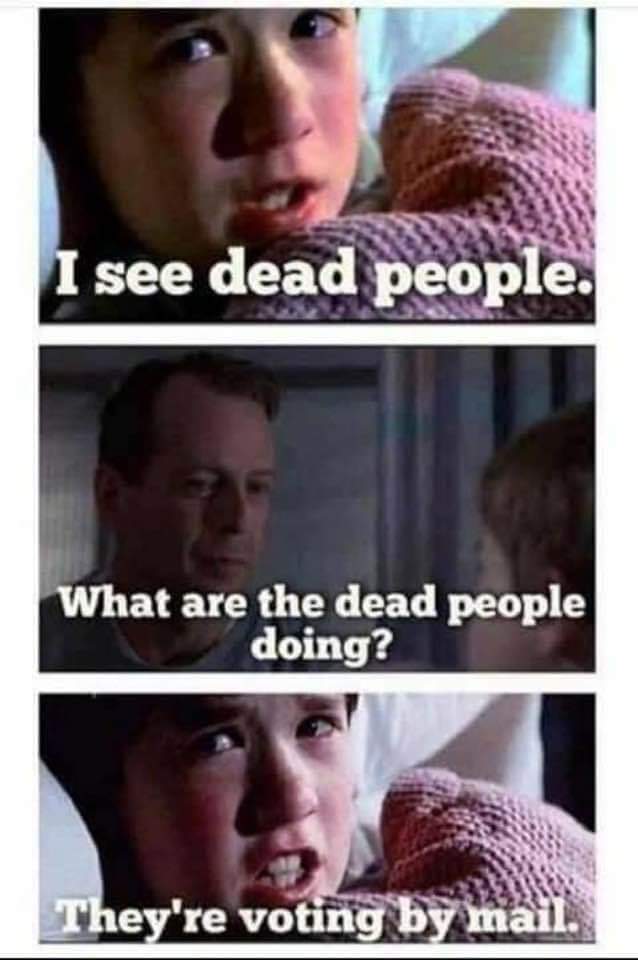
Spooky voting…

Gerry Cohen had already voted, dropping off his state-issued ballot at his local post office, by the time the unsolicited mail ballot applications started showing up at his house in early September. The first one or two didn’t bother him. Cohen knows elections: He teaches election law at Duke University and is a Democratic member of the Board of Elections in Wake County, North Carolina. Sending applications directly to voters is “a good public service,” he said.
But Cohen has received at least seven unsolicited mail ballot applications since he voted — not from the state or county, but from the same get-out-the-vote group. “It’s extremely disruptive and reaches the level of a disinformation campaign,” Cohen said. “I think seven is malicious.”
The applications were from the Washington, D.C.-based Center for Voter Information, which, along with its sister organization, the Voter Participation Center, is conducting a massive campaign to register voters and promote mail-in voting. The nonprofits aim to send 340 million pieces of mail this election cycle, with a focus on two dozen key states. The groups describe themselves as nonpartisan, but they were founded by a former Democratic operative, and the organization has spent at least $47,142 this cycle to promote former Vice President Joe Biden’s presidential bid and $40,065 supporting other Democrats, according to public filings.
Election officials say CVI has made a host of mistakes that have buried their offices in unnecessary paperwork and swamped them with calls from voters. Mailers from groups like CVI, which can be mistaken for official documents sent by state or local governments, are confusing voters at a time when states are racing to expand voting by mail during a pandemic, according to election officials from both parties. President Donald Trump has stoked fears of voter fraud by citing CVI’s activities.
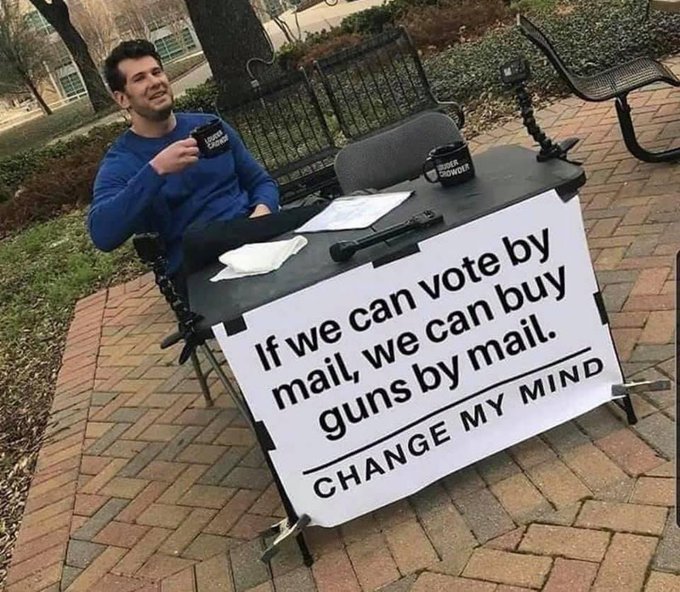
A Democratic candidate for mayor of Carrollton, Texas has been arrested on over 100 counts of alleged voter fraud.
The Denton County Sheriff’s Office arrested Zul Mirza Mohamed on Wednesday night, with the help of the Texas Attorney General’s Election Fraud Unit.
Mohamed was charged with 84 counts of mail ballot application fraud and 25 counts of unlawful possession of an official mail ballot.
“I strongly commend the Denton County Sheriff’s Office, the Lewisville Police Department, and Texas Department of Public Safety as well as the Denton Elections and District Attorney’s offices for their outstanding work on this case and their commitment to ensuring a free and fair Presidential election in the face of unprecedented voter fraud,” Attorney General Paxton said in a statement.
“Mail ballots are inherently insecure and vulnerable to fraud, and I am committed to safeguarding the integrity of our elections,” Paxton added. “My office is prepared to assist any Texas county in combating this form of fraud.”
Mohamed allegedly obtained a mailbox using a false identity, forged at least 84 voter registration applications for Denton residents unbeknownst to them, and had the applications sent to a fraudulent location. At the time of his arrest, Mohamed was in the process of stuffing envelopes with additional mail ballot applications for neighboring Dallas County, the Attorney General’s Office said.
Mohamed was running against the incumbent Republican Mayor Kevin Falconer, who was already expected to win reelection in Carrollton, a city located roughly one hour north of Dallas.
Twitter fact-checkers don’t believe in the mounting evidence of voter fraud across the country due to issues with universal mail- in ballots. In fact, the social media platform doesn’t even want you to question it.
President Donald Trump Tweeted out a simple statement of fact “the ballots being returned to states cannot be accurately counted. Many things are already going very wrong!”
Twitter – which is supposed to be a platform of free discourse – again acted as a publisher to fact check the President, putting a link below his Tweet in red saying “learn how voting by mail is safe and secure.”
But look at this major issue with vote-by-mail ballots in New York City – the The New York Post, Breitbart and others reported this year in the Democratic primary that 26 percent of mail in votes were disqualified (roughly 84,208 ballots.) Wow, that’s a lot of voters.
Prepared to give up your liberty for the sake of “public peace, health, or safety”? A new California bill would criminalize the spread of election misinformation — even on social media.
Americans can be prosecuted for their private messages on social media platforms if they contain misinformation, according to new legislation. Senate Bill 739 declared that “A person is guilty of a misdemeanor” who distributes “misleading information” about elections whether it be via “mail, radio or television broadcast, telephone call, text message, email, or any other electronic means.”
“Governor Gavin Newsom has already signed,” as of last Friday, Reclaim the Net observed in its September 22 article. The California government website stated “Approved by Governor September 18, 2020” and that it would “take effect immediately.”
Democrat Senator for the 27th Senate District Henry Stern, who authored the bill, did not mince words about the severe, and intentional, outcome of such legislation, according to Reclaim the Net:
If you’re putting out tweets, Facebook posts or using social and other types of media to intentionally mislead voters about their right and ability to vote by mail, that’s now a crime, and it’s my hope local DA’s and the state attorney general will go after violators the moment they see them.
Stern later added that “In the midst of this worldwide pandemic, it is imperative that voters, especially those who are getting a vote-by-mail ballot for the first time, know their rights and are getting accurate, reliable information,” CBS Local reported.
 Hellbound and Down
You must be logged in to post a comment.