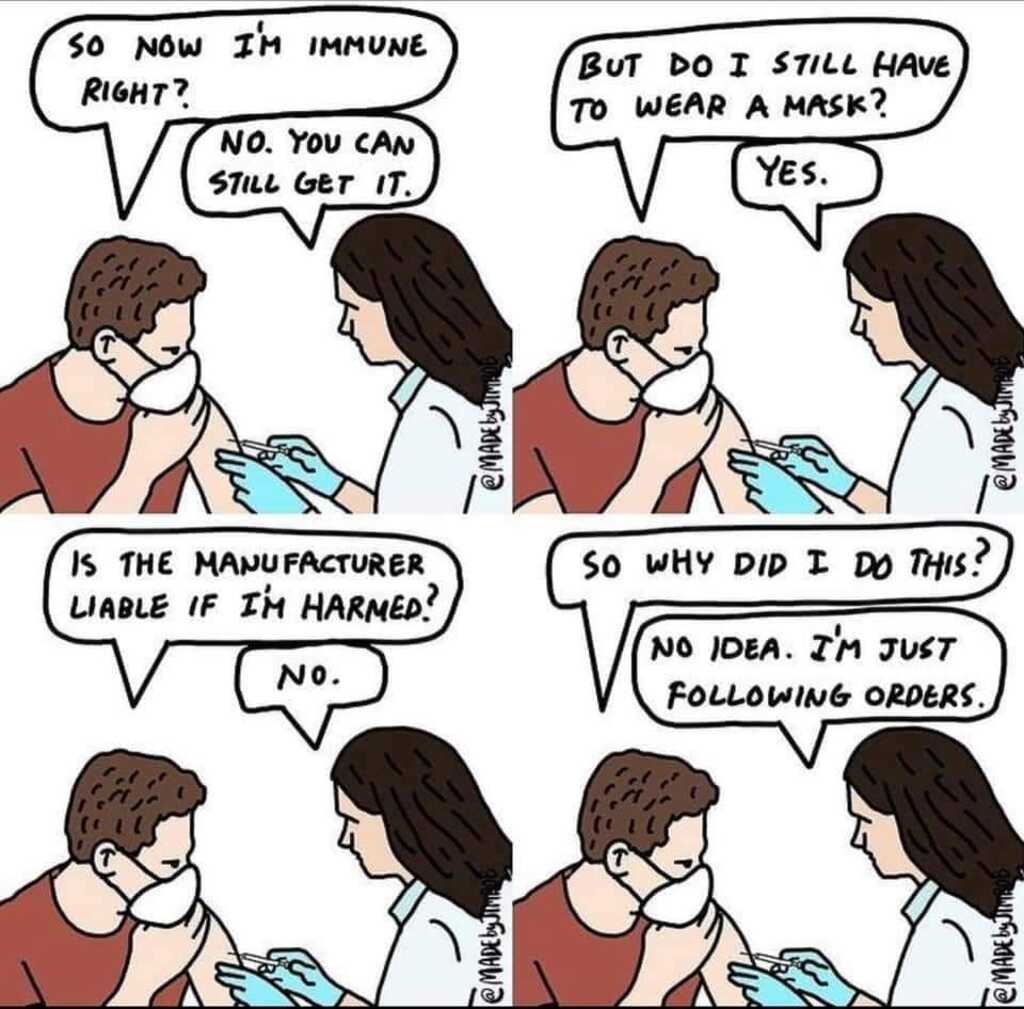
This is true…

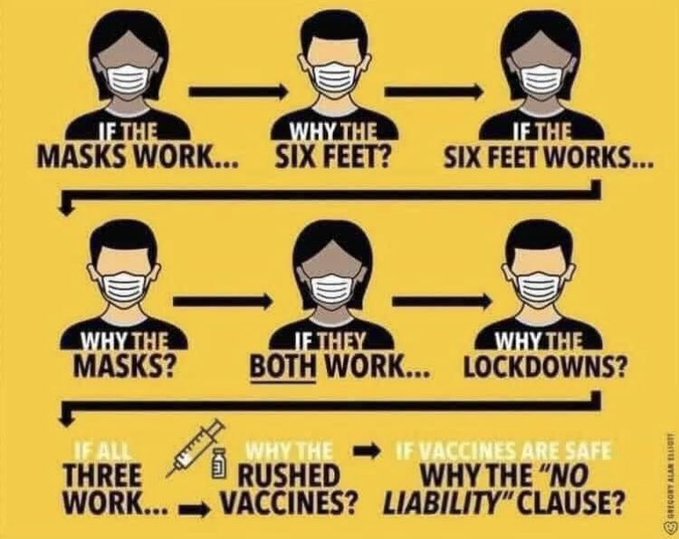
Among those first in line for the COVID-19 vaccine in Massachusetts are correction workers and the nearly 13,000 people incarcerated in jails and prisons in the state. The news comes as COVID cases continue to spike behind bars.
Gov. Charlie Baker included both groups in the first phase of his COVID vaccination plan, which he announced last week. The first phase also includes health care workers, police, fire and emergency responders and residents of long term care facilities and those living and working in homeless shelters. Massachusetts is one of six states to specifically include prisoners in the first phase of vaccinations, according to the Prison Policy Initiative.
The Department of Correction referred questions about the vaccine process to the state’s COVID-19 Response Command Center. It says those working and living in congregate care settings, like homeless shelters and correctional facilities, are prioritized for phase one because of the high-risk, high-exposure setting. The state estimates that 22,000 vaccines will be needed for those living and working in correctional facilities, and officials expect the vaccines to be distributed between December and February. Details about how the vaccines will be given behind bars will be clearer once the state receives vaccine shipments.
The U.S. Food and Drug Administration inspects a few thousand drug manufacturing plants every year to ensure their standards are up to par. Many of those inspections are required before a pharmaceutical company can gain approval of a new drug. They serve as a check on whether drugmakers can produce quality therapies.
But that won’t be the case for Covid-19 vaccine developers that gain emergency authorization of a shot.
FDA regulations don’t require what’s known as a pre-approval inspection for products seeking emergency use, said Jerry Weir, director of the Division of Viral Products in the FDA’s vaccines office. Weir spoke last week at a meeting of FDA advisers to discuss standards for Covid-19 vaccines.
Before approval, FDA inspections ensure compliance with regulations. Once a product is being made—as vaccines already are to get them out as quickly as possible—they can uncover quality breaches and assess whether pharmaceutical companies handled them correctly or are possibly downplaying or ignoring serious issues.
The participant who triggered a global shutdown of AstraZeneca’s Phase 3 Covid-19 vaccine trials was a woman in the United Kingdom who experienced neurological symptoms consistent with a rare but serious spinal inflammatory disorder called transverse myelitis, the drug maker’s chief executive, Pascal Soriot, said during a private conference call with investors on Wednesday morning.
The woman’s diagnosis has not been confirmed yet, but she is improving and will likely be discharged from the hospital as early as Wednesday, Soriot said.
The board tasked with overseeing the data and safety components of the AstraZeneca clinical trials confirmed that the participant was injected with the company’s Covid-19 vaccine and not a placebo, Soriot said on the conference call, which was set up by the investment bank J.P. Morgan.

If there are “I Voted” stickers, why not “Vaccinated for COVID-19” buttons?
The Centers for Disease Control and Prevention is planning to offer health care providers a template they can use to print buttons or stickers that would advertise a person’s vaccination status. The idea is that the button would be handed out to patients after they receive their vaccination shots.
The effort is part of a “toolkit” that the CDC plans to provide healthcare systems to “educate and promote vaccination,” a CDC spokesperson told ABC News.
It should have already been considered a crime against humanity decades ago that law makers were lobbied (bribed) into passing legislation in which vaccine manufacturers cannot be held legally liable for any damage their products may cause. It was an act which established official protocols, such as the secret vaccine injury court to largely sweep under the rug any instances of such side effects.
But now a new lawsuit filed by the world’s largest vaccine manufacturer Serum Institute of India, in association with multinational pharmaceutical giant AstraZeneca, seeks to take this a step further — by attempting to set the precedent that vaccine manufacturers can actually sue those that may have been harmed by their faulty products.
The litigation filed in an Indian court is a countersuit to a lawsuit that has been filed against SII by one of the volunteers who participated in a trial study for the developmental Covisheild. A vaccination for SARS-CoV-2.
After participating in the trial study, the yet to be named volunteer flagged severe neurological and psychological symptoms 10 days after the first injection. Symptoms which were then diagnosed as acute neurological encephalopathy, resulting in memory loss, lapses in cognitive functions such as reasoning, and changes in personality. A legal notice had been sent to ICMR, DCGI, AstraZeneca and Oxford University to stop testing, manufacturing and distributing the vaccine. The plaintiff filed a suit after the notice failed to receive response.
SII then filed a countersuit, worth $13.5 million, for defamation after alleging that the volunteers illness had nothing to do with the vaccine trial. This is a statement which was also backed up by the Data and Safety Monitoring Board (DSMB) and DCGI (Drugs Controllor General of India). However, these assertions have been challenged by independent researcher Dr. Anant Bhan, the former President of the International Association of Bioethics and current professor at India’s Yenepoya Medical University. Dr. Bhan notes that both of these institutions are government entities directly affiliated with SII, and stresses that transparency should be the top priority given that the parties vested financial interests.
 Hellbound and Down
You must be logged in to post a comment.