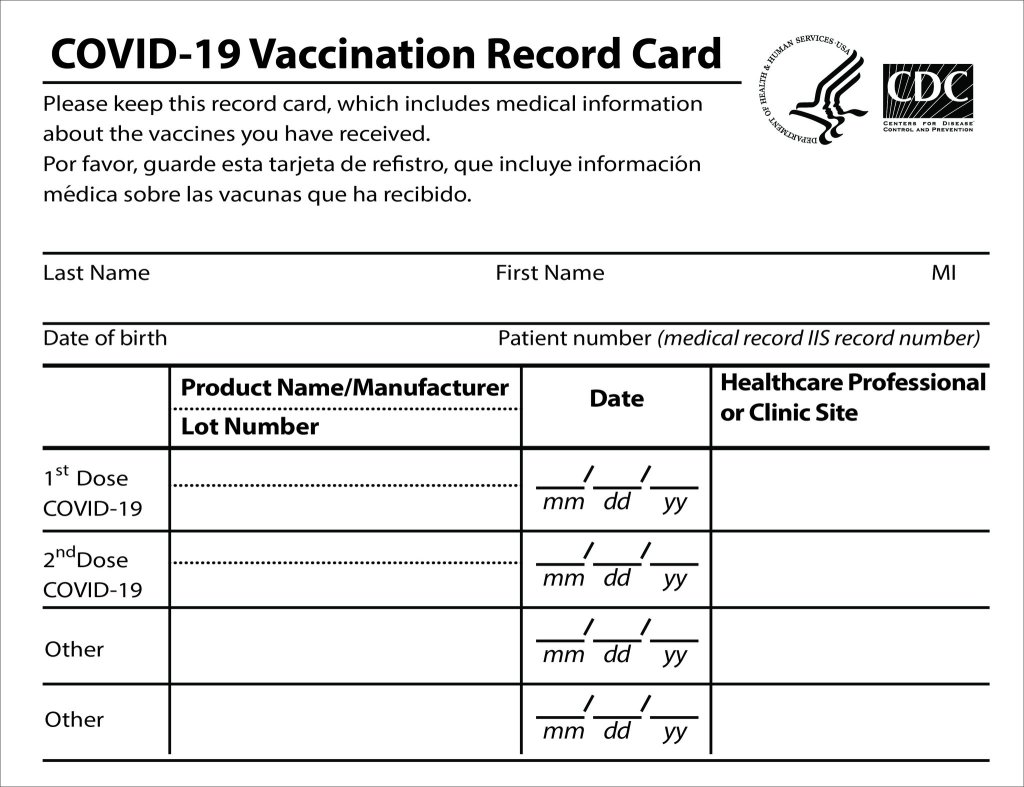
CDC to encourage ‘Vaccinated for COVID-19’ buttons

If there are “I Voted” stickers, why not “Vaccinated for COVID-19” buttons?

Keep reading

World’s Largest Vaccine Maker Suing Man for Saying COVID-19 Vaccine Injured Him

It should have already been considered a crime against humanity decades ago that law makers were lobbied (bribed) into passing legislation in which vaccine manufacturers cannot be held legally liable for any damage their products may cause. It was an act which established official protocols, such as the secret vaccine injury court to largely sweep under the rug any instances of such side effects.

But now a new lawsuit filed by the world’s largest vaccine manufacturer Serum Institute of India, in association with multinational pharmaceutical giant AstraZeneca, seeks to take this a step further — by attempting to set the precedent that vaccine manufacturers can actually sue those that may have been harmed by their faulty products.

The litigation filed in an Indian court is a countersuit to a lawsuit that has been filed against SII by one of the volunteers who participated in a trial study for the developmental Covisheild. A vaccination for SARS-CoV-2.

After participating in the trial study, the yet to be named volunteer flagged severe neurological and psychological symptoms 10 days after the first injection. Symptoms which were then diagnosed as acute neurological encephalopathy, resulting in memory loss, lapses in cognitive functions such as reasoning, and changes in personality. A legal notice had been sent to ICMR, DCGI, AstraZeneca and Oxford University to stop testing, manufacturing and distributing the vaccine. The plaintiff filed a suit after the notice failed to receive response.

SII then filed a countersuit, worth $13.5 million, for defamation after alleging that the volunteers illness had nothing to do with the vaccine trial. This is a statement which was also backed up by the Data and Safety Monitoring Board (DSMB) and DCGI (Drugs Controllor General of India). However, these assertions have been challenged by independent researcher Dr. Anant Bhan, the former President of the International Association of Bioethics and current professor at India’s Yenepoya Medical University. Dr. Bhan notes that both of these institutions are government entities directly affiliated with SII, and stresses that transparency should be the top priority given that the parties vested financial interests.

Keep reading

Gov’s order makes COVID vaccine registry mandatory

Governor Chris Sununu last week signed an executive order requiring everyone who receives a COVID-19 vaccine to have their immunizations registered with the state.

New Hampshire has been the only state without a vaccine registry, a list of who has received which vaccines. Though state law directed the Department of Health and Human Services to create the registry years ago, the state only began building the registry this year.

Sununu’s executive order will require health care providers to report every COVID-19 vaccine, suspending a part of the state vaccine registry law that allows patients to opt out of registering vaccines.

But the order will allow patients to have their immunization records removed from the registry after the pandemic is over.

Keep reading

COVID-19 Vaccine Approved In Under a Year As Gov’t Keeps Cannabis Schedule 1 Drug

Because they work on the front lines, healthcare workers are eligible to skip to the front of the line to receive the jab of the vaccine that was developed in record time. However, despite assurances from vaccine makers and their revolving door friends in the Food and Drug Administration, many of these front line workers are leery of this rushed product.

“I think I would take the vaccine later on, but right now I am a little leery of it,” nurse Yolanda Dodson, 55, who works at the Montefiore Hospital in New York City and spent the spring in the heart of the deadly fight against the virus told AFP.

“Vaccine studies so far “look promising but I don’t think there is enough data yet,” Dodson said.

“This is a vaccine that was developed in less than a year and approved under the same administration and government agencies that allowed the virus to spread like a wildfire,” Diana Torres, a nurse at a Manhattan hospital who saw several of her co-workers die of the virus this spring, said.

“They didn’t have enough time and people to study the vaccine,” she said. “This time around I will pass and watch how it unfolds.”

“They failed miserably with PPE (personal protective equipment) and testing and now they want you to be guinea pigs for the vaccine,” Torres friend added.

These are front line health care workers, experiencing the pandemic every day of their lives, and yet they remain skeptical — and rightfully so.

What’s more, the government’s selective approval process has been less than stellar given the opioid epidemic, and the millions of people harmed by FDA-approved medications. Highlighting the lapse in their judgement is the fact that as the government fast tracks this vaccine to market, cannabis — that has never killed a single person and has been around as long as we have — remains classified as follows:

a drug with no currently accepted medical use and a high potential for abuse.

Seems legit.

Keep reading

$1,500 payment proposed for people who get COVID-19 vaccine

A former presidential candidate is proposing a measure that would pay people $1,500 in exchange for getting the COVID-19 vaccine.

U.S. Rep. John Delaney, D-Maryland, told CNBC the payments would be an “incentive” for those who might be reluctant to take the vaccine.

“The faster we get 75% of this country vaccinated, the faster we end COVID and the sooner everything returns to normal,” said Delaney, who ran for president in 2020. “We have to create, in my judgment, an incentive for people to really accelerate their thinking about taking the vaccine.”

Delaney said the payments wouldn’t mean the vaccine would be required for everyone.

“If you’re still afraid of the vaccine and don’t want to take it, that’s your right,” Delaney said. “You won’t participate in this program. But guess what?  You’re going to benefit anyhow, because we’ll get the country to herd immunity faster, which benefits you. So I think everyone wins.”

Delaney’s proposal would cost about $380 billion, roughly $110 billion more than the total of the stimulus payments that went out in March during the early days of the coronavirus pandemic. That stimulus provided up to $2,400 for married couples and up to $1,200 for single people with an additional $500 per dependent. Despite months of negotiations, Congress has failed to agree on terms for a second COVID-19 stimulus.

Keep reading

Vaccine Safety to Remain Unclear Until Millions Get Their Shots

Monitoring Covid-19 vaccines for safety issues will fall to a group of U.S. health agencies that also will have a hand in their rollout, a potential hurdle in persuading skeptics to get the shots, say former government officials who helped control an outbreak a decade ago.

The Centers for Disease Control and Prevention, the Food and Drug Administration, the Department of Veterans Affairs and other health agencies all have separate systems to track side effects and safety in people who get the first shots. But there are concerns the groups advising the agencies on all aspects of a vaccine may face public skepticism over their safety assessments at a time when vaccine hesitancy is a major concern.

“The same advisory committee that told them to get it are telling them it’s OK,” said Daniel Salmon, the director of vaccine safety for the National Vaccine Program Office during the 2009 H1N1 swine flu outbreak. “What are the optics of that?”

There’s also worry that a lack of unified oversight could make it more difficult to document and quickly act on safety issues. Meanwhile, the stalled presidential transition could complicate efforts even further, said Jesse Goodman, who led the FDA office that handled vaccines during the 2009 H1N1 outbreak.

Keep reading

The coronavirus vaccine comes with more side effects than a flu shot. Experts urge people to get it anyway

The first coronavirus vaccine authorized in the United States may cause more side effects than the flu vaccine, but the most common reactions — soreness at the injection site, fatigue and headache — are mild or moderate in most people and fade after a few days, according to analyses of clinical trial data.

Infectious disease experts say most people can safely get the vaccine, but they should be prepared for some of these potential side effects.

“Any robust vaccine may generate some discomfort but it is worth the mild side effects — these side effects are not extraordinary — to be immune against this circulating new pandemic,” said Dr. Monica Gandhi, an infectious disease physician at UCSF.

The FDA granted emergency use authorization late Friday to the first vaccine in the U.S., developed by Pfizer and German firm BioNTech, which has been shown to be 95% effective at preventing COVID-19 illness.

Health care workers and residents of long-term care centers will be first in line to receive the vaccine in California, followed by essential workers. Mass vaccinations of the general public are expected in spring or summer 2021.

The Pfizer vaccine’s most common side effects were fatigue, headache, muscle pain and chills, according to an FDA analysis of Pfizer’s clinical trial data. Less common were joint pain, fever, diarrhea and vomiting. The vast majority of those symptoms were mild or moderate.

Keep reading

Pfizer and Moderna could score $32 billion in Covid-19 vaccine sales — in 2021 alone

The imminent authorization of Pfizer’s Covid-19 vaccine in the United States is a momentous occasion for science, the economy and humanity. The milestone is also a major moneymaker for the companies that developed the vaccines.Wall Street analysts are projecting Pfizer and Moderna will generate $32 billion in Covid-19 vaccine revenue — next year alone.

Keep reading