Federal Proposal Would Expand Hair Testing of Job Applicants and Employees To Make Sure They Are Obeying Drug Prohibition

A rule recently proposed by the Substance Abuse and Mental Health Services Administration (SAMHSA) revives the previously rejected idea of using hair tests in drug screening of federal employees and workers in federally regulated industries. The proposed rule, which was published last week, says “hair testing potentially offers several benefits when compared to urine,” including “a longer window of drug detection.”

If the aim of these tests is to identify workers whose job performance is affected by psychoactive substances, that “benefit” is actually a disadvantage. Metabolites do not show up in hair until after a drug’s effects have worn off and typically can be detected for up to three months. Depending on hair length and growth rate, the detection window can be as long as a year. In other words, hair testing does not detect impairment or even recent use. There is a similar problem with urine testing, but the detection period for urinalysis is much shorter—a few days after a single dose of marijuana, for example, or as long as a month for regular cannabis consumers.

Another widely recognized problem with hair tests is that their results are affected by hair color. SAMSHA acknowledges “scientific evidence that melanin pigments may influence the amount of drug incorporated into hair.” In one study cited by SAMSHA, for example, “codeine concentrations in black hair were seven-fold higher than those in brown hair and 14-15-fold higher than those in blond hair.” As the agency notes, such findings “have raised concerns that selective drug binding with the wide variation of color pigments distributed amongst the population may introduce bias in drug test results.”

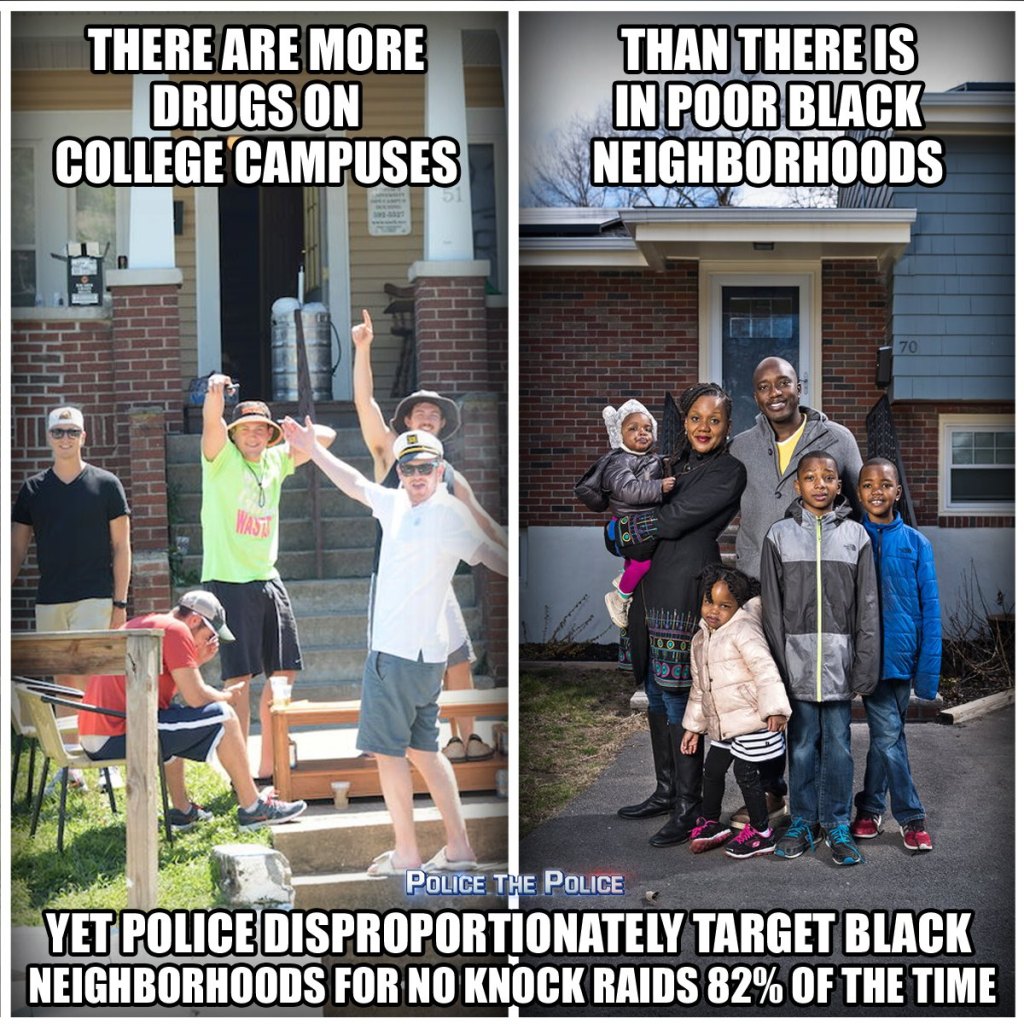
The implication is that people with darker hair—blacks and Hispanics, for example—are more likely to lose their jobs or have their applications rejected as a result of a positive hair test. “It is mind-boggling that the federal government is revisiting this half-baked proposal now,” says Paul Armentano, deputy director of the National Organization for the Reform of Marijuana Laws (NORML). “Given the heightened awareness surrounding the need for social and racial equity, the idea of proposing a testing procedure that will inherently deny more people of color opportunities than it would others who have engaged in exactly the same activities is beyond tone deaf and counterproductive.”

SAMSHA’s proposal, which would allow the use of hair samples in pre-employment screening and random testing by federal agencies, is also likely to be adopted by the Nuclear Regulatory Commission and the Department of Transportation, which regulates industries such as trucking and railroads. SAMSHA projects that the rule would lead to 275,000 hair tests by federal agencies each year, plus 15,000 tests in the nuclear industry and 1.5 million in the transportation sector.

Keep reading

Innocent 74yo Grandmother Strip Searched in Public After Cops Claimed to Smell Weed

A stop for an alleged traffic violation turned into a nightmare for a 74-year-old grandmother when the police officer conducting the stop claimed to have smelled a plant. Because the police state claims the authority to violate innocent grandmothers over plant smells, the officers involved will face no punishment and now the taxpayers will be held liable instead.

Phyllis Tucker, 74, is now suing the city of Jamestown and Fentress County, claiming the city police and county sheriff departments have illegal policies involving the use of strip searches, according to News Channel 5.

Tucker tells reporters that the incident which unfolded earlier this year has left her and her family traumatized, and rightfully so. According to the lawsuit, Tucker was forced to pull down her pants and remove her bra in the parking lot of a fast food restaurant as bystanders watched.

“If it wasn’t for my mother, I would never go back to Jamestown, never, and I wouldn’t advise anybody else to go through there either,” Tucker said.

Tucker was visiting her mother that night. She had her grandson, his girlfriend, and an infant in her car when a cop pulled them over and claimed to smell weed on her grandson’s girlfriend, Kira Smith, 19.

Instead of simply letting this family go, who had harmed absolutely no one, the cop escalated the situation to what amounts to a public roadside sexual assault — all to search for a plant.

According to the lawsuit, officers from the Jamestown police and the Fentress County Sheriff’s Department strip searched the two women in public view. According to the suit, Smith was ordered to “pull her pants down to her knees” and Tucker was told to remove “her blouse and bra” “exposing her breasts to the public.”

“I just started crying and was humiliated. I didn’t know if there was somebody who was going on the street that was seeing me with my top off,” Tucker said.

The lawsuit states the forcing both men and women to strip on the side of the road is a common practice by law enforcement in Frentress County.

“It is the custom of Frentress County to conduct these type of strip searches,” said attorney Wesley Clark who represents Tucker and Smith.

News Channel 5 reports that Clark also represents two other women who say there were pulled over in Fentress County in July, “stripped completely nude and searched” including being told to “squat” and “cough” while flashlights inspected their “genital areas,” according to the lawsuit.

In that case officers found no drugs and the women left with a ticket for an “improper tag.”

“To argue that it’s appropriate to strip women naked on the side of a public highway in search of marijuana is completely insane,” Clark said.

We agree. Nevertheless, it continues to happen all across the country in spite of marijuana being legal in some form in over half the states.

Keep reading