
I’ll tell you what they want…


American gun owners could face tens of billions of dollars in new taxes to keep the guns they already own under Democrat Joe Biden’s gun ban and tax plan.
At least 20 million rifles and 150 million ammunition magazines would be caught up in the sales ban and registration scheme Biden touted on the campaign trail, according to a National Shooting Sports Foundation (NSSF) report. The new taxes would cost Americans more than $34 billion, according to a Washington Free Beacon analysis.
NSSF told the Washington Free Beacon the sheer number of affected guns and magazines could pose a significant problem for Biden’s gun-control plans.
“I think if [Biden and his team] were smart, they would look at those numbers and get an idea of where America stands on gun ownership and gun rights,” NSSF spokesman Mark Oliva said.
American gun owners could face tens of billions of dollars in new taxes to keep the guns they already own under Democrat Joe Biden’s gun ban and tax plan.
At least 20 million rifles and 150 million ammunition magazines would be caught up in the sales ban and registration scheme Biden touted on the campaign trail, according to a National Shooting Sports Foundation (NSSF) report. The new taxes would cost Americans more than $34 billion, according to a Washington Free Beacon analysis.
NSSF told the Washington Free Beacon the sheer number of affected guns and magazines could pose a significant problem for Biden’s gun-control plans.
“I think if [Biden and his team] were smart, they would look at those numbers and get an idea of where America stands on gun ownership and gun rights,” NSSF spokesman Mark Oliva said.
Biden wants to ban new sales of AR-15 rifles and similar firearms as well as any ammunition magazine holding more than 10 rounds—sizes that come standard on most modern rifles and handguns. He would pay some owners to surrender the affected guns they legally own and force everyone else to register the guns under the National Firearms Act. The proposal would require owners to pay a $200 tax stamp for each item.
The third time wasn’t the charm for the Pentagon, which has once again failed to successfully complete an audit.
Thomas Harker, the Pentagon’s comptroller, told Reuters that it could be another seven years before the department can pass an audit—something that it has never accomplished. Previous attempts in 2018 and 2019 turned up literally thousands of problems with the Pentagon’s accounting system and millions of dollars’ worth of missing equipment.
In a statement, the Pentagon lauded the fact that auditors had “cleared” more than 500 issues identified in previous audits. That serves as compelling evidence that the effort is worth it, even if a clean review is still impossible. The Pentagon had resisted being audited for years. Though Congress passed a law in 1990 requiring all federal departments to be audited every year, it still took nearly two decades for the first Pentagon audit to be attempted. The department now says it is benefiting from the process.
A full report on this year’s audit, which covered more than $2.7 trillion in military assets, is expected to be released in January.
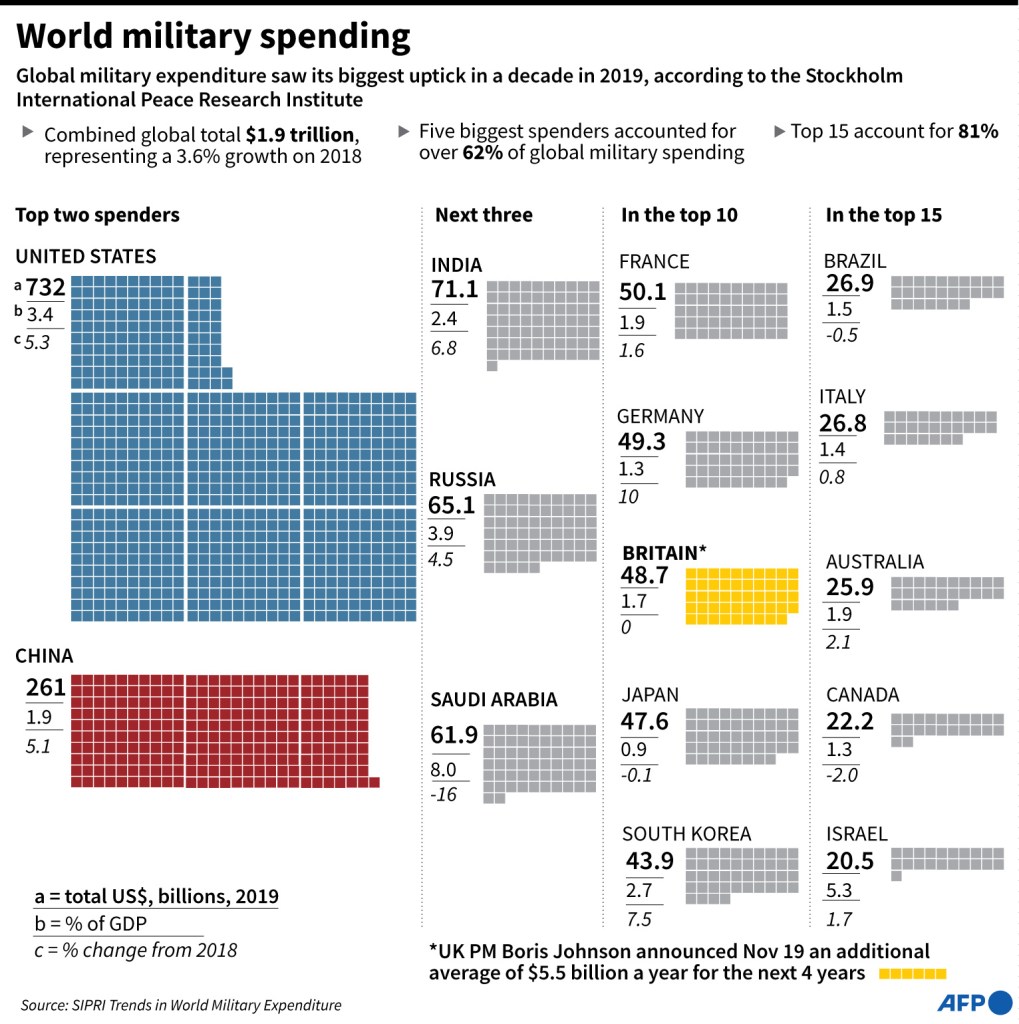
Before that, Congress is likely to sign off on a boost in military spending. As part of a new $1.4 trillion discretionary spending bill expected to be passed during the upcoming lame-duck session, the Pentagon is expected to get about a $10 billion boost in funding. That will happen in spite of another failed audit and regardless of the fact that America’s budget deficit has soared to record highs in the past year as the COVID-19 pandemic has taken its toll.
A Texas county approved over $2 million of taxpayer money for a spent legal services fund for illegal immigrants facing deportation, The Texan reported Wednesday.
The Harris County Commissioners Court voted 3-2 to allocate $2,050,000 over a two-year period to the Immigrant Legal Services Fund, an initiative of County Judge Lina Hidalgo, The Texan reported. Hidalgo, a Democrat, requested $500,000 to finance the program for its first year when she proposed the fund in February 2019.
Illegal immigrants without attorneys are deported 90% of the time while those with attorneys are deported around 5% of the time, according to Hidalgo, The Texan reported.

According to an analysis from Feeding America, food insecurity will hit 52 million people due to COVID-19 in the United States, which is an increase of 17 million people from pre-pandemic times. Supply line disruptions, lower levels of donations, and millions of unemployed people who’ve lost their jobs due to government-imposed lockdowns have created a massive strain on America’s food supply and more and more family’s are being pushed into a situation of food insecurity.
It’s not just the brink of starvation that millions of Americans face either. Thanks to government-mandated lockdowns, a record number of Americans are unable to find jobs as businesses are forced to close or have gone out of business permanently. This is creating a situation in which families are unable to pay their rent — leading to the potential for mass evictions.
In March the CARES Act imposed a federal moratorium on evictions, which mandated that it was illegal to evict tenants who participate in federal housing assistance programs or who live in properties with a federally backed mortgage loan due to the nonpayment of rent. When the CARES Act moratorium expired on July 24, a host of state and local governments passed their own eviction prevention measures—but these actions varied significantly across the country and left many renters vulnerable to eviction once again.
Then, on September 4, the Centers for Disease Control and Prevention issued another moratorium on evictions through December 31, 2020. While this will certainly help those who rent — temporarily — all the moratorium did was pass the burden onto the landlord who may no longer be able to pay the mortgage on the property without the incoming rent.
And no, contrary to what many believe, most landlords are not mega rich property owners and live modest lifestyles.
At a time when the Fed is already monetizing the entire US budget deficit thanks to helicopter money, sparking conversations about the utility of taxation, and when a Biden administration is set to at least try and roll back most of the Trump tax cuts, the last thing the population wants to hear about is even more taxes.
Yet in a “modest proposal” from Deutsche Bank, the bank argues that in a time of pervasive covid shutdowns, “those who can work from home (WFH) receive direct and indirect financial benefits and they should be taxed in order to smooth the transition process for those who have been suddenly displaced.”
In other words, the argument goes that working from an office is somehow punitive, and since WFH during the pandemic leads to “many benefits” as a resulting “disconnecting themselves from face-to-face society” a 5% tax for each WFH day “would leave the average person no worse off than if they worked in the office.” The bank calculates that such a tax could raise $49bn per year in the US, €20bn in Germany, and £7bn in the UK. “That can fund subsidies for the lowest-paid workers who usually cannot work from home.”
 Hellbound and Down
You must be logged in to post a comment.