Biden’s Protection of Murderous Saudi Despots Shows the Hidden Reality of U.S. Foreign Policy

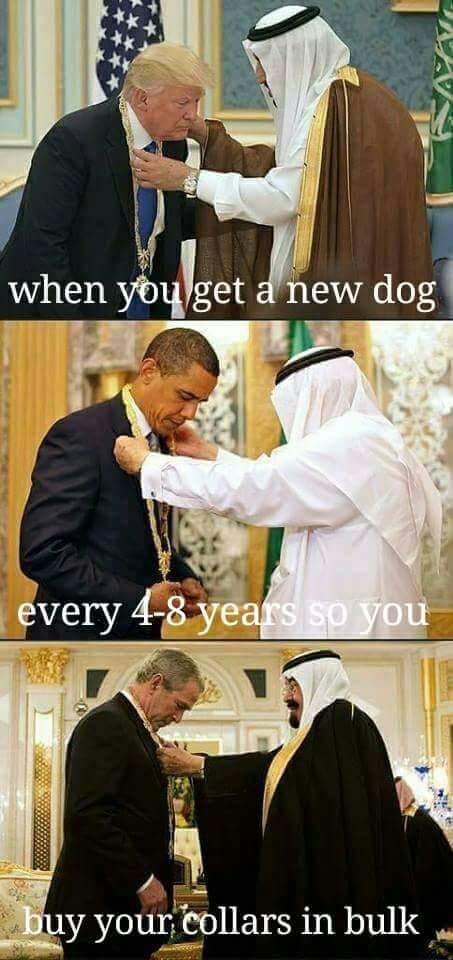
A staple of mainstream U.S. discourse is that the United States opposes tyranny and despotism and supports freedom and democracy around the world. Embracing murderous despots is something only Donald Trump did, but not normal, upstanding American Presidents. This belief about the U.S. role in the world permeates virtually every mainstream foreign policy discussion.

When the U.S. wants to start a new war — with Iraq, with Libya, with Syria, etc. — it accomplishes this by claiming that it is, at least in part, motivated by horror over the tyranny of the country’s leaders. When it wants to engineer regime change or support anti-democratic coups — in Venezuela, in Iran, in Bolivia, in Honduras — it uses the same justification. When the U.S. Government and its media partners want to increase the hostility and fear that Americans harbor for adversarial countries — for Russia, for China, for Cuba, For North Korea — it hauls out the same script: we are deeply disturbed by the human rights violations of that country’s government.

Yet it is hard to conjure a claim that is more obviously and laughably false than this one. The U.S. does not dislike autocratic and repressive governments. It loves them, and it has for decades. Installing and propping up despotic regimes has been the foundation of U.S. foreign policy since at least the end of World War II, and that approach continues to this day to be its primary instrument for advancing what it regards as its interests around the world. The U.S. for decades has counted among its closest allies and partners the world’s most barbaric autocrats, and that is still true.

Indeed, all other things being equal, when it comes to countries with important resources or geo-strategic value, the U.S. prefers autocracy to democracy because democracy is unpredictable and even dangerous, particularly in the many places around the world where anti-American sentiment among the population is high (often because of sustained U.S. interference in those countries, including propping up their dictators). There is no way for a rational person to acquire even the most minimal knowledge of U.S. history and current foreign policy and still believe the claim that the U.S. acts against other countries because it is angry or offended at human rights abuses perpetrated by those other governments.

Keep reading

US Expanding Military Presence in Saudi Arabia With Eye on Iran

The US military is expanding its operations in Saudi Arabia and looking to establish bases in the western part of the country. The initiative began about a year ago and was just revealed to reporters by Gen. Frank McKenzie, the head of US Central Command.

According to McKenzie, the US has been using various air bases and seaports in western Saudi Arabia and is working to build its own bases in the region. As part of the plan, the US and Saudi Arabia are negotiating infrastructure projects that would make two ports on the Red Sea and two airbases in the west more suitable for the use of the US military.

The idea is that US bases in Qatar, the UAE, and Bahrain are in the range of Iran’s ballistic missiles, and bases further west would be beneficial in a conflict with Tehran, something McKenzie explained to reporters.

“The Arabian Gulf would be contested waters under any scenario of armed conflict with Iran, so you look at the places where you would move your forces as they enter the theater from being in a contested area,” he said.

Keep reading

Shocking New Figures Show How Just Much the US is Fueling the Violence in Yemen

Despite presenting itself as a force for good and peace in the Middle East, the United States sells at least five times as much weaponry to Saudi Arabia than aid it donates to Yemen. The State Department constantly portrays itself as a humanitarian superpower with the welfare of the Yemeni people as its highest priority, yet figures released from the United Nations and the Stockholm International Peace Research Institute (SIPRI) show that since the war in Yemen began, the U.S. government has given $2.56 billion in aid to the country, but sold over $13 billion in high-tech weapons to Saudi Arabia, the leader of the coalition prosecuting a relentless onslaught against the country.

Figures like these are always debatable. What constitutes legitimate “aid” is a question everyone would answer differently. Furthermore, the $13 billion figure does not include the enormous weapons deal Saudi Arabia signed with Donald Trump in 2017, which will reportedly see the Kingdom purchase $350 billion over ten years.

SIPRI is skeptical of the size of these numbers, but if they prove to be correct, once the orders begin arriving, they will make the paltry aid donations seem like small change by comparison. Sales include all manner of military equipment, from radar and transport systems to F-15 fighter jets, TOW missiles, Abrams tanks, and Paladin howitzers.

Keep reading