
House Republican lawmakers who advocate for reducing federal spending to bring down the budget deficit are defending the use of earmarks as Congress passes a spending package that include $13 billion of them.
“When Democrats are in control, if we don’t have the opportunity for our elected representatives to weigh in on these types of issues, then we’re sending our tax dollars to Washington, D.C. and bureaucrats are deciding where it goes,” said Rep. Erin Houchin, R-Ind., during an interview with Just the News.
Rep. Burgess Owens, R-Utah, said he’s thankful for the earmarks process, which is now formally titled, “Community Project Funding,” noting that his “district was not being serviced at all” when earmarks were banned prior to 2021.
There were about 6,000 earmarks taking up 605 pages in the minibus spending package that passed. The package contains 6 appropriations bills.
“Keep in mind as representatives we are the closest to the people,” Owens said on Thursday on Capitol Hill. “If there’s a body that knows what the people really care for and need it is the House and what we did, we took ourselves off the plate.”
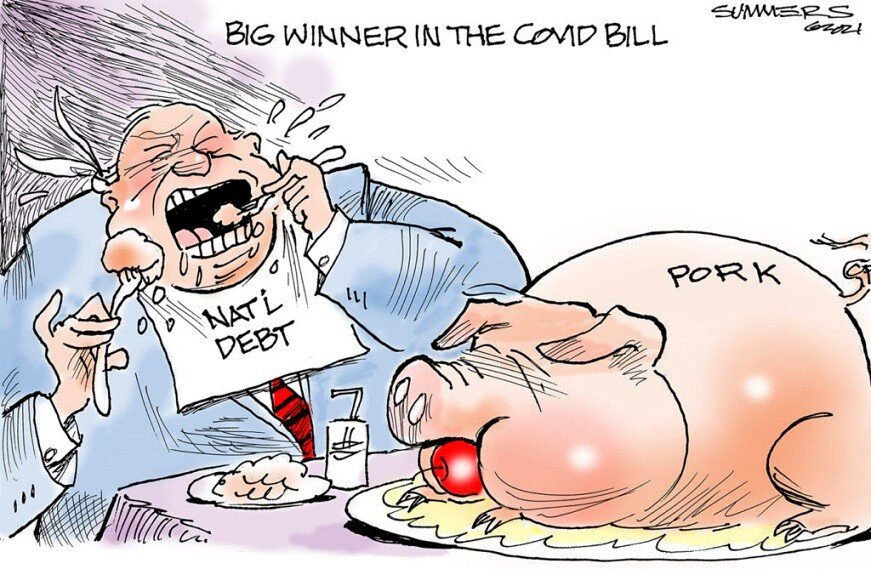
Not all Republicans in Congress are on board with earmarks, known derogatorily as “pork.”
Rep. Bob Good, R-Va., told Just the News that the previous ban on earmarks should be resurrected. “It’s another step in the wrong direction. It does nothing to cut our spending, it does nothing to secure our border, and worse than that, you mentioned, you’ve got nearly 7,000 earmarks for about $13 billion.”
“And earmarks represent the worst in Washington because they are pet projects back in somebody’s district used to buy votes,” Good continued. “It’s something that was eliminated about 15 years ago, it got brought back by the Dems when they got control. But Republicans have kept it much to my dismay, I oppose earmarks and we ought not to be doing that.”
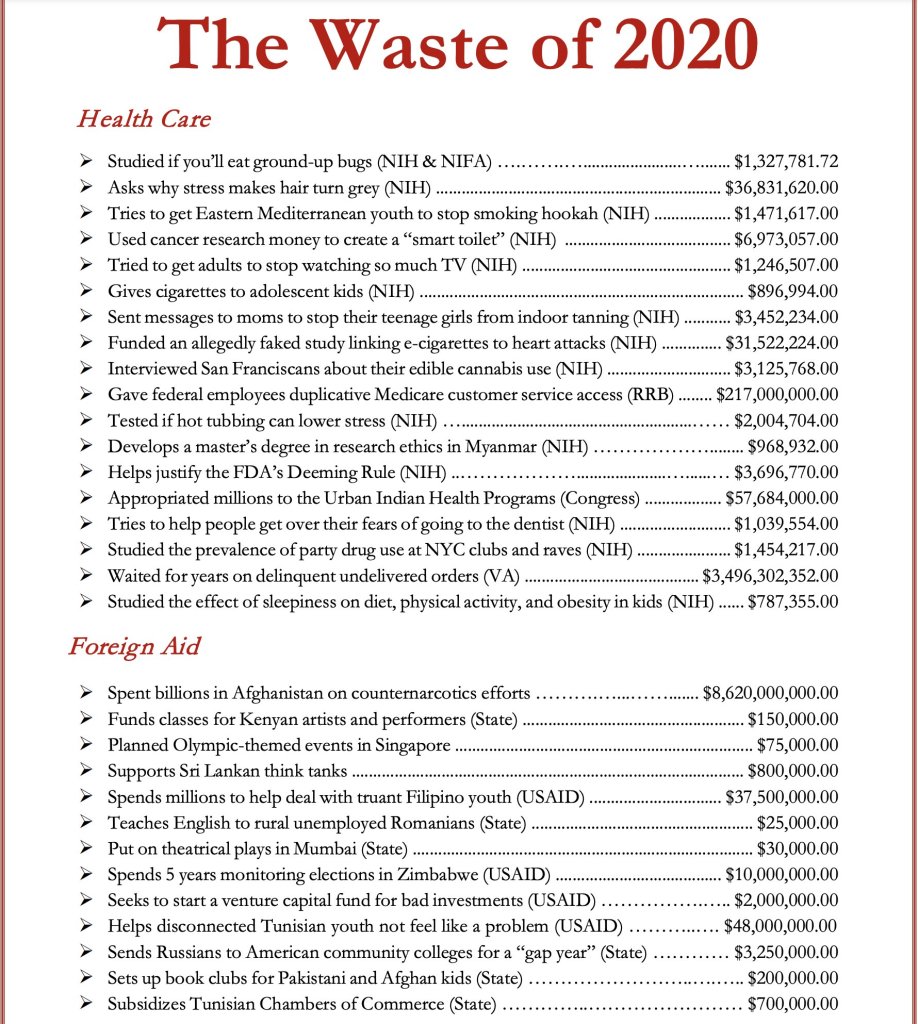
Sen. Rand Paul, R-Ky., described the earmarks in the minibus spending package as wasteful. A second spending package is under consideration and has to be passed before a March 22 shutdown deadline.


 Hellbound and Down
You must be logged in to post a comment.