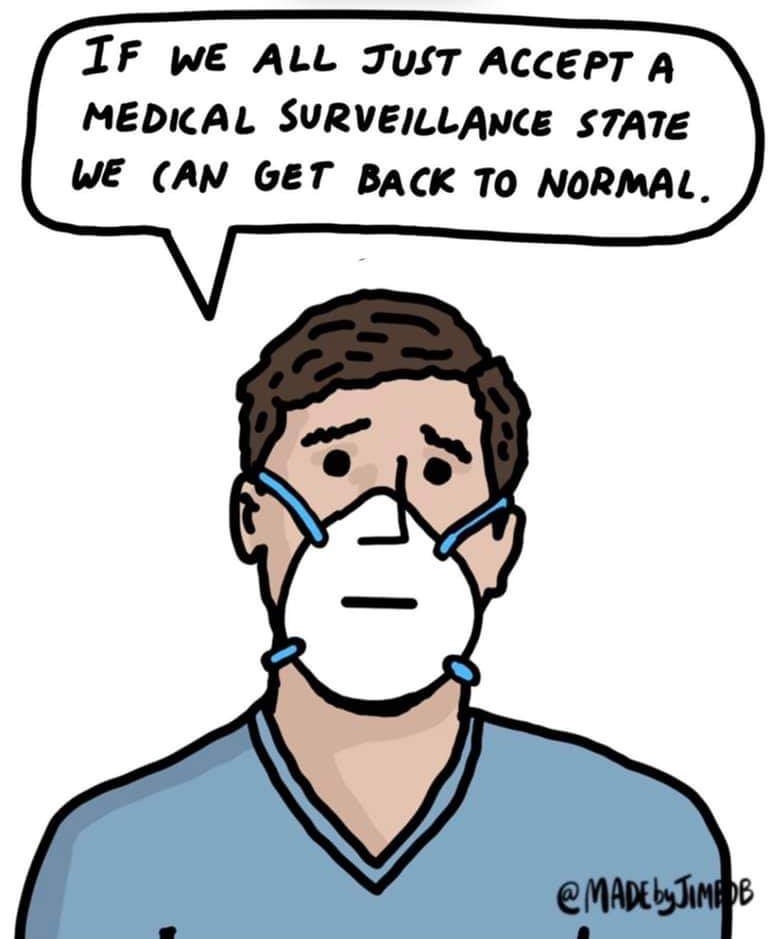
Don’t accept it.

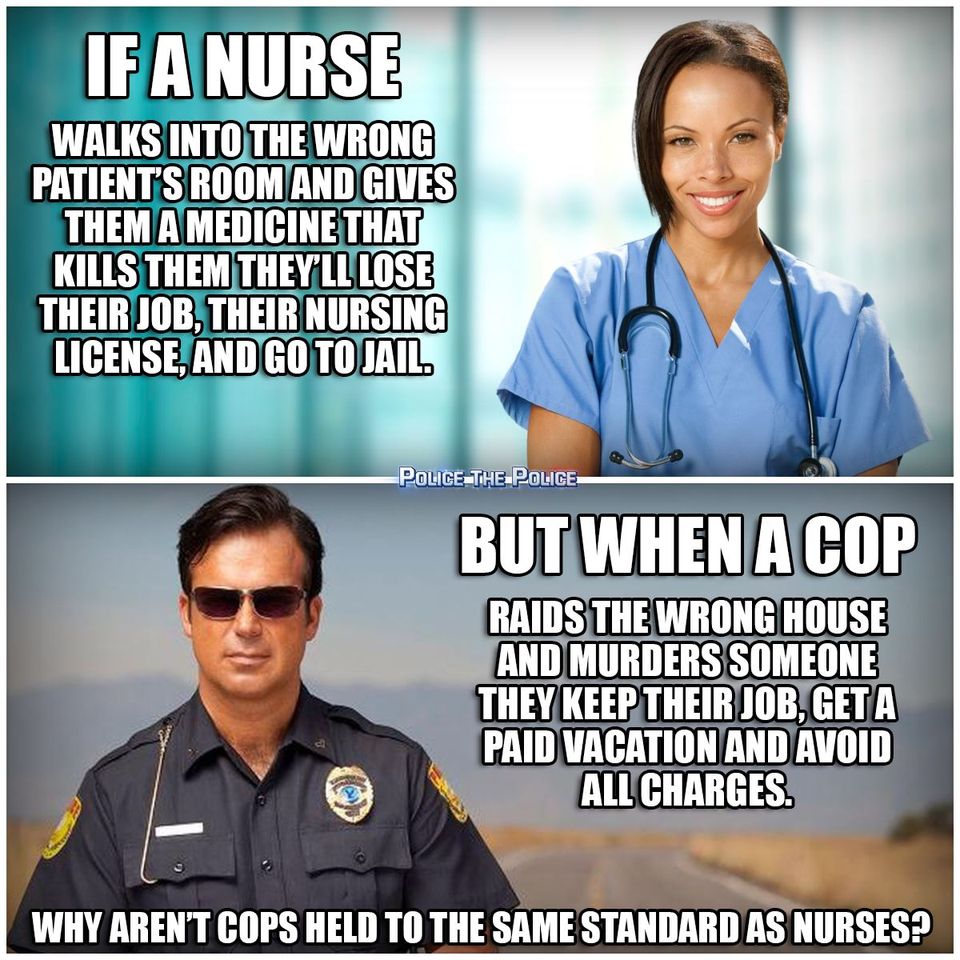
NEW YORK POLICE deliberately assaulted dozens of peaceful protesters, medics, and legal observers in one of this summer’s most violently repressed protests, trapping people in the streets past a city-imposed curfew before beating and arresting them in what Police Commissioner Dermot Shea described as “a plan which was executed nearly flawlessly.”
At least 236 people were arrested at the June 4 protest in the Mott Haven neighborhood of the Bronx, and at least 61 were injured by police, with some left with broken noses and fingers, lost teeth, and potential nerve damage, according to a detailed report released on Wednesday by Human Rights Watch. “The police response to the peaceful Mott Haven protest was intentional, planned, and unjustified,” the report concluded. “The protest was peaceful until the police responded with violence.”
It’s getting harder to deny the likelihood that Kentucky attorney general Daniel Cameron lied, and lied multiple times, when he explained why a grand jury decided not to charge any police officer with a crime for killing Breonna Taylor. Cameron’s office presented evidence to the jury, but the only criminal charges he announced last week were against Brett Hankison, the Louisville officer who fired blindly into Taylor’s apartment on March 13 and accidentally sprayed ammo into a neighboring unit. The “wanton endangerment” charge he’s facing means that the only officer who will suffer legal consequences for the events surrounding Taylor’s death, at least for now, is the only one who didn’t have a direct hand in killing her. The other officers involved, Jonathan Mattingly and Myles Cosgrove, shot Taylor six times out of more than 30 rounds fired between them.
When Cameron announced this decision to the public, he characterized it as a just resolution to a universally accepted set of facts. “The warrant [that the police used to enter the apartment] was not served as a ‘no-knock’ warrant,” he claimed, rebuking witness accounts that officers had failed to announce their presence before bursting into Taylor’s home, causing her boyfriend Kenneth Walker to think they were being burglarized and shoot one of them in the leg. Walker’s bullet was the police’s justification for opening fire, which killed Taylor, who was unarmed. But failing to announce themselves as police would undermine that defense: Under Kentucky’s “castle doctrine,” law-enforcement officers are the only home invaders that residents aren’t allowed to use deadly force against, but only if they clearly identify themselves as law enforcement.
This wasn’t the only dubious claim that Cameron expected the public to take at face value. He also said that the grand jury agreed that Taylor’s death was justified. “While there are six possible homicide charges under Kentucky law,” he explained, “these charges are not applicable to the facts before us because our investigation showed — and the grand jury agreed — that Mattingly and Cosgrove were justified in the return of deadly fire after having been fired upon.” But the grand jury may not have actually agreed.
On Monday, one of the jurors took the extraordinary step of filing a court motion to make transcripts of the grand jury deliberations public and allow its members to speak publicly about how they unfolded, according to the New York Times. Grand jury deliberations are subject to strict secrecy, and the evidence they consider usually only becomes public in court if there’s prosecution. The unnamed juror claimed that Cameron had misrepresented the jury’s case to the public, and that the jurors were never given the option to indict officers Mattingly and Cosgrove. If true, this would appear to undermine Cameron’s claim that the jury was unanimous that Taylor’s death was legally justified.
Rape in the United States is defined by the Department of Justice as “Penetration, no matter how slight, of the vagina or anus with any body part or object, or oral penetration by a sex organ of another person, without the consent of the victim.” At the end of the following story about what happened to Erica Reynolds, you will have zero doubt that she was raped. However, because her rapists wear a badge and claim to protect society, no one will be going to jail and the rapists claim everything they did was legal.
Erica’s nightmare started the day after Christmas in 2018 when police suspected her of having a substance deemed illegal by the state. Because the state claims the immoral authority to kidnap, cage — and, in Erica’s case, rape — people in search of these substances, this innocent mother was kidnapped and brought down to the Phoenix police department.
As police searched for the arbitrary substance, Erica was stripped naked, forced into a concrete room — and raped.
She recalled, in horrifying detail, to the Arizona Republic, about how the rape unfolded. Erica was in the room with a male officer and a female officer. When she noticed the female officer begin to put on rubber gloves, Erica went into panic mode and began begging the officers not to do what they were about to do. They did not listen, even when she demanded they stop.
“I said, ‘You can’t do this to me,’” she says. “He said, ‘We can. And we will.’”
Without putting any lubrication on the glove, Erica was forced to bend over as the female cop rammed her dry fingers into Erica’s anus. Having given birth just a few months earlier, Erica was suffering from hemorrhoids which were prodded and torn during the search for non-existent drugs. Erica screamed out in agony, but the callous state-sanctioned rapists couldn’t have cared less.
After anally raping the innocent mother, the female cop — without changing gloves — proceeded to vaginally rape Erica. After finding nothing again, Erica was sent on her way. She went home vomiting and was in so much pain that she had to go to the hospital to be treated. Her injuries were so bad that hospital staff called police to report a sexual assault.
Clearly understanding that what she just experienced was an act of rape, Erica filed a complaint. But no one would even listen to her, much less be held accountable because, as mentioned above, it’s not called rape when cops are searching for substances deemed illegal by the state — it’s called policy, even when they violate it.

Mayor Bill de Blasio (D) announced on Tuesday that the city will “aggressively” move to enforce mask mandates and fine those who refuse to wear a face covering.
The mayor spoke about the continued actions in the city to combat the Chinese coronavirus, citing hundreds of additional city agency personnel handing out masks, encouraging testing, and “pushing back against misinformation.”
De Blasio also announced an additional enforcement measure: mask patrols.
“Anyone who is not wearing a face covering will be offered one, will be reminded it is required, and anyone who refuses to wear a face covering will be told that if they don’t put one on they will be fined, and anyone who still refuses will be fined,” he explained, noting that it will “happen aggressively.”
The Bill & Melinda Gates Foundation Trust increased its stake in one of the U.K.’s largest for-profit prison operators.
The trust, the Seattle-based Gates foundation’s investment arm, added nearly 200,000 shares of Serco Group Plc in May, according to data compiled by Bloomberg. That took its holding to 3.74 million shares worth about 5.3 million pounds ($6.6 million), a tiny fraction of the foundation’s total assets of about $48 billion.
The Serco shares were added to the portfolio by an outside asset manager with discretion over individual investments, according to a spokesman for the trust, who said holdings are regularly evaluated for performance and fit. The foundation’s staff have no influence over the trust’s investment decisions, according to its website.
Serco runs six for-profit prisons in the U.K., all of which are nearly filled to capacity. Britain holds a bigger proportion of inmates in for-profit prisons than any other country except Australia, and the market is dominated by three companies: Serco, G4S Plc and Sodexo SA. In January, Serco was handed a 1.9 billion-pound, 10-year government contract to provide support services for asylum seekers.

 Hellbound and Down
You must be logged in to post a comment.