Truth, Fear, and the Collapse of Control

There are moments in history when systems of control begin to lose their effectiveness—not because they are dismantled, but because they are no longer believed.

We may be entering such a moment now.

The signals are contradictory. On the surface, the world appears increasingly unstable—conflicts escalate in the Middle East, economic pressures tighten, energy costs rise, political narratives shift rapidly, and digital systems expand their reach into everyday life. At the same time, something more subtle is occurring. More people are beginning to recognize that fear itself has become one of the primary instruments through which modern systems maintain influence.

This is not a conspiracy in the simplistic sense. It is structural.

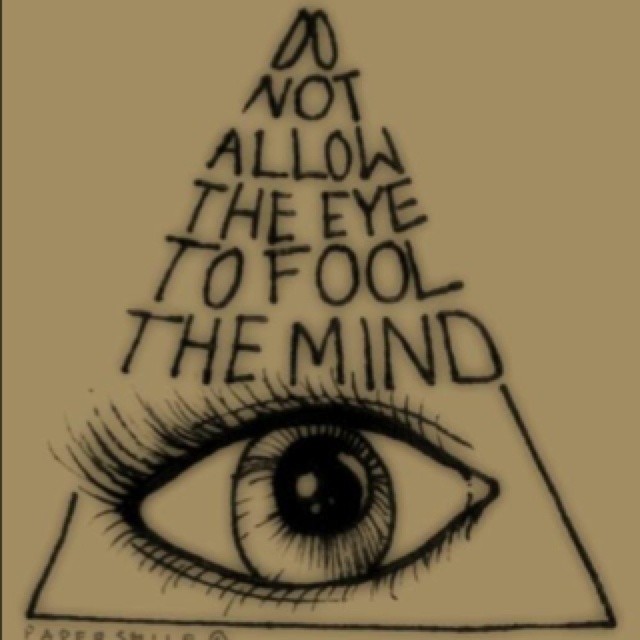
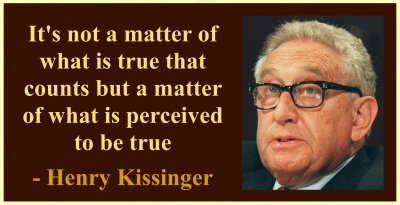
Modern governance—whether expressed through media institutions, financial systems, technological platforms, or regulatory frameworks—depends less on direct coercion than on the management of perception. Control is exercised not only through laws or force, but through the shaping of attention, the framing of events, and the constant stimulation of emotional response.

Fear plays a central role in this arrangement.

A population that is uncertain, anxious, and reactive is easier to guide than one that is stable, reflective, and inwardly anchored. Under conditions of sustained pressure—economic, informational, or social—people become more likely to defer judgment, seek authority, and accept narratives they might otherwise question. In this way, fear does not merely accompany modern systems of power; it sustains them.

Yet this mechanism has limits.

When fear becomes constant, it begins to lose its effect. When every development is presented as urgent, every disagreement as existential, and every event as a crisis, fatigue sets in. People may not fully understand what is happening, but they begin to sense that something is off—that the intensity of the messaging no longer matches their direct experience of reality.

This is where a shift begins.

It does not start with large-scale political change. It begins at the level of perception. Individuals start to withdraw their automatic emotional investment from the stream of narratives presented to them. They still observe events, but with greater distance. They become less willing to be pulled into cycles of alarm and reaction, and begin—however tentatively—to rely more on their own judgment.

This is a quiet development, but a significant one.

Keep reading

Perception Vs. Reality

If you only get your news from the mainstream media, you would be tempted to believe that global conditions are relatively stable right now. 

Yes, there is a war between Russia and Ukraine, but the mainstream media is assuring us that Ukraine is winning that war. 

Other than that, the mainstream media seems to think that everything is just fine.

Of course the truth is that our planet is facing a whole host of extremely challenging problems at the moment.  The UN has warned that we are entering the worst global food crisis since World War II, inflation has started to spiral out of control all over the world, the war in Ukraine is making our supply chain nightmares even worse and an absolutely horrifying bird flu plague is killing millions upon millions of chickens and turkeys.

But if you flip on one of the corporate news channels tonight, they will be focusing on other things.

And you probably won’t even hear them talk about the food riots that have suddenly begun erupting around the world at all.

For example, a “curfew” has just been imposed on the capital of Peru after a series of extremely passionate protests that were sparked by rapidly rising fuel and food prices…

Peruvian President Pedro Castillo announced a curfew for Tuesday in the capital Lima and neighboring port city Callao, after demonstrations across the country over fuel prices caused roadblocks and “acts of violence”.

Protests had erupted across Peru in recent days due to a hike in fuel prices and tolls, during a time of rising food prices.

Is this the first time that you have heard about this?

For many of you it will be, and that is because the mainstream media in the U.S. is largely ignoring this.

In Sri Lanka, severe shortages of “food, medicine and fuel” have caused a full-blown economic collapse and tremendous chaos in the streets…

In Sri Lanka, where an economic crisis is growing, more than 40 lawmakers walked out of the ruling coalition today. That leaves the government of President Gotabaya Rajapaksa in the minority in Parliament. There have been new calls today for both the president and prime minister to step down after the entire Cabinet resigned on Sunday. Shortages of food, medicine and fuel have sparked countrywide protests, and security forces have fired tear gas and water cannons at protesters marching on the president’s home.

Most of you have probably not heard about that either, and that is because our largest news outlets are being really quiet about it.

But USA Today wants to make sure that you know about a new promotion that McDonald’s is running: “McDonald’s brings back Spicy Chicken McNuggets to select restaurants for a limited time”.

More than ever before, our perception of the world around us is shaped by the corporate elite.  Americans get more than 90 percent of the “television news” that they consume from just five giant media corporations, and so that gives those corporations an incredible amount of influence over how our society views reality.

For example, far more Americans are talking about “the slap” at the Academy Awards than about the fact that North Korea just threatened South Korea with nuclear war

Keep reading