Influenza Vaccines Only 42 Percent Effective in Adults This Year

The influenza vaccines currently being administered in the United States are estimated by the U.S. Centers for Disease Control and Prevention (CDC) to be 42 percent effective in adults. This is an interim estimate for the 2023-2024 “flu season” published in the agency’s Morbidity and Mortality Weekly Report (MMWR) on Feb. 29, 2024.1 2 3

By “effective,” the CDC is referring to reducing the risk of influenza-related hospitalizations or “medically attended influenza virus infection, not actually preventing influenza infections—notably influenza A (H1N1) and B (Victoria lineage).1 In its report, the agency stated:

These findings indicate that the 2023–24 seasonal influenza vaccine is effective at reducing the risk of influenza-associated outpatient visits and hospitalization.1

Less Than 25 Percent of Suspected ILI Cases are Influenza

Most influenza-like-illness (ILI) which occurs during the “flu season” is not actually caused by  type A or type B influenza. Studies show that less than 25 percent of suspected ILI cases turn out to be influenza after lab testing. There are many other respiratory infections that look like influenza but are caused by other types of viruses and bacteria.2.4

According to Sascha Ellington, PhD, leader of the CDC’s influenza prevention and control team, the 42 percent influenza vaccine effectiveness rate falls within the “range” that the CDC “typically” sees when the vaccine is a “good match with the [influenza] viruses that are circulating.” This season’s rate thus far lags behind the estimated 54 percent effectiveness rate for the flu shot in 2022-2023, but it is better than the 36 percent rate for 2021-2022.1 2 3 5 6
Keep reading

CDC: Last Year’s Flu Shot Was Less Than 50% Effective For Children And Adolescents

During the 2022–2023 flu season, the influenza vaccine was less than 50 percent effective at preventing emergency department/urgent care visits and hospitalizations among children and adolescents, according to a study funded by the Centers for Disease Control and Prevention (CDC).

The analysis, published Nov. 16, 2023, in Clinical Infectious Diseases, found the seasonal influenza vaccine was only 48 percent effective overall at reducing the risk of influenza-A-associated emergency department (ED) or urgent care (UC) visits, and only 40 percent effective at preventing hospitalizations.

Researchers analyzed acute respiratory illness-associated ED and UC visits or hospitalizations at 55 hospitals and 107 ED or UC sites within the VISION vaccine effectiveness network—a multistate collaboration with the CDC. Children and adolescents 6 months to 17 years were tested for influenza between October 2022 and March 2023.

Researchers estimated influenza A vaccine effectiveness using a test-negative design—a popular method for determining vaccine efficacy that uses the same clinical case definition for both cases and controls and distinguishes which patients are in each group with subsequent laboratory testing. In other words, the effectiveness of the influenza vaccine was estimated by comparing influenza vaccination status in patients testing positive for influenza with those testing negative for influenza.

According to the study, 13,547 of 44,787 qualified ED/UC visits and 263 of 1,862 hospitalizations were positive for influenza A. Among ED/UC patients, 15.2 percent of influenza-positive cases and 27.1 percent of influenza-negative cases were vaccinated.

The vaccine was 44 to 52 percent effective—or 48 percent effective “overall,” 47 to 58 percent effective among children aged 6 months to 4 years, and 30 to 45 percent effective among those aged 9 to 17 years old.

Keep reading

FDA Warns White House Recommendation to Get COVID-19 Booster and Flu Shot At the Same Time May Increase Risk of a Stroke

After three years of the pandemic, looks like the “conspiracy theorists” and “anti-vaxxers” were right again.

Last week, a small official study reveals that receiving both the flu shot and Pfizer’s Covid bivalent booster at the same time may increase the risk of stroke.

On December 2022, FDA admitted that Pfizer’s COVID-19 vaccine had been linked to blood clotting in older individuals based on the results of one of the largest studies of elderly persons aged 65 years and above.

On January 2023, CDC and FDA announced that it is going to investigate the link between Pfizer’s mRNA COVID-19 booster and ischemic strokes in people aged 65 and older.

Keep reading

Massive Peer-Reviewed Mask Study Shows ‘Little To No Difference’ In Preventing COVID, Flu Infection

A massive international research collaboration that analyzed several dozen rigorous studies focusing on “physical interventions” against COVID-19 and influenza found that they provide little to no protection against infection or illness rates.

The study, published in the peer-reviewed Cochrane Database of Systematic Reviews, is the strongest science to date refuting the basis for mask mandates worldwide.

And of course, the CDC still recommends masking in areas with “high” rates of transmission (fewer than 4% of US counties, as Just the News notes), along with indoor masking in areas with “medium” rates of transmission (27%).

Masks are still required in educational institutions in Democratic strongholds such as New York, New Jersey, Massachusetts, Pennsylvania, Washington and California, according to the Daily Mail. Boston Public Schools denied its “temporary masking protocol” in early January was a “mandate,” following a public letter against the policy by student Enrique Abud Evereteze.

South Korea is still requiring masks on public transport and in medical facilities after dropping COVID mandates in most indoor settings, including gyms, Monday, Reuters reported. -Just the News

According to the Cochrane study, which included the work of researchers at institutions in the  U.K., Canada, Australia, Italy and Saudi Arabia, a total of 78 studies were analyzed. Most recent additions to the meta-analysis were 11 new randomized controlled trials.

As unlisted study author Carl Heneghan – who directs the Centre for Evidence-Based Medicine at the University of Oxford noted on Twitter: “Wearing masks in the community probably makes little or no difference to the outcome of influenza‐like illness (ILI)/COVID‐19 like illness compared to not wearing masks.”

Keep reading

Could Omicron be even LESS deadly than seasonal flu? Scientists believe ultra-infectious strain may kill 100 TIMES fewer people than Delta (and mortality rates were ALREADY similar to influenza before the variant emerged)

Omicron could be even less deadly than flu, scientists believe in a boost to hopes that the worst of the pandemic is over.

Some experts have always maintained that the coronavirus would eventually morph into a seasonal cold-like virus as the world develops immunity through vaccines and natural infection. But the emergence of the highly-mutated Omicron variant appears to have sped the process up.

MailOnline analysis shows Covid killed one in 33 people who tested positive at the peak of the devastating second wave last January, compared to just one in 670 now. But experts believe the figure could be even lower because of Omicron. 

The case fatality rate — the proportion of confirmed infections that end in death — for seasonal influenza is 0.1, the equivalent of one in 1,000. 

Meanwhile, researchers at Washington University modelling the next stage of the pandemic expect Omicron to kill up to 99 per cent fewer people than Delta, in another hint it could be less deadly than flu. 

No accurate infection-fatality rate (IFR), which is always just a fraction of the CFR because it reflects deaths among everyone who catches the virus, has yet been published for Delta. 

But UK Government advisers estimated the overall figure stood at around 0.25 per cent before Omicron burst onto the scene, down from highs of around 1.5 per cent before the advent of life-saving vaccines. 

If Omicron is 99 per cent less lethal than Delta, it suggests the current IFR could be as low as 0.0025 per cent, the equivalent of one in 40,000, although experts say this is unlikely. Instead, the Washington modelling estimates the figure actually sits in the region of 0.07 per cent, meaning approximately one in 1,430 people who get infected will succumb to the illness.  

Keep reading

The U.S. Has Been Through A Vaccine Rollout Like This Before – Here’s What Went Wrong

“This government-led campaign was widely viewed as a debacle and put an irreparable dent in future public health initiative, as well as negatively influenced the public’s perception of both the flu and the flu shot in this country.” – Rebecca Kreston, writing for Discover Magazine

After a soldier named David Lewis died from a newly emerged form of influenza, then-US Secretary of Health F. David Mathis announced that this virus indicated “a return of the 1918 flu virus that is the most virulent form of flu,” and in extension the most deadly pandemic since the start of the 20th century.

The CDC decided that in order to prevent another pandemic, 80% of Americans would have to be vaccinated immediately. Ultimately, 46 million Americans received the vaccine for a virus which never actually emerged.

Resulting from what Rebecca Kreston believes to be then-President Ford’s “increasingly politically motivated” election campaign was that over 450 mostly elderly folks came down with a rare neurological disorder called Guillain-Barre syndrome, an illness that causes full-body paralysis and of which there is no cure.

Keep reading

Fauci: “Possible” Mask Mandates Could Last Indefinitely to Fight Flu

Anthony Fauci told NBC’s Chuck Todd that it’s “possible” mask mandates could continue indefinitely in order to reduce seasonal flu infections.

During his appearance on Meet The Press, Fauci was asked when Americans could take the masks off given that the CDC is now advising vaccinated Americans that they can remove the face coverings when outside.

“At what point, if vaccinated people get together, do you take the mask off? Are masks going to be something we have with us in a seasonal aspect?” Todd asked Fauci.

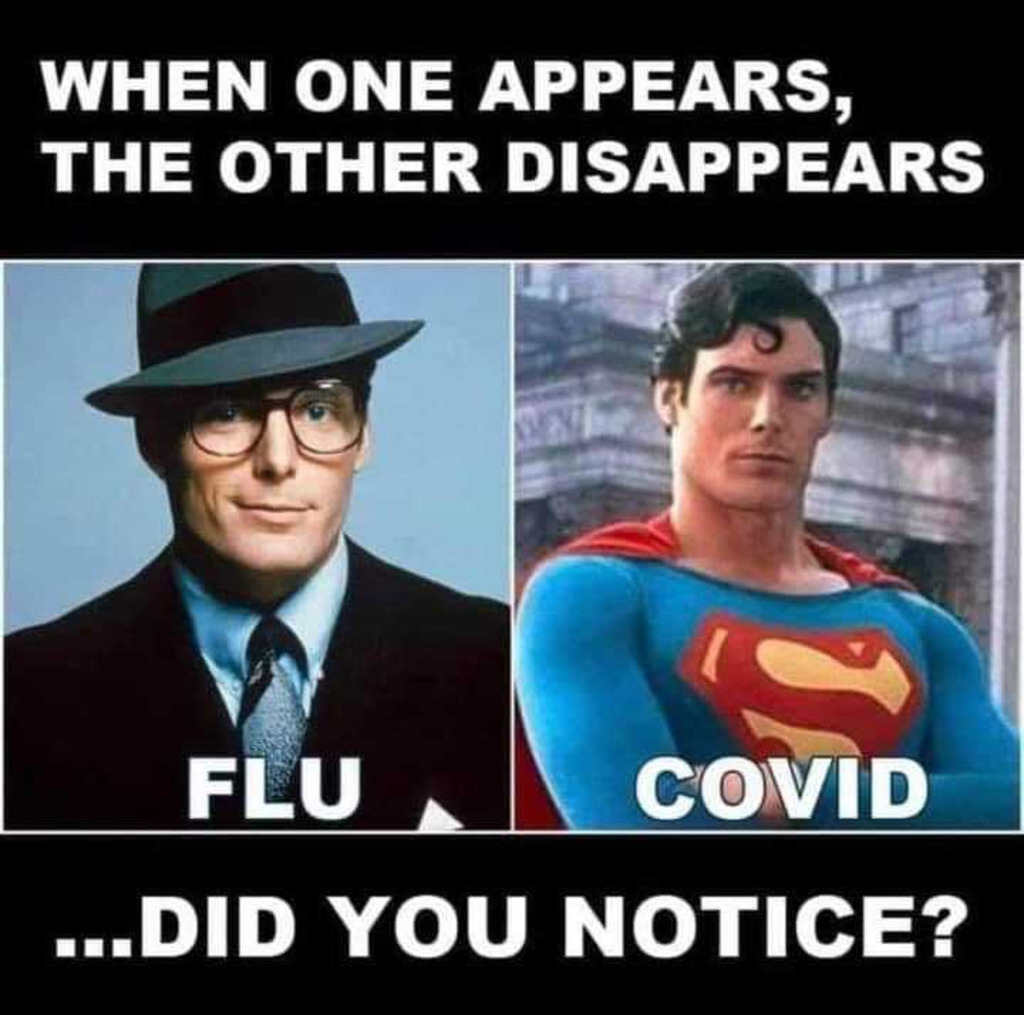
“You know, that’s quite possible, I think people have gotten used to the fact that wearing masks, clearly if you look at the data, diminished respiratory diseases. We’ve had practically a nonexistent flu season this year, merely because people were doing the kinds of public health things that were directed predominantly against COVID-19,” responded Fauci.

Keep reading