
In March, the Hayride reported on the results of another mask study posted on June 10, 2020, at the CDC website. This study confirms our reporting from yesterday that masks aren’t just a nuisance but can cause serious health problems. The article recently uncovered was published by the CDC and it states in black and white the side-effects of wearing a mask, specifically related to the masks trapping carbon dioxide or CO2. The article states the masks cause breathing resistance that could result in a reduction in the frequency and depth of breathing, known as hypoventilation, in as little as an hour of wearing a mask.
Tag: face masks
Which will you choose?

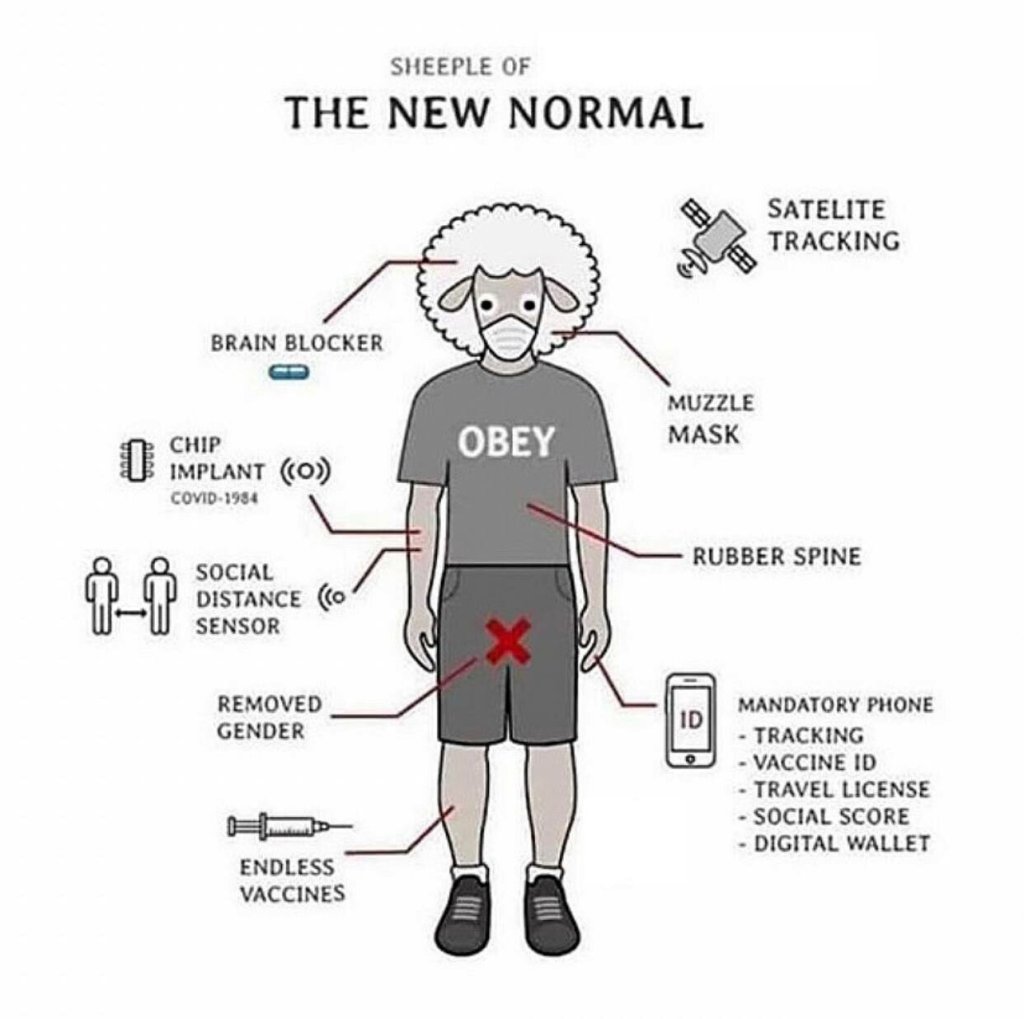
Baa baa baa…
Waterboarded…

The evidence shows that cloth and those blue paper masks don’t work
I decided to look up masking studies online yet again, to see if anyone had actually gathered the information that used to be scattered here and there from this and that study, and then analyzed it scientifically. Do masks do anything positive enough to make us wear them? That is the question at hand, after all. I already know on a personal, empirical level that they have negative effects on respiratory and mental health. My search yielded this, from last July:
The foregoing data show that masks serve more as instruments of obstruction of normal breathing, rather than as effective barriers to pathogens. Therefore, masks should not be used by the general public, either by adults or children, and their limitations as prophylaxis against pathogens should also be considered in medical settings.
That was confirmed in a Stanford study published in November at the National Institutes of Health — although the leftists have tried hard to hide it. They like us afraid and isolated.
It’s About Time for Us to Stop Wearing Masks Outside
One of the last times I stepped outside my Brooklyn apartment without a mask on was in early spring 2020, just before the state issued a mask mandate. I remember because as my dog peed on a tree, a neighbor asked me pointedly where my mask was. Where I live, almost everyone wears a mask when they go outside. If a person sipping from an iced coffee with their mask pulled down approaches someone else on the sidewalk coming the other way, they will usually yank the mask back up, as if they’ve been caught partially dressed. The other day I noticed a woman sitting on a hill in the middle of a field with her face covered. There was no one near her.
For a while now, this has felt a little unnecessary, if understandable, given that we were still learning things about the virus and were trying to be as careful as possible. But now, as we’ve come to know more about the virus, as vaccinations are ramping up, and as we’re trying to figure out how to live with some level of COVID in a sustainable way, masking up outside when you’re at most briefly crossing paths with people is starting to feel barely understandable. Look: I believe masks (and even shaming) are indispensable in controlling the spread of the coronavirus. Despite early waffling, public health experts are virtually unanimously in support of them and have remained so even as our early dedication to scrubbing surfaces and Cloroxing veggies wound down.
In other words, as the pandemic has progressed, so has our understanding of what safety measures are truly most useful, and which aren’t worth the alcohol wipes. And I would like to calmly suggest that now is the time we should consider no longer wearing masks when we walk around outside.
Oregon seeks to keep COVID mask mandate ‘indefinitely’
While some states are reopening businesses or dropping mask mandates altogether, Oregon is bucking the trend — floating an idea to require masks and social distancing indefinitely.
One of the state’s top health officials wants to require masks and social distancing in all businesses indefinitely.
“We are not out of the woods yet,” said Michael Wood, administrator for the Oregon department of Occupational Safety and Health department.
But not everyone is happy about the possible extension of the mask rules, which under state law expire on May 4. The agency has gotten a record number of public comments and nearly 60,000 people have signed a petition rejecting the proposal.
Facemasks in the COVID-19 era: A health hypothesis
The existing scientific evidences challenge the safety and efficacy of wearing facemask as preventive intervention for COVID-19. The data suggest that both medical and non-medical facemasks are ineffective to block human-to-human transmission of viral and infectious disease such SARS-CoV-2 and COVID-19, supporting against the usage of facemasks. Wearing facemasks has been demonstrated to have substantial adverse physiological and psychological effects. These include hypoxia, hypercapnia, shortness of breath, increased acidity and toxicity, activation of fear and stress response, rise in stress hormones, immunosuppression, fatigue, headaches, decline in cognitive performance, predisposition for viral and infectious illnesses, chronic stress, anxiety and depression. Long-term consequences of wearing facemask can cause health deterioration, developing and progression of chronic diseases and premature death. Governments, policy makers and health organizations should utilize prosper and scientific evidence-based approach with respect to wearing facemasks, when the latter is considered as preventive intervention for public health.
Michigan Gov. Gretchen Whitmer Expands Mask Mandate to 2-Year-Olds
Michigan Gov. Gretchen Whitmer (D) doubled down on her restrictive coronavirus strategy by requiring young children to wear masks.
Michigan Capitol Confidential reported the Michigan Department of Health and Human Services (MDHHS), headed by Elizabeth Hertel, who just returned from an Alabama beach vacation, issued the order.
Children under the age of 5 had previously been exempt. But now, kids at camps and child care must be covered.
“A good faith effort is made to ensure that children aged 2 to 4 years wear a mask when participating in gatherings,” the order said.
The mandate noted at this point, children under 2 are exempt. It expires May 25.
The order came days after Hertel arrived back from a spring break vacation to Gulf Shores, Alabama and another top Whitmer aide, Tricia Foster, was found to have vacationed in Siesta Key, Florida.
Critics questioned whether there were different rules for top officials. Whitmer responded, “What directors do on their personal time is their business, so long as they are safe.”
On Thursday, the governor appeared on MSNBC and blamed the Republican-controlled legislature and even former President Donald Trump himself for the situation.
Facemasks in the COVID-19 era: A health hypothesis
The existing scientific evidences challenge the safety and efficacy of wearing facemask as preventive intervention for COVID-19. The data suggest that both medical and non-medical facemasks are ineffective to block human-to-human transmission of viral and infectious disease such SARS-CoV-2 and COVID-19, supporting against the usage of facemasks. Wearing facemasks has been demonstrated to have substantial adverse physiological and psychological effects. These include hypoxia, hypercapnia, shortness of breath, increased acidity and toxicity, activation of fear and stress response, rise in stress hormones, immunosuppression, fatigue, headaches, decline in cognitive performance, predisposition for viral and infectious illnesses, chronic stress, anxiety and depression. Long-term consequences of wearing facemask can cause health deterioration, developing and progression of chronic diseases and premature death. Governments, policy makers and health organizations should utilize prosper and scientific evidence-based approach with respect to wearing facemasks, when the latter is considered as preventive intervention for public health.
 Hellbound and Down
You must be logged in to post a comment.