The Deep State Is What Disables Democracy

The idea of democracy as it emerged gradually out of the Enlightenment, and drawing on ancient forms in Greece and Rome, is that the people govern themselves. People serve as the main determinants of the rules, laws, and legislation under which they live. They even set the rules concerning what people are allowed to do to themselves and each other using government: such is the point of a constitution.

In a representative democracy, we elect leaders who represent our interests in the halls of government. Crucially, the main point is not the election or even the right of masses of people to vote. Those are means to an end. The end is self-government, government by and for the people, which came to be seen in republican theory as a crucial feature of freedom itself.

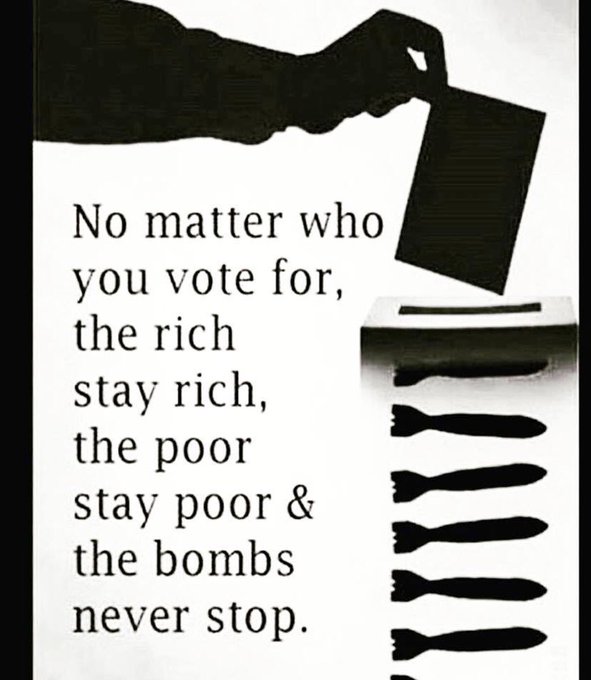
Many totalitarian societies have figured out over time how to appear to be democratic without actually being so. When I was growing up, we used to laugh about how the Soviet people had a vote. What possibly could that mean or why would it matter in the slightest if the vote only ends up changing the face and name of the marionette on the balcony reading prepared propaganda?

We as Americans sneered at such a fake democracy. It exists in name only over there, whereas here we have the real thing!

Or so we thought. Every American must absolutely learn the lesson of these last 31 months.

They locked us in their homes, closed our churches and schools and businesses, restricted travel, segregated whole cities based on whether a person had taken a medicine like some kind of dystopian movement, wrecked the entire economy, and separated families by force.

Not one person in this entire country voted for a single one of these things to happen. It was never on the ballot. And for the most part, the elected leaders in this country were not the main actors in this. They gave approval to be sure but mainly because most of them are deeply ignorant, easily led, and deeply scared.

The main actors were people who were never elected. They were appointed bureaucrats. Most of them cannot be fired. They have permanent jobs with high income and benefits. They have vast power, more power it seems than the politicians and certainly more power than you. Indeed they have awesome power over you. And over everything, to the point that they can say whether you can go to church or not or whether your children can play with friends.

Not even the courts can act fast enough to control them and stop them from exercising total power over our lives.

Keep reading

Ohio Voters to Decide If Non-US Citizens Can Vote in Local Elections

Ohio voters are heading to the polls to decide if non-U.S. citizens can vote in state or local elections.

If passed, Issue 2 would change the Ohio Constitution. It proposes that only adult U.S. citizens who legally reside and are registered to vote in Ohio for at least 30 days can cast a ballot in future state and local elections.

The current Ohio Constitution states that “every citizen of the United States, of the age of eighteen years and has been registered to vote for thirty days is entitled to vote at all elections.”

The state constitution does not say that noncitizens cannot vote.

Federal law prohibits noncitizens from casting ballots in federal elections.

A 1917 ruling by the Ohio Supreme Court determined that the state constitution’s home rule, which gives cities control over their local issues, provided municipalities permission to expand voting rights in city elections.

Issue 2 would ensure that a city’s home rule does not circumvent the law that only adult U.S. citizens can cast ballots.

Supporters of Issue 2 believe the amendment will uphold the integrity of citizenship if it becomes law, while opponents claim it is an effort to “restrict voting access.”

At the forefront of Issue 2 is the village of Yellow Springs, which is located east of Dayton in southwest Ohio.

In 2019, village officials passed a referendum allowing residents who were not U.S. citizens to vote in local elections. Ohio Secretary of State Frank LaRose ordered the Greene County Board of Elections not to accept voter registration forms from noncitizens.

The referendum violated the U.S. and Ohio Constitutions, LaRose said. In a press release, he added, “Just when you thought 2020 couldn’t get any weirder, the village of Yellow Springs forces me, as Ohio’s chief elections officer, to restate the obvious – only U.S. citizens may vote.”

Keep reading

Colorado Officials Accidentally Sent Out 30,000 Voter Registration Postcards to Noncitizens

Colorado officials claim they accidentally sent approximately 30,000 postcards last month to noncitizens instructing them how they could register to vote.

First reported by Colorado Public Radio News, Democratic Secretary of State Jena Griswold’s office said department employees had sent the postcards on Sept. 27 after comparing a list of 102,000 names provided by the Electronic Registration Information Center, a nonprofit organization aiming to improve U.S. voter rolls and advocating residents to vote.

“The Department has become aware that approximately 30,000 EBU [Eligible But Unregistered] postcard mailers were incorrectly sent to ineligible Coloradans,” a spokesperson for the Colorado Secretary of State’s Office told local media. “The office is undertaking an internal review of the incident and will take any corrective action that is warranted.”

Griswold insisted noncitizens would not be allowed to register to vote.

The postcards, which the office printed in English and Spanish, read, “A message from Colorado Secretary of State Jena Griswold . . . Our records indicate that you or your household may be eligible to vote, but do not appear to be registered at your current address.”

Keep reading

When a ‘conspiracy theory’ turns out to be…not a theory

WHEN A ‘CONSPIRACY THEORY’ TURNS OUT TO BE…NOT A THEORY. On Monday, the New York Times published a story about Konnech, a small election software company that has just 27 employees, 21 based in Michigan and six in Australia. The paper reported that Konnech has been the target of “election deniers” who have made it the focus of “a new conspiracy theory about the 2020 presidential election.”

“Using threadbare evidence, or none at all,” the New York Times’s Stuart A. Thompson reported, the “election deniers” said Konnech “had secret ties to the Chinese Communist Party and had given the Chinese government backdoor access to personal data about two million poll workers in the United States.”

In the last two years, the New York Times added, “conspiracy theorists have subjected election officials and private companies that play a major role in elections to a barrage of outlandish voter fraud claims.” But now, “the attacks on Konnech demonstrate how far-right election deniers are also giving more attention to new and more secondary companies and groups.”

Subscribe today to the Washington Examiner magazine that will keep you up to date with what’s going on in Washington. SUBSCRIBE NOW: Just $1.00 an issue!

Konnech officials assured the New York Times that “none of the accusations were true.” Thompson reported that employees “feared for their safety” from right-wing violence and that “Konnech’s founder and chief executive, Eugene Yu, an American citizen who immigrated from China in 1986, went into hiding with his family after receiving threatening messages.”

Any reasonable reader would come away with the conclusion that Konnech, an innocent company that makes products to deal with “basic election logistics, such as scheduling poll workers,” has been the target of crazy, and possibly dangerous, conspiracy theories. To press the point, the New York Times used the phrase “conspiracy theory” or “conspiracy theorists” nine times in the article, once in the headline — “How a Tiny Elections Company Became a Conspiracy Theory Target” — seven times in the body of the story, and once in a photo caption. Got it?

Fast forward one day. Twenty-four hours. The New York Times published another story about Konnech, this one headlined, “Election Software Executive Arrested on Suspicion of Theft.” Thompson reported that Yu had been “arrested by Los Angeles County officials in connection with an investigation into the possible theft of personal information about poll workers.”

From the New York Times: “The company has been accused by groups challenging the validity of the 2020 presidential election with storing information about poll workers on servers in China. The company has repeatedly denied keeping data outside the United States, including in recent statements to The New York Times.” And then: The Los Angeles County District Attorney’s Office “said its investigators had found data stored in China.” And this is from the New York Times on the core of the matter:

Konnech came under scrutiny this year by several election deniers, including a founder of True the Vote, a nonprofit that says it is devoted to uncovering election fraud. True the Vote said its team had downloaded personal information on 1.8 million American poll workers from a server owned by Konnech and hosted in China. It said it obtained the data by using the server’s default password, which it said was ‘password.’ … The group provided no evidence that it had downloaded the data, saying that it had given the information to the Federal Bureau of Investigation.

Keep reading