$67 In France And $798 In US – Why Prescription Drug Prices Are So High In America

Prescription drugs cost more in the United States than anywhere else in the world. President Donald Trump and some bipartisan senators want to change that.

Trump has so far issued several actions related to prescription drug prices. The latest, announced May 12, is a Most Favored Nation Prescription Drug policy, requiring pharmaceutical companies to offer their lowest price to U.S. customers.

An earlier order aimed to ensure that the middlemen in the drug supply chain can’t hold on to rebates provided by pharmaceutical companies and instead must pass savings on to Medicare beneficiaries.

In all, the president has taken at least a dozen actions to reduce prescription drug costs, while no less than nine Senate bills aim for the same results.

Some of these ideas have been introduced before.

Trump’s Most Favored Nation pricing plan was introduced near the end of his first term.

The plan was stalled by court challenges, and President Joe Biden dropped it shortly after taking office.

A plan to make vendors pass manufacturer discounts on to Medicare beneficiaries was proposed in 2020. Biden rescinded it before it took effect.

There have been modest successes, including a pilot program begun by Trump in 2020 to cap insulin costs for Medicare Part B beneficiaries at $35 per month. At the time, a single vial of insulin cost about $100 in the United States.

That program was a success, and the idea was later broadened to include all Medicare beneficiaries through the Inflation Reduction Act of 2022. By 2024, most major drug companies had voluntarily limited out-of-pocket expenses for insulin for all U.S. customers to $35.

Yet Americans still pay nearly three times as much for prescription medication as any peer nation, often even more.

Trulicity, a medication for Type 2 diabetics, was listed for $67 in France, according to a 2021 Government Accountability Report. In the United States, it cost $798.

Meanwhile, Remlivid, an oral cancer medication, was listed for $4,723 in Australia. In the United States, it was listed at almost five times that price: $22,048.

Keep reading

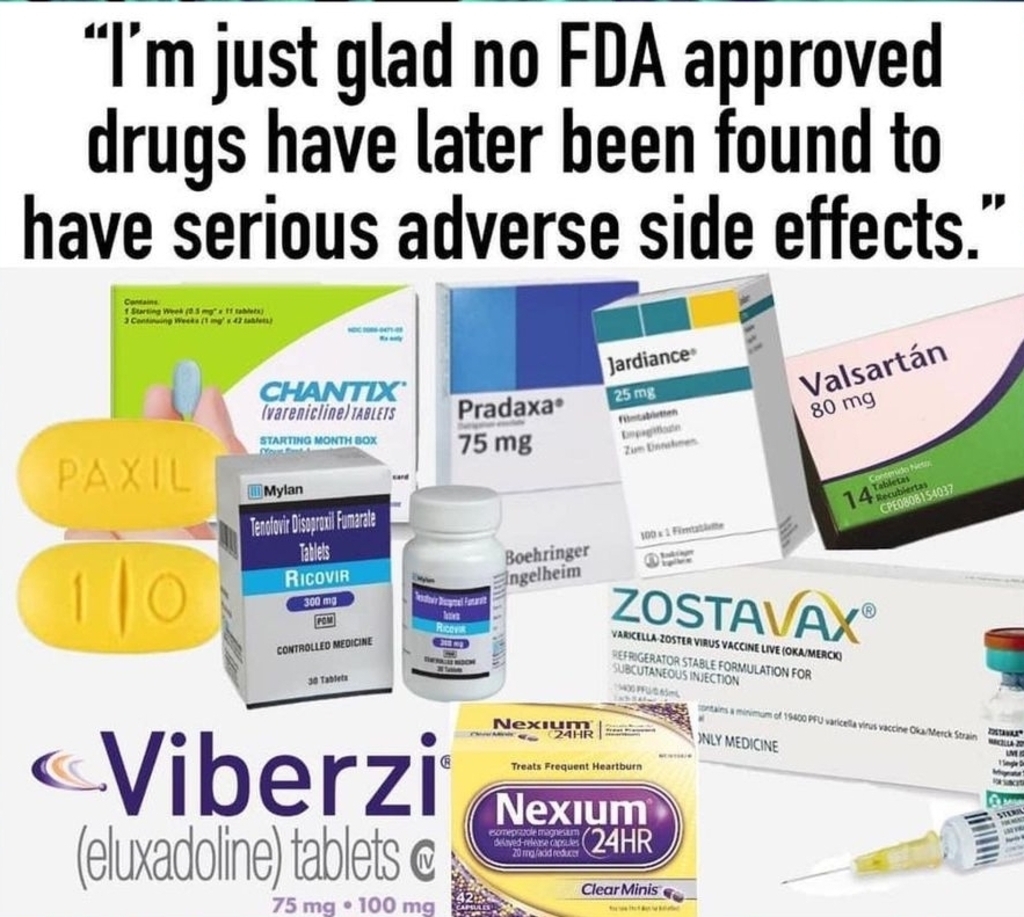
One-Third Of New Drugs Had Safety Problems After FDA Approval

Seventy-one of the 222 drugs approved in the first decade of the millennium were withdrawn, required a “black box” warning on side effects or warranted a safety announcement about new risks, Dr. Joseph Ross, an associate professor of medicine at Yale School of Medicine, and colleagues reported in JAMA on Tuesday. The study included safety actions through Feb. 28.

“While the administration pushes for less regulation and faster approvals, those decisions have consequences,” Ross says. The Yale researchers’ previous studies concluded that the FDA approves drugs faster than its counterpart agency in Europe does and that the majority of pivotal trials in drug approvals involved fewer than 1,000 patients and lasted six months or less.

It took a median of 4.2 years after the drugs were approved for these safety concerns to come to light, the study found, and issues were more common among psychiatric drugs, biologic drugs, drugs that were granted “accelerated approval” and drugs that were approved near the regulatory deadline for approval.

Keep reading

Rep. Cori Bush Introduces Bill to Decriminalize Possession of All Drugs

Apair of House Democrats introduced legislation on Tuesday that would decriminalize possession of all drugs at the federal level for personal use and begin the process of prioritizing a public health approach to drug use over punishment and policing. These are the necessary first steps, advocates say, for ending the war on drugs 50 years after it was first declared by President Richard Nixon.

Representatives Cori Bush (D-Missouri) and Bonnie Watson Coleman (D-New Jersey) introduced the Drug Policy Reform Act, which would eliminate federal criminal penalties for possession of any drug for personal use, including marijuana, cocaine, opioids, various psychedelics and other drugs banned under the Controlled Substances Act. The bill aims to begin repairing some of the damage to communities and the lives of individuals caused by the drug war, which has contributed heavily to mass incarceration and other forms of state violence that have fallen hardest on low-income communities and people of color.

“The economic stability of our carceral state depends on this misguided and racist policy, and we are here to say, no more, it’s time that we end this destruction,” Bush told reporters on Tuesday, adding that, as a nurse in St. Louis, she saw how criminalization and stigma harms people who use drugs. “Imagine what we could do if we built systems of care that treated and supported people…that is the world we should build.”

Keep reading