Pentagon creates UFO task force to see if aerial objects pose threat

The concern is out there.

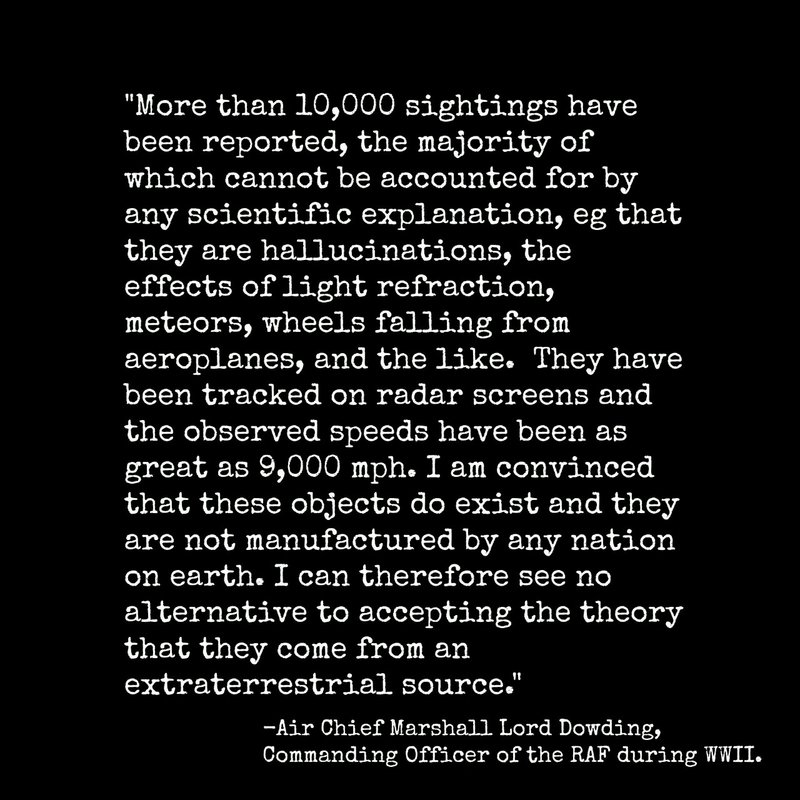
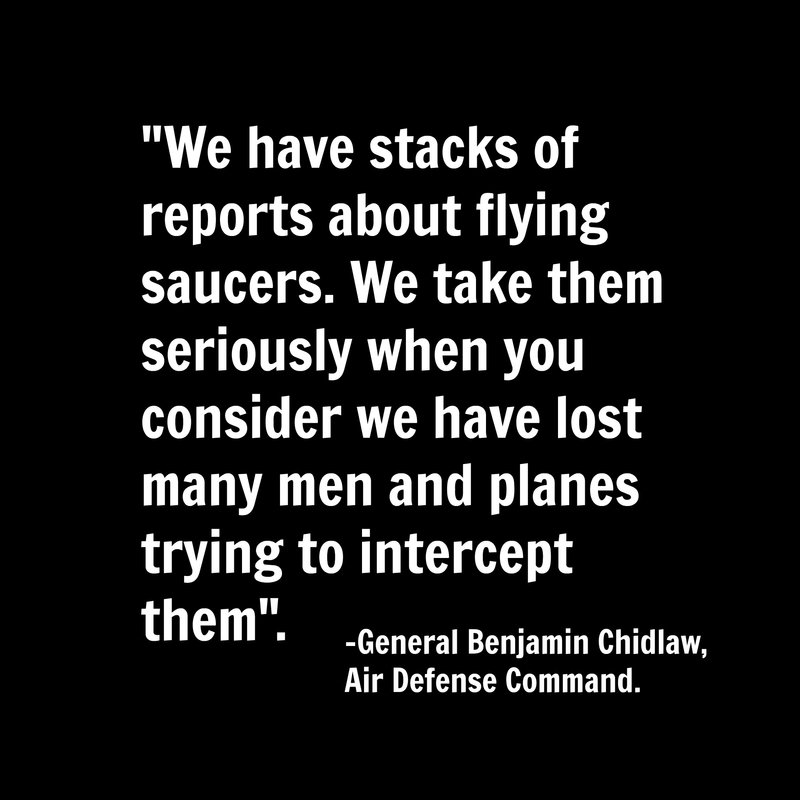
Pentagon officials on Friday confirmed the existence of a Navy-led “Unidentified Aerial Phenomena Task Force” that will monitor ongoing encounters with strange aerial objects and determine whether these phenomena should be perceived as a threat.

Approved on Aug. 4 by Deputy Secretary of Defense David L. Norquist, the task force was officially launched “to improve its understanding of, and gain insight into, the nature and origins of UAPs,” according to a Friday evening news release. “The mission of the task force is to detect, analyze and catalog UAPs that could potentially pose a threat to U.S. national security.”

Keep reading

WikiLeaks reveals failed plan to make the U.N. investigate UFOs

A series of leaked U.S. State Department diplomatic cables from 1978 have revealed how the United Nations almost set up a committee to research alien and UFO sightings.

The initiative was forwarded by Prime Minister Sir Eric Gairy, whose administration ran the tiny Caribbean island of Grenada. Gairy had a deep personal interest in extraterrestrials and UFO encounters, proposing to the U.N. that a formal investigatory committee be organised.

One classified cable humorously describes Gairy as “undaunted by a lack of response” to his committee idea, having “laid the groundwork for a blitzkrieg sales pitch which will include a cast of supporters ranging from scientists to astronauts, supplemented by a Hollywood film production.” The cable goes on to request instruction as to what the formal U.S. position would be on this.

The document is one of many in an enormous cable dump published in 2015 by WikiLeaks. Consisting of over half a million official correspondence documents, the leak not only offers a behind-the-scenes look at the important geopolitical events in 1978 but also exposes the U.S. government’s interest in the Grenadian committee resolution.

Keep reading

Michael Vick’s Shocking Account of His Personal Encounter with a UFO

Like most people, Michael Vick has heard about UFOs. He’s watched the videos online of spaceship-like objects flying across the skies above cities in the U.S. and around the world. But Vick doesn’t believe in UFOs based on what he’s heard or what he’s seen online. Vick has a much more compelling reason for his belief in UFOs. That’s because he had his own personal experience. 

In an interview with Fox Sports, Vick said when he was around seven or eight years old, he had a bizarre but very memorable experience with something he had a difficult time understanding at the time.

“I saw something in the sky that I didn’t think was normal. And it was there, it appeared, and then it was gone. I’m like I know I’m only seven years old, but I know what I saw and it had eyes and I could see it,” Vick said. “It was really really weird. I’m not playing. I’m telling the truth. I told this story to a couple of different people.”

Keep reading

It’s time to take UFOs seriously. Seriously.

Earlier this year, the Pentagon released three videos of UFOs recorded by the Navy — one taken in 2004 and the other two in 2015. The videos, which first leaked a couple of years ago, show … well, it’s not exactly clear.

There are various objects — two of which look like aircraft — spinning through the sky and moving in ways that defy easy explanation. As the images bop across the screen, you can hear the pilots’ excitement and confusion in real time as they track whatever it is they’re seeing.

I’m not what you would call a UFO enthusiast, but the videos are the most compelling I’ve ever seen. They seem to confirm, at the very least, that UFOs are real — not that aliens exist, but that there are unidentified objects buzzing around the sky.

Now, do I think aliens are real? Yeah, probably. Are they flying spaceships into our atmosphere? Who the hell knows?

The best anyone can say is that there’s a non-zero chance that some of these UFOs were made by non-human hands, and that, I’d argue, is reason enough to talk about them. But it’s barely cracked the news cycle. Even in a pandemic, you’d think we’d have a little time for UFO talk.

So in an attempt to force a UFO conversation into the public discourse, I contacted Alexander Wendt, a professor of international relations at Ohio State University. Wendt is a giant in his field of IR theory, but in the past 15 years or so, he’s become an amateur ufologist. He wrote an academic article about the political implications of UFOs in 2008, and, more recently, he gave a TEDx talk calling out the “taboo” against studying UFOs.

Keep reading