
“We the people are the rightful masters of both Congress and the courts, not to overthrow the Constitution but to overthrow the men who pervert the Constitution.” — Abraham Lincoln
It’s easy to become discouraged about the state of our nation.
We’re drowning under the weight of too much debt, too many wars, too much power in the hands of a centralized government, too many militarized police, too many laws, too many lobbyists, and generally too much bad news.
It’s harder to believe that change is possible, that the system can be reformed, that politicians can be principled, that courts can be just, that good can overcome evil, and that freedom will prevail.
So where does that leave us?
Benjamin Franklin provided the answer. As the delegates to the Constitutional Convention trudged out of Independence Hall on September 17, 1787, an anxious woman in the crowd waiting at the entrance inquired of Franklin, “Well, Doctor, what have we got, a republic or a monarchy?” “A republic,” Franklin replied, “if you can keep it.”
What Franklin meant, of course, is that when all is said and done, we get the government we deserve.
Those who gave us the Constitution and the Bill of Rights believed that the government exists at the behest of its citizens. It is there to protect, defend and even enhance our freedoms, not violate them.
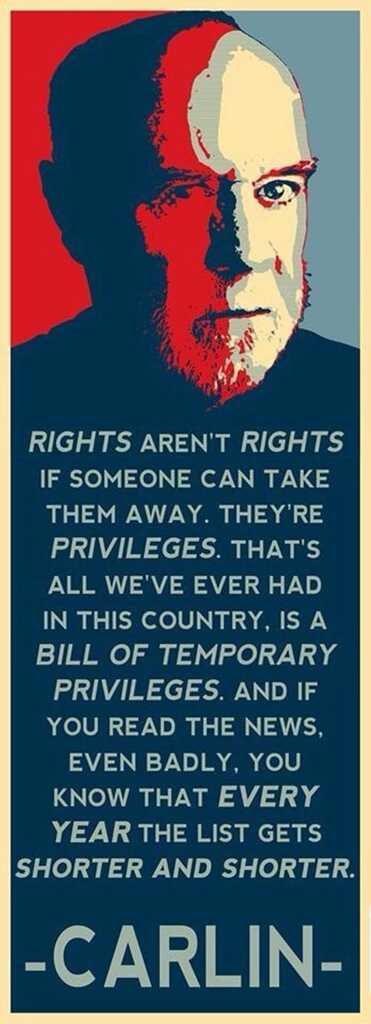
Unfortunately, although the Bill of Rights was adopted as a means of protecting the people against government tyranny, in America today, the government does whatever it wants, freedom be damned.
“We the people” have been terrorized, traumatized, and tricked into a semi-permanent state of compliance by a government that cares nothing for our lives or our liberties.
The bogeyman’s names and faces have changed over time (terrorism, the war on drugs, illegal immigration, a viral pandemic, and more to come), but the end result remains the same: in the so-called name of national security, the Constitution has been steadily chipped away at, undermined, eroded, whittled down, and generally discarded with the support of Congress, the White House, and the courts.
A recitation of the Bill of Rights—set against a backdrop of government surveillance, militarized police, SWAT team raids, asset forfeiture, eminent domain, overcriminalization, armed surveillance drones, whole body scanners, stop and frisk searches, vaccine mandates, lockdowns, and the like (all sanctioned by Congress, the White House, and the courts)—would understandably sound more like a eulogy to freedoms lost than an affirmation of rights we truly possess.
What we are left with today is but a shadow of the robust document adopted more than two centuries ago. Sadly, most of the damage has been inflicted upon the Bill of Rights.
Here is what it means to live under the Constitution, twenty-plus years after 9/11 and with the nation just emerging from two years of COVID-19 lockdowns and mandates.





 Hellbound and Down
You must be logged in to post a comment.