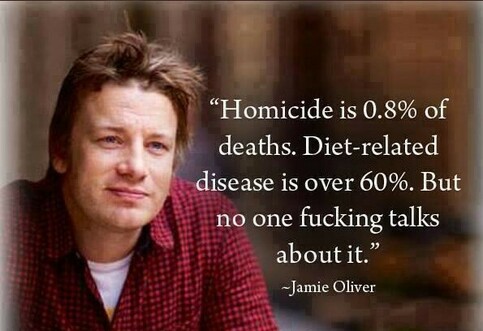
If it bleeds, it leads…

Bob Saget’s death in January was a very tragic thing, especially for someone who was still relatively young, was beloved by so many people, and who had contributed so much to the entertainment industry.
But now, there are folks raising questions about the serious head trauma he suffered.
His death was attributed to head trauma in an autopsy report released on Thursday, and it was assessed to be an accident, i.e. maybe he fell and then went to sleep, and then died.
Now, the description of the head trauma is much more extensive than initially suggested, according to the NY Times. He had multiple fractures in multiple areas on his head, both the front and the back.
Some neurosurgeons said that it would be unusual for a typical fall to cause Mr. Saget’s set of fractures — to the back, the right side, and the front of his skull. Those doctors said that the injuries appeared more reminiscent of ones suffered by people who fall from a considerable height or get thrown from their seat in a car crash.
The autopsy, though, found no injuries to other parts of Mr. Saget’s body, as would be expected in a lengthier fall. The medical examiner ruled that the death was accidental. The local sheriff’s office had previously said there were no signs of foul play.
“This is significant trauma,” said Dr. Gavin Britz, the chair in neurosurgery at Houston Methodist. “This is something I find with someone with a baseball bat to the head, or who has fallen from 20 or 30 feet.”
Dr. Britz noted that the autopsy described fractures to particularly thick parts of the skull, as well as to bones in the roof of the eye socket. “If you fracture your orbit,” he said, referring to those eye bones, “you have significant pain.”
While I don’t often have a lot of respect for Dr. Sanjay Gupta, he is a neurosurgeon and his description here of the injuries is accurate.
In yet another absolute bombshell revelation the government of Alberta, Canada exposed itself this week when it accidentally published damning evidence that exposes how the public health authorities have been manipulating the Covid-19 statistics.
After seemingly realizing what it had just done, the corrupt Canadian province quickly scrambled to delete the incriminating data off their website, but, thanks to internet sleuths like Twitter user Metatron – and his substack post, we have the receipts.
According to its latest Covid-19 update, the Alberta Government admitted to following the fraudulent standard that was in use by vaccine manufacturers during clinical trials – which is to ignore the adverse outcomes, including Covid infection, hospitalizations, and deaths, for fourteen days after vaccine administration – no matter how many doses they have had.
But instead of just ignoring the cases like the vaccine manufacturers, the corrupt Alberta government has been lumping them in with the unvaxxed.
In other words, anyone who was infected – was hospitalized – or even died, in the two weeks following their first, second, or even THIRD dose would be recorded as an unvaccinated case.
And now, thanks to the now-deleted data, we can tell exactly how many cases have been fraudulently manipulated by inadvertently including the time from dose to infection for each of the events – and as it turns out, over half of the vaccinated deaths were added to the unvaccinated.
Death is in the air. Unless you have been living in a cave for the past 12 months, you already know that this is true. Old people are dying, young people are dying, famous people are dying, and countless hard working Americans that make up the backbone of our economy are dying. For months, I have been writing articles about “the mystery of the missing workers”. For the very first time in U.S. history, we have a severe shortage of able-bodied workers, and this is one of the biggest reasons why we are facing an unprecedented supply chain crisis today. Millions of Americans that were working prior to the pandemic seem to have “disappeared” from the system, and now it has become clear that a lot of them have simply died.
Before I discuss the new life insurance numbers that have been revealed, I want to do a quick review.
Earlier this month, I wrote an article about a large life insurance company in Indiana that announced that the death rate for working age people covered by their policies was up 40 percent from pre-pandemic levels…
The head of Indianapolis-based insurance company OneAmerica said the death rate is up a stunning 40% from pre-pandemic levels among working-age people.
“We are seeing, right now, the highest death rates we have seen in the history of this business – not just at OneAmerica,” the company’s CEO Scott Davison said during an online news conference this week. “The data is consistent across every player in that business.”
A 40 percent increase in the death rate is really bad news for a life insurance company, because they make money when people don’t die.
In fact, Davison said that a 40 percent increase in a single year “is just unheard of”…
“Just to give you an idea of how bad that is, a three-sigma or a one-in-200-year catastrophe would be 10% increase over pre-pandemic,” he said. “So 40% is just unheard of.”
Davison’s remarks sent shockwaves all over the Internet, because they were one of the first hard pieces of evidence confirming the fact that Americans are dying in unusually large numbers.
But of course it was going to be extremely important for other life insurance companies to confirm that such a dramatic shift was indeed taking place, and now that is starting to happen.
The death rate for those aged 18-64 has risen an astonishing 40% over pre-pandemic levels, according to the CEO of Indianapolis-based insurance company OneAmerica.
“We are seeing, right now, the highest death rates we have seen in the history of this business – not just at OneAmerica,” said Scott Davison, head of the $100 billion insurance company that’s been in operation since 1877 and has approximately 2,400 employees.
The increase represents “huge, huge numbers,” among “primarily working-age people” who have employer-sponsored group life plans through OneAmerica, according to The Center Square.
“And what we saw just in third quarter, we’re seeing it continue into fourth quarter, is that death rates are up 40% over what they were pre-pandemic,” Davison said during an online news conference last week. “Just to give you an idea of how bad that is, a three-sigma or a one-in-200-year catastrophe would be 10% increase over pre-pandemic.”
“So 40% is just unheard of,” he added.
The government has reported that, since the year 2020, fentanyl overdoses have become the new leading cause of death for American adults between the ages of 18 and 45, as reported by Fox News.
The analysis from the Drug Enforcement Agency (DEA) shows that nearly 79,000 Americans died from the drug between 2020 and 2021. Of those, just over 37,000 died in 2020 while almost 42,000 died in 2021. Fentanyl is an opioid that is sometimes laced with other drugs such as meth and heroin when used by addicts, but can also be deadly on its own in even small doses. The primary foreign sources for imports of the drug are China and Mexico.
Fentanyl overdoses have surpassed all other leading causes of death in the last two years. By contrast, only about 53,000 Americans between the ages of 18 and 49 died of the Chinese coronavirus from 2020 to 2021. Fentanyl has also claimed more lives in this age group than car accidents, suicide, gun violence, and breast cancer, among others. The number of overall fentanyl deaths in the last two years has also surpassed previous years’ totals, doubling from about 33,000 to 64,000 between 2019 and 2021.
We know that “vaccines” are the leading cause of coincidences. But the injections are also related to a lot of karma in 2021.
We wrote a story in July about Ohio judges mandating mRNA and viral vector DNA injections as a condition of probation at sentencing for criminal defendants. Franklin County (Columbus) judge David Matia sentenced at least three people to injections at the time of publishing. Said county issued a vaccine mandate that went into effect last week. All 1,400 Franklin County employees were required to show proof of Pfizer, Moderna or Johnson & Johnson injection last week, or be fired.
But the instant story is in Cuyahoga County (Cleveland). Two judges – Peter Corrigan and David Matia – were featured in our July story for sentencing people to mRNA and viral vector DNA injections. Cuyahoga County also has a vaccine mandate that required all employees to receive the injections by October 15. And whether it’s karma or coincidence, the story picks up from there.
One of our readers contacted me this week with information that the Australian government collects on vaccine injuries on their Department of Health website. Like many countries, Australia maintains a database of adverse reactions for drugs.
The Australian government database for adverse reactions tracks 78 different vaccines for the past 20 years, with a total of 47 deaths following vaccination during the years 2000 through 2020.
In 2021 for just the 3 COVID-19 vaccines, there have already been a total of 524 deaths recorded following the COVID-19 shots, more than 10X the total for the past 20 years.
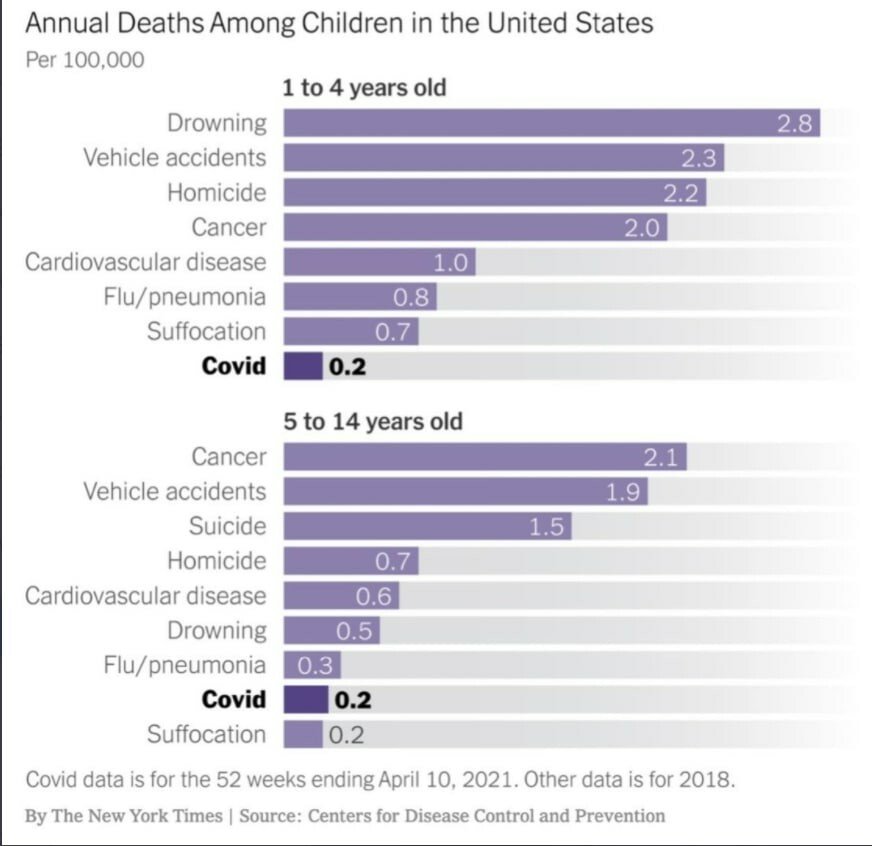
Comparing this dataset to CDC’s WONDER database, it is clear that COVID-19 accounts for a lower percentage of total child deaths than any of 2019’s 10 leading causes of child death; that even leaves COVID well behind 2019’s 9th-leading cause of death: Influenza and Pneumonia.
Assuming similar cause-of-death trends in 2020 and 2021 as existed in 2019:
The cause of a child’s death would be 9.49 times more likely to be suicide; 8.46 times more likely to be homicide; 2.02 times more likely to be a drug overdose or alcohol poisoning; and 1.29 times more likely to be influenza.
The infographic below demonstrates the 10 most common causes of death for children aged 1-18 for 2019. Note that this leaves out newborn deaths (as they account for roughly half the total number of child deaths and unacceptably skew the data) and it doesn’t account for seasonality (comparing Jan-Dec 2019 to Jan-2020-Sep-2021).
 Hellbound and Down
You must be logged in to post a comment.