
Rocker Nick Cave: Cancel Culture Is ‘Bad Religion Run Amuck’

Earlier this year, the highly regarded Australian rocker and “Goth heartthrob” Nick Cave criticized “perpetually pissed-off…pearl-clutchers” who demand that old songs, novels, and other works of creative expression be censored or changed when they offend contemporary sensibilities. Writing in his monthly newsletter The Red Hand Fileshe averred

I would rather be remembered for writing something that was discomforting or offensive, than to be forgotten for writing something bloodless and bland.

In the most recent edition of The Red Hand Files, Cave again takes aims against “cancel culture,” especially what he sees as its “refusal to engage with uncomfortable ideas” and “asphyxiating effect on the creative soul of a society.” Cancel culture, he writes, “is mercy’s antithesis,” an impulse that combines the worst aspects of religious fervor and ideological certitude.

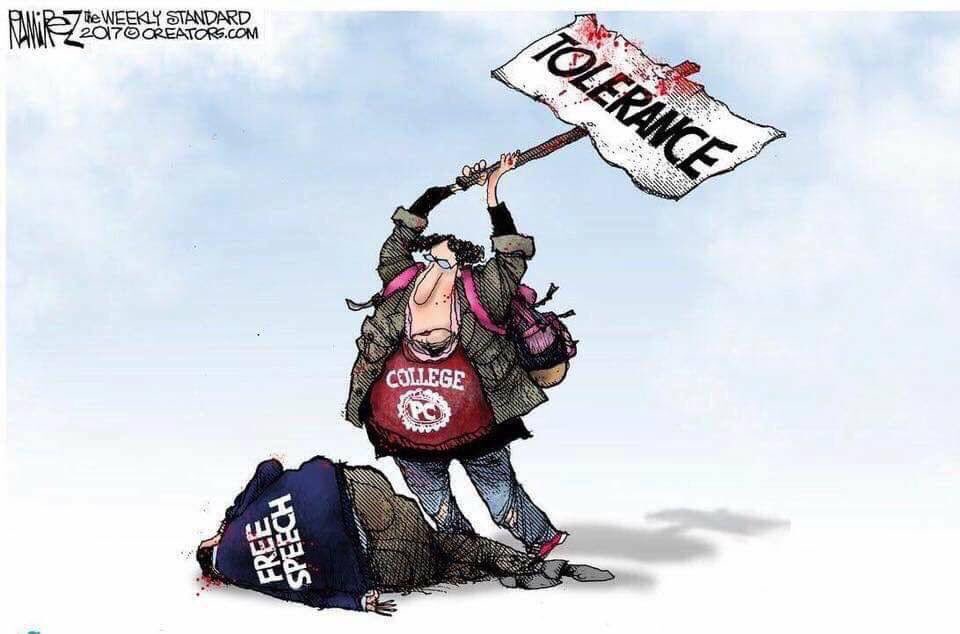
Political correctness has grown to become the unhappiest religion in the world. Its once honourable attempt to reimagine our society in a more equitable way now embodies all the worst aspects that religion has to offer (and none of the beauty) — moral certainty and self-righteousness shorn even of the capacity for redemption. It has become quite literally, bad religion run amuck.

Cancel culture’s refusal to engage with uncomfortable ideas has an asphyxiating effect on the creative soul of a society. Compassion is the primary experience — the heart event — out of which emerges the genius and generosity of the imagination. Creativity is an act of love that can knock up against our most foundational beliefs, and in doing so brings forth fresh ways of seeing the world. This is both the function and glory of art and ideas. A force that finds its meaning in the cancellation of these difficult ideas hampers the creative spirit of a society and strikes at the complex and diverse nature of its culture.
Keep reading

The Cancel Culture Checklist

Cancel culture now poses a real threat to intellectual freedom in the United States. According to a recent poll by the Cato Institute, a third of Americans say that they are personally worried about losing their jobs or missing out on career opportunities if they express their real political opinions. Americans in all walks of life have been publicly shamed, pressured into ritualistic apologies or summarily fired.

But critics of the critics of cancel culture make a powerful retort. Accusing others of canceling can, they claim, be a way to stigmatize legitimate criticism. As Hannah Giorgis writes in the Atlantic, “critical tweets are not censorship.”

So what, exactly, does a cancellation consist of? And how does it differ from the exercise of free speech and robust critical debate?

At a conceptual level, the difference is clear. Criticism marshals evidence and arguments in a rational effort to persuade. Canceling, by contrast, seeks to organize and manipulate the social or media environment in order to isolate, deplatform or intimidate ideological opponents. It is about shaping the information battlefield, not seeking truth; and its intent—or at least its predictable outcome—is to coerce conformity and reduce the scope for forms of criticism that are not sanctioned by the prevailing consensus of some local majority.

In practice, however, telling canceling apart from criticism can be difficult because both take the form of criticizing others. That is why it is probably impossible to devise a simple bright-line test of what should count as a harmful instance of cancelation.

A better approach might therefore be diagnostic. Like the symptoms of cancer, the hallmarks of a cancellation are many. Though not all instances involve every single characteristic, they all involve some of its key attributes. Rather than issuing a single litmus test, the diagnostic approach allows us to draw up a checklist of warning signs. The more signs you see, the more certain you can be that you are looking at a cancel campaign.


Six warning signs make up my personal checklist for cancel culture.

Keep reading

What happened to an America where you could freely speak your mind?

The angry left-handed broom of America’s cultural revolution uses fear to sweep through our civic, corporate and personal life.

It brings with it attempted intimidation, shame and the usual demands for ceremonies of public groveling.

It is happening in newsrooms in New York, Philadelphia, Los Angeles. And now it’s coming for me, in an attempt to shame me into silence.

Keep reading

What Cancel Culture Has In Common With Medieval Outlawry

Cancel culture is slippery in the taxonomist’s hands, but I think something like columnist Ross Douthat’s definition is about right: “Cancellation, properly understood, refers to an attack on someone’s employment and reputation by a determined collective of critics, based on an opinion or an action that is alleged to be disgraceful and disqualifying.”

This description highlights the differences of function between medieval outlawry and cancel culture today: Outlawry was a formal, legal punishment backed by the threat of violence and usually intended to punish people accused of felony crimes like murder, arson, or conspiracy. Cancel culture has no such legal force. It’s a movement of social censure, and in its quintessential cases—e.g., Justine Sacco or, more recently, David Shor or the woman from The Washington Post Halloween party story—there’s no criminal allegation or, many times, even a lean outside the Overton Window. (The “Central Park Karen,” somewhat unusually among high-profile cancellation stories, is being prosecuted.)

Beyond these distinctions, however, outlawry and cancel culture have much in common: They grow out of the same human impulse of ostracism, the desire to exclude offenders from “respectable” society. They give the broader community permission to attack their targets, whether with physical violence (as in outlawry) or via verbal abuse, doxxing, or threats (as in cancel culture). They oust offenders from their social class (today, typically the professional-managerial class) and deprive them of their normal means of livelihood.

Keep reading

Artists in Arms: Why Creators Must Stick Together in the Age of Rage

This must be the kind of “diversity” and “inclusion” that Hollywood celebrities and other prominent creators constantly preach at us about. “We welcome you regardless of your race, gender, or sexuality, but we’ll treat you like an AIDS-ridden leper if you think differently than us.”

Keep reading

Ricky Gervais Slams Cancel Culture as a ‘Weird Sort of Fascism’

British actor Ricky Gervais raged against the rising tide of political correctness and cancel culture in the wake of the Black Lives Matter uprising, describing it as a “weird sort of fascism” fueled by trendy myths.

“There’s this new, weird sort of fascism of people thinking they know what you can say and what you can’t,” Gervais said in an interview with talkRADIO. “There’s this new trendy myth that people who want free speech want to say awful things all the time. This just isn’t true. It protects everyone.”

Gervais also bemoaned the growing level of exaggeration across the political divide, a trend he says is worsened by social media.”If you’re mildly left-wing on Twitter, you’re suddenly Trotsky, right?” he said. “If you’re mildly conservative, you’re Hitler and if your centrist and you look at both arguments, you’re a coward.”

Keep reading

‘Cancel Culture’ Letter Really About Stifling Free Speech

Aopen letter published by Harper’s magazine, and signed by dozens of prominent writers and public figures, has focused attention on the apparent dangers of what has been termed a new “cancel culture.”

The letter brings together an unlikely alliance of genuine leftists, such as Noam Chomsky and Matt Karp, centrists such as J. K. Rowling and Ian Buruma, and neoconservatives such as David Frum and Bari Weiss, all speaking out in defense of free speech.

Although the letter doesn’t explicitly use the term “cancel culture,” it is clearly what is meant in the complaint about a “stifling” cultural climate that is imposing “ideological conformity” and weakening “norms of open debate and toleration of differences.”

It is easy to agree with the letter’s generalized argument for tolerance and free and fair debate. But the reality is that many of those who signed are utter hypocrites, who have shown precisely zero commitment to free speech, either in their words or in their deeds.

Further, the intent of many them in signing the letter is the very reverse of their professed goal: they want to stifle free speech, not protect it.

To understand what is really going on with this letter, we first need to scrutinize the motives, rather than the substance, of the letter.

Keep reading