
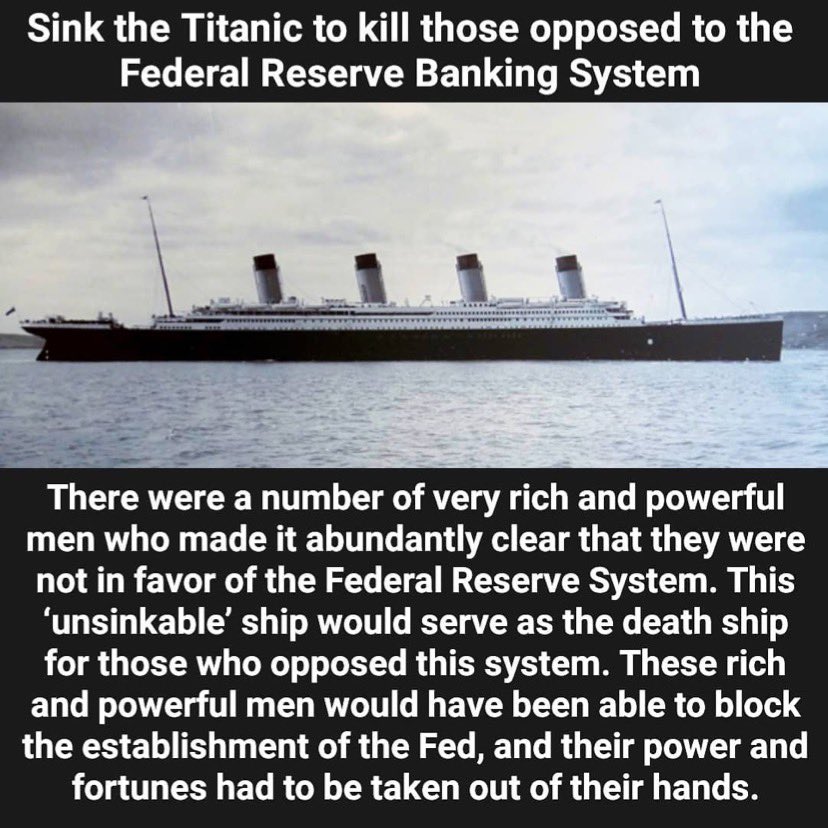
The Titanic never actually sank. Or maybe it did, but not because of an accidental run-in with an iceberg. It was really a dastardly plot by Irish Catholics, or perhaps banker J.P. Morgan or an Egyptian mummy’s curse is to blame.
Those—and plenty more—wild conspiracy theories about the disaster that unfolded in the North Atlantic during the early morning hours of April 15, 1912, have been circulating for years, with some starting almost immediately after the Titanic reached the ocean floor.
But now they’re also spreading on TikTok, and The New York Times seems convinced that the social media app is a uniquely dangerous place for kids to encounter ideas that they might otherwise have to find in books, in movies, or elsewhere on the internet.
On TikTok, “musty rumors merge with fresh misinformation and manipulated content—a demonstration of TikTok’s potent ability to seed historical revisionism about even the most deeply studied cases,” the Times‘ Tiffany Hsu and Sapna Maheshwari declare in a piece about the video site’s “Titanic Truthers.”
But the story’s dramatic framing and its specific targeting of TikTok seem at odds with reality—a problem for any article, but especially one that’s supposed to be combating misinformation. Indeed, near the bottom of the piece, Hsu and Maheshwari admit that these TikToks are “just the latest recycling bin for false narratives about the Titanic.”
Is there something uniquely dangerous about the way these ideas spread via TikTok? I asked Joseph Uscinski, a political scientist at the University of Miami who has written extensively about conspiracy theories (including in the pages of Reason), whether this is a worrying development.
“No, we should not be worried,” says Uscinski. “The ability of social media to turn people into conspiracy theorists is vastly overrated, largely because people don’t believe everything they hear and see, and oftentimes, the things they hear and see are things that they sought out purposely because those things match their preexisting beliefs.”
If TikTok—or social media in general, or even the internet as a whole—was causing people to believe in more conspiracy theories, researchers would be able to see that trend. Instead, surveys by Uscinski and others have found that, at the mass level, conspiracy theory beliefs tend to be stable over time.



 Hellbound and Down
You must be logged in to post a comment.