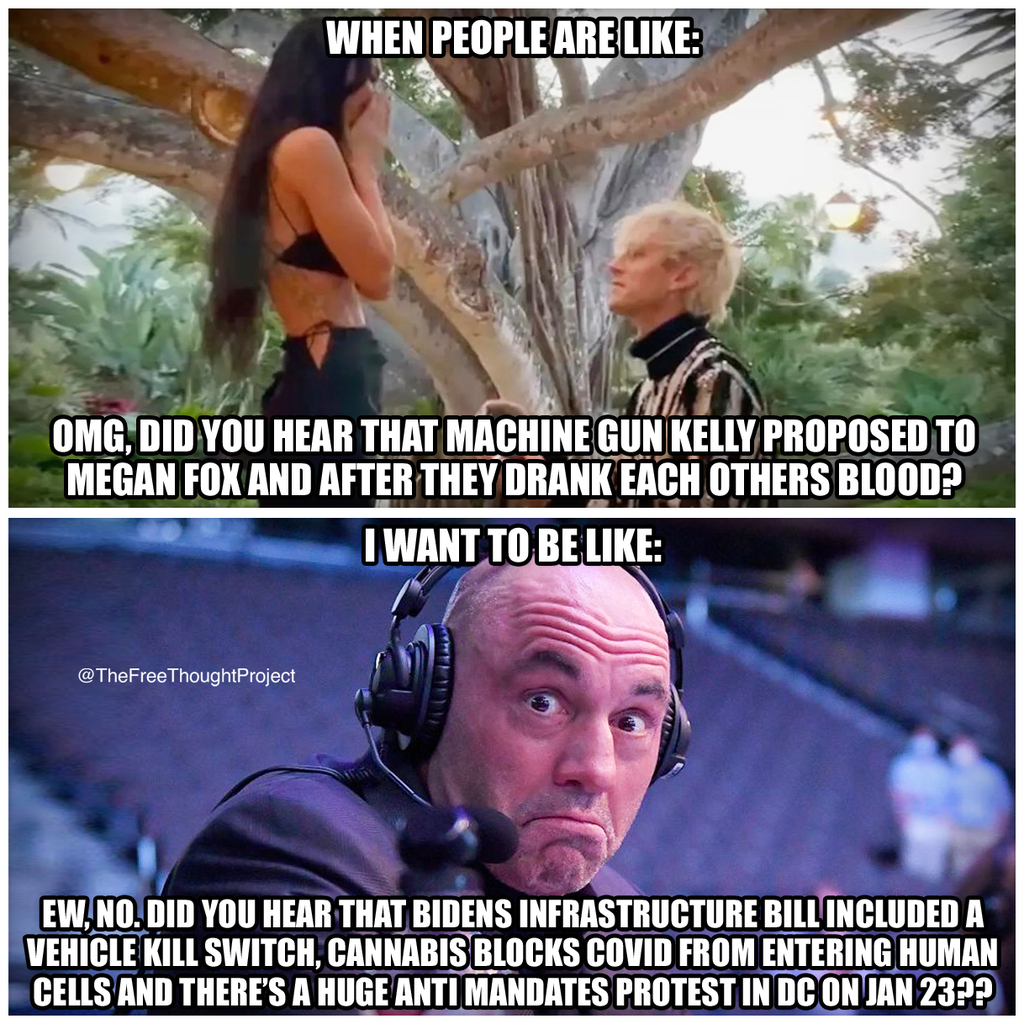
Like, did you hear about…

Compounds in cannabis can prevent infection from the virus that causes Covid-19 by blocking its entry into cells, according to a study published this week by researchers affiliated with Oregon State University. A report on the research, “Cannabinoids Block Cellular Entry of SARS-CoV-2 and the Emerging Variants,” was published online on Monday by the Journal of Natural Products.
The researchers found that two cannabinoid acids commonly found in hemp varietals of cannabis, cannabigerolic acid, or CBGA, and cannabidiolic acid, also known as CBDA, can bind to the spike protein of SARS-CoV-2, the virus that causes Covid-19. By binding to the spike protein, the compounds can prevent the virus from entering cells and causing infection, potentially offering new avenues to prevent and treat the disease.
In December 2017, one of the godfathers of the contemporary psychedelic renaissance, Bob Jesse, penned a manifesto for the commercial era of hallucinogens, one that echoed as far and wide as when Timothy Leary famously evangelized, “Turn on, tune in, drop out,” in 1966. Jesse delivered a very different kind of message: “Open science for all!”
A philanthropist and independent researcher, Jesse was instrumental to reviving a new wave of medical interest into psychedelic-assisted therapy starting in the 1990s. This new form of therapy offers a revolutionary approach to treating the rising cases of depression and anxiety in the U.S. But Jesse began to see this pioneering research pillaged by Big Pharma, as soon as it showed commercial value as a breakthrough treatment for mental illness.
In the manifesto, Jesse took a stand against would-be monopolists for flagrantly misusing patent laws, advocating instead for a shared creative commons for psychedelic research, with limited intellectual-property rights. The statement attracted over 100 co-signers, including every major figure in the psychedelic research and NGO community, from philanthropic funders to grassroots advocates.
But there was a notable absence from the list: the founders of Compass Pathways, a rapidly growing psychedelic therapy company bankrolled by major investors, notably Peter Thiel, the PayPal co-founder and right-wing political financier.
“It was very suspicious when they didn’t sign on to the letter. It gave a lot of people pause about what their plans were,” said Carey Turnbull, a longtime philanthropist in the psychedelic community who has become one of Compass Pathways’ main detractors.
Compass’s founders—millionaire couple George Goldsmith and Ekaterina Malievskaia—had already raised eyebrows by quietly transitioning from a charity organization to a for-profit corporation in 2017. Compass was also conducting dubious drug trials on the Isle of Man, an infamous tax haven for the uber-wealthy with lax regulatory oversight. Suspicions abounded about the unusually restrictive contracts it pushed researchers to sign, and reports that Compass had blocked other organizations from signing a deal with one of their drug manufacturers.
The unwillingness to sign the letter was more than a snub. It was a harbinger of things to come.
Having utterly failed to end the marijuana black market in California, lawmakers have decided to backslide into the drug war by increasing fines on those who operate outside of the state’s very costly and tightly regulated legal cannabis system.
California will begin 2022 not just by increasing taxes on legal marijuana cultivation but also by introducing new fines against anybody “aiding and abetting” any unlicensed dealers in the state.
Lawmakers passed A.B. 1138 in September, and it was signed into law by Gov. Gavin Newsom in October to take effect at the start of 2022. California law establishing recreational marijuana already permits civil penalties against unlicensed marijuana dealers. A.B.1138 threatens civil fines of up to $30,000 per violation against anybody providing assistance to an unlicensed dealer. And each day of doing so counts as a new violation.
California’s implementation of recreational cannabis regulations, authorized by the passage of Proposition 64 in 2016, has been a massive mess. The ballot initiative allowed for municipalities to decide whether to allow cultivation and dispensaries, and two-thirds of them still refuse to do so despite the public vote. The state levies high cultivation and excise taxes that are escalated further by local sales taxes in any municipality that does allow for dispensaries to open up shop.
The result has been price and availability issues so severe that experts estimate that between two-thirds and three-quarters of all marijuana purchases take place through unlicensed dealers, which means that the state isn’t getting its share of the revenue. The problem is so severe that the editorial board at the Los Angeles Times recently acknowledged that high taxes for goods fuel black markets.
But instead of eliminating or reducing these taxes, the state is instead taking a more punitive approach. And it’s not just lawmakers looking to make sure the state is getting its cut of the money. The bill was introduced by Assemblywoman Blanca E. Rubio (D–Baldwin Park), but the Assembly analysis of her proposal explains that it was co-sponsored by the United Cannabis Business Association and The United Food and Commercial Western (UFCW) States Council, the union that represents some licensed cannabis industry workers. Several licensed cannabis industries and trade groups have also signed on in support.
At the beginning of 2022, tax rates for marijuana cultivated in California are set to increase, even though black market sales completely dominate the retail market in the Golden State.
Experts estimate that about three-quarters of all marijuana sales in California happen not through legal dispensaries, but through unlicensed vendors. California voters legalized the cultivation and sale of marijuana for recreational use in 2016, but extremely high taxes and oppressive regulations have caused the rollout to be a disaster.
The tax increase set to hit on New Year’s Day is a prime example. California taxes the cultivation of marijuana by weight. In the tax regulations that state lawmakers passed for cannabis in 2017, the cultivation tax rate was tied to inflation. When inflation rises, the cultivation tax will also automatically rise.
Inflation rose in 2021, and not by a small amount. The U.S. Bureau of Labor Statistics calculates that consumer prices rose nationally 6.8 percent between November 2020 and November 2021. Because of California’s law, cultivation taxes will rise 4.5 percent. For growers of fresh cannabis plants, the cultivation tax will jump from $1.35 an ounce to $1.41 an ounce. On top of the cultivation tax, the state charges a 15 percent excise tax, and the cities that allow dispensaries have their own local sales tax rates. A person attempting to legally buy marijuana in California can expect the price to balloon between 35–50 percent through tax add-ons, depending on the city.
This, obviously, will make it all the more difficult for legal vendors to compete with the black market. That the increase is happening anyway is absurd and should be seen as a warning against automatically tying any tax rate to inflation.
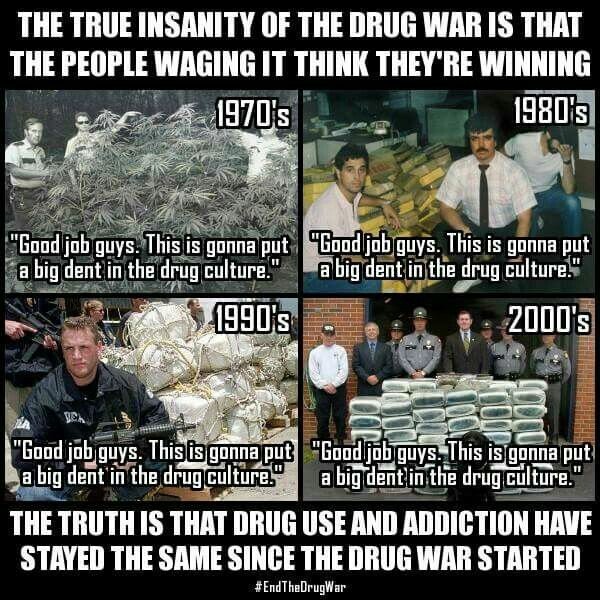
The Drug War is an ineffectual waste of resources. No appreciable decline in illicit drug use has occurred since it began, despite the trillions of dollars spent:
“Prohibition is not only ineffective but counterproductive, at achieving the goals of policymakers both domestically and abroad. Given the insights from economics and the available data… the domestic War on Drugs has contributed to an increase in drug overdoses and fostered and sustained the creation of powerful drug cartels.”
The evidence of the DEA’s, ATF’s, and respective state agencies’ total incompetence, and even corruption, in doing their jobs is legion. The CIA facilitates the importation of cocaine into the US with impunity.
Given its failure, if the Drug War were a private-sector endeavor, investors would have pulled the plug years ago. Instead, since this utterly useless bureaucratic machinery sucks at the teat of the taxpayer, its purveyors are allowed to subsidize their careers fighting windmills.
Rather than acknowledging that their total lack of any meaningful progress in reducing the flow of drugs into the US or deescalating usage rates, these agencies routinely use their abject failure to justify ever-larger budgets. If they just got a few billion more dollars each year, the logic goes, the Drug War could be won in a jiffy.
Total nonsense.
The government has reported that, since the year 2020, fentanyl overdoses have become the new leading cause of death for American adults between the ages of 18 and 45, as reported by Fox News.
The analysis from the Drug Enforcement Agency (DEA) shows that nearly 79,000 Americans died from the drug between 2020 and 2021. Of those, just over 37,000 died in 2020 while almost 42,000 died in 2021. Fentanyl is an opioid that is sometimes laced with other drugs such as meth and heroin when used by addicts, but can also be deadly on its own in even small doses. The primary foreign sources for imports of the drug are China and Mexico.
Fentanyl overdoses have surpassed all other leading causes of death in the last two years. By contrast, only about 53,000 Americans between the ages of 18 and 49 died of the Chinese coronavirus from 2020 to 2021. Fentanyl has also claimed more lives in this age group than car accidents, suicide, gun violence, and breast cancer, among others. The number of overall fentanyl deaths in the last two years has also surpassed previous years’ totals, doubling from about 33,000 to 64,000 between 2019 and 2021.
The legal status of cannabis in the U.S. isn’t always clear. At the federal level, it is an illegal Schedule I drug. However, individual states have the ability to determine their own laws around cannabis sales and usage.
But, as Visual Capitalist’s Avery Koop details below, cannabis was not always illegal at the top level. It was only in the last 100 years that cannabis faced a prohibition similar to the alcohol prohibition of the early 1920s.
In this infographic from Tenacious Labs, we explore the fascinating history of cannabis prohibition in the U.S. dating all the way back to the 1900s.


You must be logged in to post a comment.