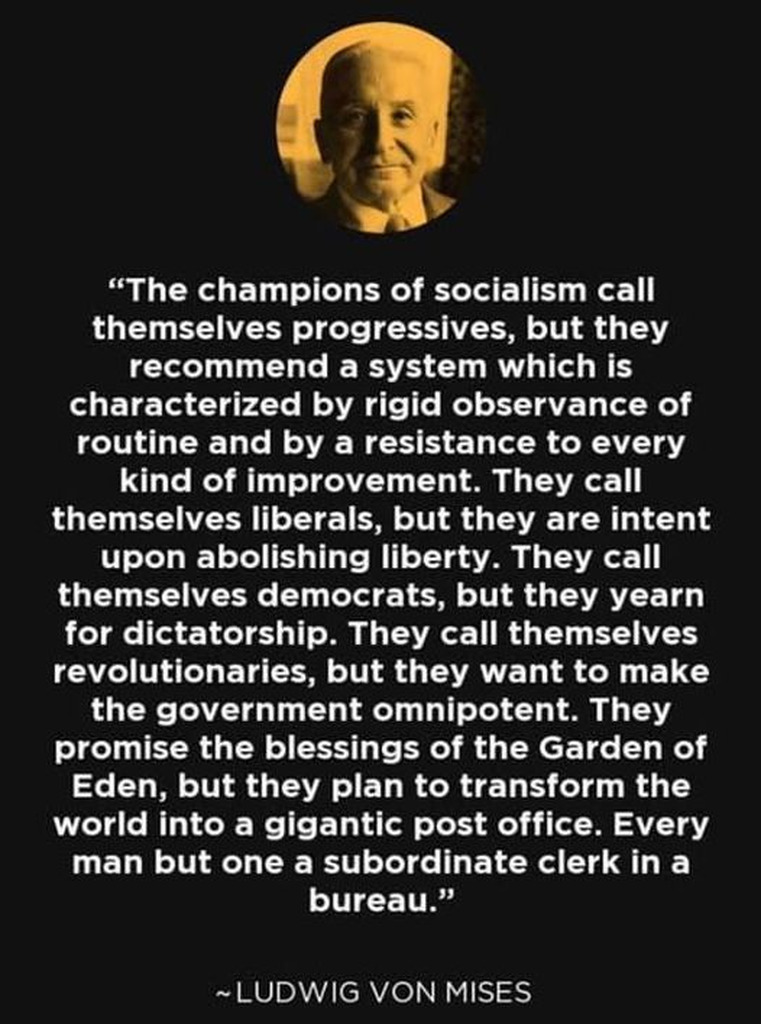
The Politics of Envy

Socialists and other leftwingers support taxation of the income and wealth of the well off. They say that they want to promote “equality” and “social justice,” but in fact they are motivated by envy. They want what others have. They can’t stand the thought of other people’s having more money than they do.

Here is what Rob Larson, an economics professor at Tacoma Community College, says about certain very expensive apartments: “Besides the return of in-city mansions for the affluent and their cars, New York and London have also seen the growth of ‘poor doors.’ These are entrances to new luxury buildings, erected with a city requirement to include some affordable housing units for regular working people, in addition to ‘market rate’ units that sell for seven figures and up. The Guardian describes a luxury London development where the main door opens to luxury marble tiling and plush doors, and a sign on the wall alerts residents to the fact that the concierge is available. Round the back, the entrance to the affordable homes is a cream corridor, decorated only with grey mailboxes and a poster warning tenants that they are on CCTV and will be prosecuted if they cause any damage.

To me, this is an amazing passage. In Larson’s example, some “regular working people” are housed in some of the most luxurious apartments in the world. But Larson still objects because these people don’t get to use the fancier entrances made for the superrich who pay market rates. As you read Larson, you can feel his seething hatred for the rich: he would like to pull them down, just because they are able to afford things others cannot. He offers no evidence that the working people in the apartments are dissatisfied. If I had to guess, I would imagine them to be happy to be getting the windfall that results from the government’s interference with the free market on their behalf; but whether I am right does not in the present context matter. The point is simply to expose Larson’s emotion for what it is. As an analogy, consider someone who resents first-class air travel, not because he finds coach class uncomfortable, but just because others travel under better conditions than he does. And the case that envy and hatred are involved in Larson’s example is stronger than for the air travel case. Except for the entrance, the working people are getting the luxury good—but this is not enough for Larson.

A much more prominent economist than Larson illustrates the same attitude. Thomas Piketty’s central idea is that inequality is the supreme social sin and must be radically curtailed. He doesn’t deny that capitalism results in economic growth and an enhanced standard of living, but the income and wealth of the rich have grown far faster than those of the poor. You might ask why this matters, even granting his dubious statistics: Don’t people care about how well they are doing, much more than they resent the rich, if in fact they resent them at all?

Keep reading

Harris’s Price Control Plan is Worse Than You Think

The Myth of the Eternal Return is the title of a 1954 tome by the Romanian historian Mircea Eliade, although many other deep thinkers, from Pythagoras to Nietszche, have voyaged into the same poetic and philosophic recesses. 

My task is much shallower: To show how old, bad, ideas keep recurring in American politics. Yes, I bear witness to The Truth of Infernal Return. As with bad pennies and bad breath, it’s no myth that our politics are infested with nefarious ideas that never die and eternal lie. As with some Lovecraftian daemon, they await their infernal comeback. 

Case in point: Kamala Harris’s August 16 announcement of her plan for price controls—that being a fair way to describe federal monitoring of “price gouging.” Harris has revived one of the worst ideas from the stagflationary (stagnation + inflation) 1970s. More on that later, but let’s recall other bad ideas that have lamentably rebounded: 

First, unnecessary foreign war. Into this Baby Boomer, memories of the bloody futility of the Vietnam War are seared. So when the North Vietnamese finally conquered South Vietnam in 1975, my teenage self said, “Well, at least the U.S. will never make that mistake again.” Which only proves I had a lot to learn. As we all know, less than three decades later, the U.S. invaded Iraq, a military operation that made the Vietnam War look prudential. 

Today, 21 years after George W. Bush’s “Mission Accomplished”—the most grimly hilarious pronunciamento since Vietnam’s “It became necessary to destroy the town to save it”—we still have troops in Iraq, which is now dominated, of course, by Iran. So what, now, are those Americans doing there? They aren’t looking for WMDs, and they aren’t building democracy. Instead, they are fighting Al Qaeda, ISIS, Daesh—or whatever new bogeyman emerges from the Middle East’s tireless terror-meme generator. 

According to reports, the U.S. has 3,400 troops in Iraq and adjacent Syria, but only a fool would vouch for the accuracy of that number, given officialdom’s history of fibbing, the slippery X-factor of contractors—and perhaps some other number-hiding shell-game that we’ll learn about only in the next investigative scoop. 

Keep reading

Socialism, Not US Sanctions, Ruined the Venezuelan Economy

US sanctions against Venezuela are barbaric and immoral. But, they are not responsible for the economic collapse that has transpired in Venezuela over the past twenty years. Yes, the sanctions have further reduced the standard of living in Venezuela, and the burden of relative impoverishment caused by the sanctions has fallen hardest on those at the lowest end of the socio-economic ladder.

However, the effects of these US-imposed sanctions have not been nearly broad enough to be responsible for the general collapse of economic conditions that we now see in that country.

It is important to make this distinction because defenders of Venezuela’s socialist economic policies have repeatedly attempted to claim that sanctions are the primary reason for the country’s economic collapse.

Why do the socialist apologists claim this? It’s so they can make the case—as socialists are always eager to do—that socialism would be a boon for everyone’s standard of living if only it weren’t for the interference of foreign states like the US.

The truth, however, is that socialist policies like those practiced in Venezuela—widespread expropriation of private businesses coupled with vast wealth redistribution and government dominance of major industry sectors—are more than enough to destroy any polity’s economy. It is not necessary for Washington to intervene.

Keep reading

Do Not Under Any Circumstances Nationalize Greyhound

America has an extensive network of private, for-profit (and profitable) intercity bus services primarily serving lower-income people. It’s a great example of how the free market can provide an essential service without public subsidies.

Naturally, the socialists want to shut it all down.

In response to recent news reports about Greyhound closing bus stations (in favor of curbside pick up) and shutting down service to some midsized cities entirely, Jacobin columnist and Rutgers philosophy professor Ben Burgis advocates for nationalizing the company and running its buses on dedicated interstate lanes.

“A publicly owned intercity bus service with dedicated highway lanes could do for travelers what the US Postal Service does for letters and packages,” writes Burgis.

Travelers, like Postal Service packages, would “criss-cross the country cheaply and quickly,” says Burgis. This new government-run bus company would extend service to everywhere, he writes, and “like the USPS,” this government-run bus company would be “financially self-sufficient.”

That the Postal Service is “financially self-sufficient” would be news to USPS, which reported a $6.5 billion net loss this past fiscal year. Indeed, the Postal Service is currently shuttering facilities and raising prices as part of a 10-year restructuring plan meant to get it out of the red.

Keep reading

The Pilgrims Dreamed of Socialism. Then Socialism Almost Killed Them.

Thursday, if you eat a nice meal, thank the Pilgrims. They made Thanksgiving possible.

They left the Old World to escape religious persecution. They imagined a new society where everyone worked together and shared everything.

In other words, they dreamed of socialism. Socialism then almost killed them.

As I explain in my weekly video, the Pilgrims attempted collective farming. The whole community decided when and how much to plant, when to harvest, and who would do the work.

Gov. William Bradford wrote in his diary that he thought that taking away property and bringing it into a commonwealth would make the Pilgrims “happy and flourishing.”

It didn’t. Soon, there wasn’t enough food. “No supply was heard of,” wrote Bradford, “neither knew they when they might expect any.”

The problem, Bradford realized, was that no one wanted to work. Everyone relied on others to do the work. Some people pretended to be injured. Others stole food.

The communal system, Bradford wrote, “was found to breed much confusion and discontent and retard much employment.”

Young men complained they had to “spend their time and strength to work for other men’s wives and children without any recompense.”

Strong men thought it was an “injustice” they had to do more than weaker men without more compensation.

Older men thought that working as much as young men was “indignity and disrespect.”

Women who cooked and cleaned “deemed it a kind of slavery.”

The Pilgrims had run into the “tragedy of the commons.” No individual Pilgrim owned crops they grew, so no individual had much incentive to work.

Bradford’s solution: private property.

Keep reading

CBS’s Latest Socialism Sales Pitch: ‘Maybe You Can Be Too Rich’

On CBS Sunday Morning, the broadcast network made a new push to sell socialism by arguing that billionaires shouldn’t be allowed to exist and that their wealth should be seized by the government and spent on left-wing priorities like climate change. The segment featured radical guests demanding wealth redistribution and advocating the notion that “maybe you can be too rich.”

“A recent report reveals the world’s nearly 3,000 billionaires increased their wealth by $5 trillion last year….Which prompts Mark Whitaker to ask: When is more than enough, enough?,” host Jane Pauley announced at the top of the segment. Whitaker went on to warn viewers: “The wealth gap has reached stratospheric levels. The richest one percent of Americans now has almost 13 times the wealth of the bottom 50 percent. It’s led some to consider: Maybe you can be too rich.”

He turned to a far-left, European philosophy professor to explain her socialist ideology of seizing wealth by giving it a new name: “Professor Ingrid Robeyns teaches philosophy and ethics at Utrecht University in the Netherlands. She’s been promoting a concept called limitarianism. Define limitarianism.”

Robeyns lectured: “So limitarianism is just the word for the thought that there should be a moral limit to how much wealth you can accumulate. So it’s the idea that it’s fine to be well off, but at some point one has too much.”

Keep reading