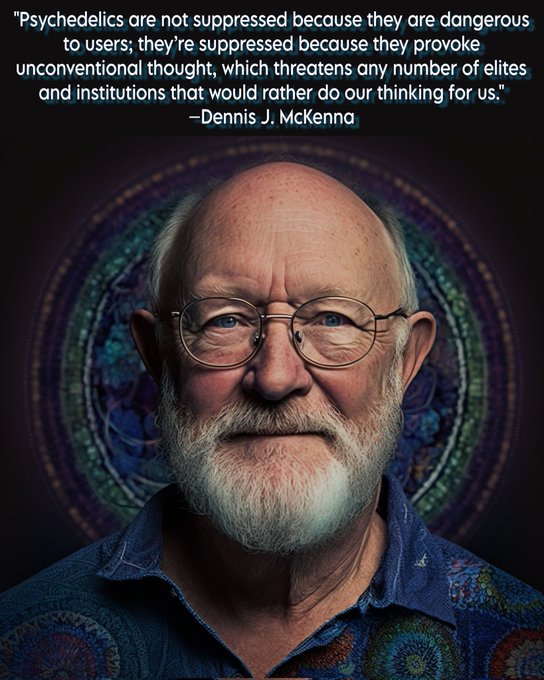
Psychedelics plus psychotherapy can trigger rapid changes in the brain

The human brain can change—but usually only slowly and with great effort, such as when learning a new sport or foreign language, or recovering from a stroke. Learning new skills correlates with changes in the brain, as evidenced by neuroscience research with animals and functional brain scans in people. Presumably, if you master Calculus 1, something is now different in your brain. Furthermore, motor neurons in the brain expand and contract depending on how often they are exercised— a neuronal reflection of “use it or lose it.”

People may wish their brains could change faster—not just when learning new skills, but also when overcoming problems like anxiety, depression, and addictions.

Clinicians and scientists know there are times the brain can make rapid, enduring changes. Most often, these occur in the context of traumatic experiences, leaving an indelible imprint on the brain.

But positive experiences, which alter one’s life for the better, can occur equally as fast. Think of a spiritual awakening, a near-death experience or a feeling of awe in nature.

Social scientists call events like these psychologically transformative experiences or pivotal mental states. For the rest of us, they’re forks in the road. Presumably, these positive experiences quickly change some “wiring” in the brain.

How do these rapid, positive transformations happen? It seems the brain has a way to facilitate accelerated change. And here’s where it gets really interesting: Psychedelic-assisted psychotherapy appears to tap into this natural neural mechanism.

Keep reading

California Governor Signs Bills To Let Doctors Prescribe Psilocybin And MDMA If They’re Federally Rescheduled And To Change Marijuana Testing Rules

California Gov. Gavin Newsom (D) has signed a bill that would allow doctors to immediately start prescribing certain currently illicit drugs like psilocybin and MDMA if they’re federally rescheduled, and he also approved separate legislation to amend THC variance testing requirements for marijuana.

The governor signed off on the measures—which are just two of more than a dozen cannabis and drug policy reform proposals on his desk—on Saturday.

AB 1021, sponsored by Assemblymembers Buffy Wicks (D), Isaac Bryan (D) and Corey Jackson (D), says that, if the federal government reschedules any Schedule I drug under the Controlled Substances Act (CSA), California health professionals will automatically be able to legally prescribe and dispense it.

This could be especially relevant to the psychedelics psilocybin and MDMA, which have been designated as breakthrough therapies by the federal Food and Drug Administration (FDA) and are expected to be approved for medical use as early as next year.

Following a recent Phase 3 clinical trial, a peer-reviewed study published in the journal Nature last month found that treatment with MDMA reduced symptoms in patients with moderate to severe PTSD. The findings mean federal regulators could consider approving the drug for wider use as soon as next year.

Keep reading

House Approves Psychedelic Research And Marijuana Labeling Amendments As Part Of Spending Bills

The U.S. House of Representatives has voted to approve a series of psychedelics and marijuana amendments as part of spending bills, and a Democratic congressman is again seeking to revise separate measures to end cannabis testing for federal workers.

On the same day that a Senate committee passed a marijuana banking bill, the House took up amendments to appropriations legislation that were recently cleared for floor consideration by the Rules Committee.

Both psychedelics measures were attached to a spending bill covering the Department of Defense (DOD) in voice votes on Wednesday.

One, sponsored by Reps. Morgan Luttrell (R-TX) and Dan Crenshaw (R-TX), would provide $15 million in funding for DOD to carry out “Psychedelic Medical Clinical Trials.” The second amendment, from Crenshaw alone, lays the parameters for the trials, which would involve active duty service members with post-traumatic stress disorder (PTSD) or traumatic brain injuries (TBI). The Defense Health Agency would need to send a report to Congress with its findings.

Notably, a Democratic congresswoman argued against the proposal, citing DOD concerns about trials involving active duty service members.

Luttrell said ahead of the voice vote on his amendment that he can “personally attest to the benefits in treating post-traumatic stress, traumatic brain injury and chronic traumatic encephalopathy through the use of psychedelic substances.” The congressman, who is a military veteran, has previously disclosed his own experience with psychedelic-assisted therapy.

“There’s a stigma that exists within the [House] that I believe stems from a lack of education experience around the clinical use of plant-based, or psychedelic, medications,” he said. “I understand that when many of my colleagues hear the word ‘psychedelics,’ they think of mushrooms and so on. This isn’t what we are talking about today.”

Keep reading

Michigan Lawmaker Renews Push To Legalize Certain Psychedelic Plants And Fungi

A bill recently introduced in Michigan would legalize psychedelic plants and fungi so long as activities like cultivating and distributing the substances are done “without receiving money or other valuable consideration.”

Senate Bill 449, sponsored by Sen. Jeff Irwin (D), would apply to five substances—psilocybin, psilocyn, dimethyltryptamine (DMT), ibogaine and mescaline—along with the plants and fungi known to produce them. If approved, it would exempt individuals from penalties for possession and use of the substances as well as noncommercial manufacturing, processing and delivery.

Simple possession of any of the covered substances is currently a misdemeanor in the state.

Irwin, who introduced a similar bill in 2021, told Marijuana Moment in an interview Thursday that it’s urgent lawmakers revisit the proposal, noting the potential of psychedelics to treat PTSD, depression, anxiety and other mental health conditions, especially in veterans. He called the prospective policy change “just simply good public policy.”

“This is a reintroduction of an important policy that hasn’t gotten its due consideration in Michigan or most other states,” he said. “These are substances that have a long history of use by humans in medicinal, religious and cultural practices. Furthermore, these substances do not have a high propensity for abuse, nor are they physiologically very damaging.”

Irwin acknowledged there’s “a long road ahead of us in terms of passing this bill,” but he said he’s optimistic that, over time, advocates will win over hesitant lawmakers.

At the local level, several municipal governments in Michigan have moved to decriminalize psychedelics, including DetroitAnn ArborFerndale and Hazel Park. Only Massachusetts has seen more local jurisdictions pass the reform.

Last year, a group of activists failed to qualify a psychedelics legalization initiative for the ballot, saying they will refocus their efforts on the 2024 election.

Keep reading

Ketamine Therapy Is Now Being Offered Across the US by an Insurance Provider

Ketamine-assisted therapy is now available as a health benefit across the U.S.

Enthea, a benefits company focused on providing insurance coverage for psychedelic treatments, announced it is offering ketamine-assisted therapy to its benefit plans nationwide. The company already has ketamine-assisted therapy on benefit plans in California, New York, and Texas. 

But the number of Americans receiving this type of treatment as a benefit is limited. Currently only 1,500 people are offered it while the company hopes that number will reach 200,000 by the end of 2024. 

Ketamine is the only psychedelic that can legally be used to treat mental health conditions, and there’s been an influx of clinics offering the drug, sometimes in conjunction with psychotherapy, in the last few years. Sessions range from $300 to $1,500 a session without insurance—usually several sessions are recommended. 

Enthea’s ability to offer ketamine as a benefit nationwide is due to new partnerships with two companies—Skylight Psychedelics and Innerwell—that facilitate psychedelic experiences at clinics around the country, remotely, and in people’s homes, according to a news release. 

Employers looking to offer the benefit to its workers can add it on to existing plans, similarly to dental and vision plans, Enthea said. 

Keep reading

Key House Committee Clears Psychedelics Amendments To Defense Bill For Floor Votes, But Blocks Marijuana Proposals

A powerful House committee has cleared two psychedelics amendments for floor consideration as part of a large-scale spending bill covering the Department of Defense (DOD). But it also blocked separate marijuana-related proposals from advancing.

Several bipartisan members filed drug policy reform proposals that they hope will be attached to the Fiscal Year 2024 appropriations legislation. And on Tuesday, the House Rules Committee made the two psychedelics measures in order, allowing them to advance to floor votes.

The DOD bill is one of four spending packages on the committee’s current agenda, and all three of the remaining measures contain at least one marijuana proposal that would prohibit various departments from testing federal job applicants for cannabis.

Keep reading

CALIFORNIA MIGHT LEGALIZE MAGIC MUSHROOMS

A BILL TO legalize psychedelics is on a trip to California Gov. Gavin Newsom’s office.

On Thursday, the California Senate gave final approval to a bill legalizing certain psychedelics for people who are 21 or older. If Newsom signs the bill, it will go into effect in 2025 and make it legal to possess or grow plant-based psychedelics, including psychedelic mushrooms.

Newsom has not said where he stands on the bill, but he has mostly been a critic against the war on drugs, having been a leading voice to legalize cannabis in California and reduce nonviolent offenses like drug crimes to misdemeanors rather than felonies. Last year, however, he vetoed a bill that would have allowed three California cities to operate supervised drug-consumption sites in efforts to combat fatal overdoses.

“We respect the legislative process and don’t typically comment on pending legislation,” a Newsom spokesperson told Marijuana Moment on Thursday. “The governor will evaluate the bill on its merits when it reaches his desk.”

Keep reading

EXPLORING SEX AND PSYCHEDELICS

The connection between sex and psychedelics dates back to the sexual liberation movement throughout the 1960s and 70s. Psychedelics, in particular LSD, were associated with loosened sexual inhibitions and the resolution of past sexual trauma. Inspired by Timothy Leary’s infamous calls to ‘turn up, tune in, drop out’, psychedelics appeared as a tool for pleasure, love and self-expression. 

For sex guru Annie Sprinkle, using psychedelics through the 60s, 70s and 80s had profound positive impacts on her sex life. From opening doors to alternative realities, to increasing connectedness and sexual satisfaction between partners, Annie calls them her ‘greatest sexual educators’. 

She notes that the connection between sex and psychedelics is much deeper than arousal. Through each experience the user gains new information, allowing them to see themselves from a new perspective. This, in turn, can inform the individual’s sexual life.

Even though psychedelics remain illegal across much of the world, anecdotal evidence suggests that using psychedelics to enhance sexual experiences is still just as popular as it once was. However, as sex on drugs has inevitably been labelled a high-risk activity , there is a clear lack of hard-line statistics to back up such an assumption. 

Keep reading

Magic mushroom dispensaries multiplying in southwestern Ontario, with no cap in sight

Flying in the face of local law enforcement, a chain of illegal brick-and-mortar magic mushroom dispensaries with locations in London, Windsor, and across the province is expanding to more local municipalities, strengthening a trend reminiscent of the pre-legalization cannabis market.

A recently opened storefront in St. Thomas is the latest move for FunGuyz, the entity that runs at least 13 dispensaries in Canada and one in Detroit, with a spokesperson suggesting other nearby small towns may be next.

“We’re looking at Sarnia, Strathroy, smaller cities surrounding London,” said a spokesperson who identified themselves only as Edgar and said the St. Thomas store opened last week.

In the past, different spokespeople for the company have all identified themselves as Edgar, or Edgars Gorbans. When asked if the name was real by CBC Windsor in early August, one spokesperson claiming to be named Edgar Gorbans said  “could be,” and “of course not.”

The latest expansion comes despite recent police raids at FunGuyz stores. London Police raided the local store in early July, whereas Windsor Police have raided their local store multiple times, and issued an arrest warrant for the store’s owner, who they identified as Edward Gorbans. 

Keep reading

I Went to Rehab for Alcoholism 18 Times. Only Psychedelics Helped

I met Amanda at a pain therapy clinic in Zurich last December. She was sitting on a chair, hands folded neatly in her lap – she’d come here with her husband Tim for one of her regular visits to neurologist Livia Granata, one of the few specialists in Switzerland offering psychedelic therapy

British-born Amanda is 50 years old and has been an alcoholic for two decades. She also struggles with severe depression and anxiety stemming from childhood trauma. It took a lot for her to share her story, so she asked to be referred to on a first-name basis to protect her and her husband’s privacy. 

For the past seven years, Amanda hasn’t lived in her flat with her partner and their children, but outside on the balcony. She stays in an improvised shelter her husband made for her, only going in to use the toilet – and the pandemic only further tightened the grip her anxiety disorders have on her life.

A year ago, Amanda probably wouldn’t have shown up for this appointment at all, either cancelling at the last minute or simply letting it pass. Over the years, she’s been through too many treatments – experimental therapies that brought little to no relief. But in April 2022, she found her way to the clinic – and to the first treatment she felt ever truly worked.

Keep reading