‘I Can’t See Any Weapons’: Video Shows Cops Kill 6yo Boy While Executing an Unarmed Woman

In December 2017, the Free Thought Project reported on the tragic death of 6-year-old Kameron Prescott whose life was stolen from him when police opened fire on an unarmed woman suspected of stealing a car. In June of 2018, the family of the little boy who was gunned down by police found out that the cops who killed their son all went back to work. Then, in March of last year, the family found out that none of the officers responsible for the death of her son would face charges. After the system refused to hold itself accountable, the family filed a lawsuit against Bexar county and have been getting the run-around ever since.

This month, the family announced in a letter that it is now calling on Bexar County to settle the lawsuit. According to KENS5, in a 16-page letter sent to county commissioners, attorneys for Prescott’s father and mother, Christopher and Rubi Prescott, laid out what they had discovered since filing suit against the county, writing that while they are “confident in our case,” the Prescott family is “willing to accept, at this time, a fraction of what a jury would likely award as damages.”

The letter reveals new details of Prescott’s killing, including the release of a video which proves a DPS trooper informed the officer that the woman police were shooting at, had no weapons. Also, the letter states that police falsely claimed the suspect, Amanda Jones, was involved in a vehicle burglary which they claim prompted the chase. In reality, according to the letter, a bounty hunter had tipped off police that Jones was in the area.

Keep reading

Portland Police Officers Are Hiding Their Names. The Only Way to Find Out Who They Are: Tell the City Their Names

In the nearly two months that police and protesters have faced off on Portland streets, numerous incidents (including Brown’s beating) have been captured on video and raised questions about police tactics. The lawsuit the ACLU filed on behalf of Brown and other journalists and observers—demanding that cops keep their hands off—now winds its way through federal court.

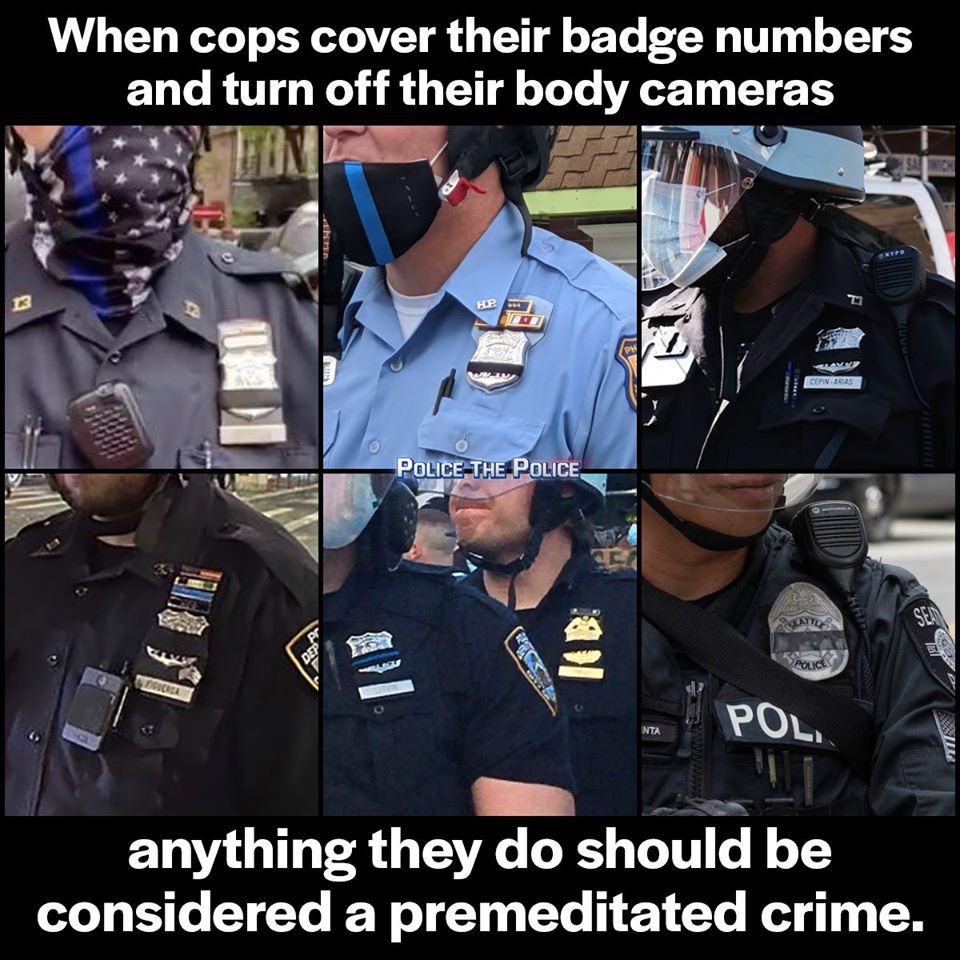
Meanwhile, Kessler says scrutiny is more difficult since June 6, when the Portland Police Bureau initiated its new policy allowing officers to cover the name tags traditionally visible on their uniforms and instead identify themselves with only a tag or piece of tape with an internal personnel number written on it.

Keep reading

Good Cop Forced Out for Exposing Corruption Says Fellow Cop Put Gun to His Head to Scare Him

In 2015, the Free Thought Project brought you the exclusive story of the whistleblower Chicago Police officer, Shannon Spalding who was retaliated against by her fellow cops for exposing corruption. Spalding and her partner Daniel Echeverria uncovered a massive level of corruption in their department, leading to the arrest of other officers. However, being good cops got them threatened with “going home in a casket.”Since then, we have reported on countless similar incidents in which good cops are forced out for trying to stay good cops.

“It’s no secret that if you go against the code of silence, and you report corruption, it will ruin your career,” Spalding said. And as the following case illustrates, she is right.

Despite knowing it would ruin his career, Redwood City Police officer Ryan Adler could no longer stay silent about the atrocities he witnessed committed by his fellow officers in the Redwood City Police Department.

Keep reading

We Reviewed Police Tactics Seen in Nearly 400 Protest Videos. Here’s What We Found.

AS PROTESTS DENOUNCING POLICE BRUTALITY against unarmed Black people spread to thousands of cities, it was videos of police violence — this time, directed at protesters — that went viral. Clips showed officers launching tear gas canisters at protesters’ heads, shooting pepper spray from moving vehicles and firing foam bullets into crowds.

ProPublica looked at nearly 400 social media posts showing police responses to protesters and found troubling conduct by officers in at least 184 of them. In 59 videos, pepper spray and tear gas were used improperly; in a dozen others, officers used batons to strike noncombative demonstrators; and in 87 videos, officers punched, pushed and kicked retreating protesters, including a few instances in which they used an arm or knee to exert pressure on a protester’s neck.

While the weapons, tactics and circumstances varied from city to city, what we saw in one instance after another was a willingness by police to escalate confrontations.

Experts said weapons that aren’t designed to be lethal, from beanbag rounds to grenades filled with pepper spray, can make officers more willing to respond to protesters with force and less disposed to de-escalate tense situations. Not only can some of these weapons cause considerable injury to protesters, particularly if misused, but experts say the mere presence of the weapons often incites panic, intensifies confrontations and puts people on all sides at risk.

And of course, unlike a mass demonstration urging action on an issue like climate change, the protests over police brutality are directed squarely at the officers standing watch. Any use of force can remind protesters what brought them into the streets in the first place and redouble their outrage.

Keep reading