Inside the CIA’s secret mission to sabotage Afghanistan’s opium

In 20 years of grinding war in Afghanistan, the United States dropped a multitude of weapons from the skies: Millions of tons of ordnance. Hellfire missiles launched from Predator drones. Even the “Mother of All Bombs,” the most powerful nonnuclear bomb in existence. And, amid the more conventional projectiles, tiny poppy seeds. By the billions.

On and off for over a decade, the Central Intelligence Agency conducted an audacious highly classified program to covertly manipulate Afghanistan’s lucrative poppy crop, blanketing Afghan farmers’ fields with specially modified seeds that germinated plants containing almost none of the chemicals that are refined into heroin, The Washington Post has learned.

The covert program, which has not previously been disclosed, is an unreported chapter in the 2001-2021 U.S. war in Afghanistan and in the long checkered history of American efforts to combat narcotics globally, from Latin America to Asia. Its existence was confirmed by 14 people familiar with aspects of the secret operation, all of whom spoke on the condition of anonymity to describe a classified project.

The program’s disclosure comes as the war on narcotics is again dominating the security agenda. President Donald Trump has declared war on drug cartels in the Western Hemisphere, ordering more than a dozen lethal strikes on alleged drug boats in the Caribbean and the eastern Pacific, designating cartels as terrorist groups, and moving a vast naval and air force to the region. He has also authorized the CIA to take aggressive covert action against drug traffickers and their supporters.
Keep reading

‘1mn died’ from Afghan heroin, drug production ’40 times higher’ since NATO op

Heroin production in Afghanistan increased 40 times since NATO began its ‘War on Terror’ in 2001, the head of Russia’s Federal Drug Control Service stated, adding that more than 1million people have died from Afghan heroin since then.

“Afghan heroin has killed more than 1 million people worldwide since the ‘Operation Enduring Freedom’ began and over a trillion dollars has been invested into transnational organized crime from drug sales,” Viktor Ivanov said at the conference on the drug situation in Afghanistan.

Ivanov stressed that the main factor of instability in the war-torn country remains the prosperous heroin industry.

“Any impartial observer must admit the sad fact that the international community has failed to curb heroin production in Afghanistan since the start of NATO’s operation.”

According to his presentation at UN’s 56th session of the Commission on Narcotic Drugs in Vienna on March 11, opium growth has increased by 18 per cent from 131,000 hectares to 154,000.

As the situation in Afghanistan changed with NATO withdrawing its troops, Russia along with Afghanistan and the international community must face the new reality and develop an efficient strategy to deal with the heroin problem, explained Ivanov. 

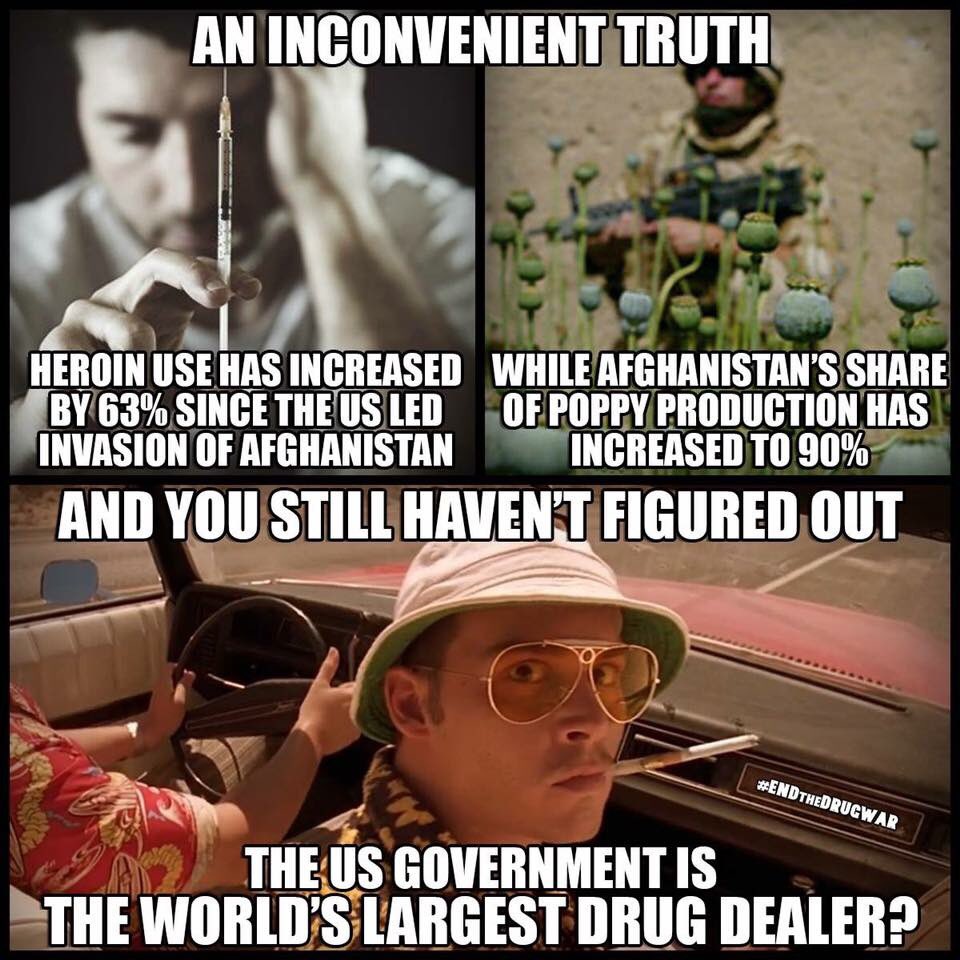
Opium production has been central to Afghanistan’s economy ever since US and NATO forces invaded in October 2001. Just before the invasion Taliban had implemented a ban on poppy growing, declaring it to be anti-Islam, which lowered the overall production. But after the West’s involvement, production resumed and now the country produces some 90 per cent of the world’s opium, the great bulk of which ends up on the streets of Europe and Russia.

Keep reading