Counterinsurgency, PSYOPS and the Military Origins of the Internet

As the digital revolution was underway in the mid-nineties, research departments at the CIA and NSA were developing programs to predict the usefulness of the world wide web as a tool for capturing what they dubbed “birds of a feather” formations. That’s when flocks of sparrows make sudden movements together in rhythmical patterns.

They were particularly interested in how these principles would influence the way that people would eventually move together on the burgeoning internet: Would groups and communities move together in the same way as ‘birds of a feather, so that they could be tracked in an organised way? And if their movements could be indexed and recorded, could they be identified later by their digital fingerprints?

To answer these questions, the CIA and NSA established a series of initiatives called Massive Digital Data Systems (MDDS) to directly fund tech entrepreneurs through an inter-university disbursement program. Naming their first unclassified briefing for computer scientists ‘birds of a feather,’ which took place in San Jose in the spring of 1995.

Amongst the first grants provided by the MDDS program to capture the ‘birds of a feather’ theory towards building a massive digital library and indexing system – using the internet as its backbone – were dispersed to two Stanford University PHD’s, Sergey Brin and Larry Page, who were making significant headways in the development of web-page ranking technology that would track user movements online.

Those disbursements, together with $4.5 million in grants from a multi-agency consortium including NASA and DARPA, became the seed funding that was used to establish Google.

Eventually MDDS was integrated into DARPA’s global eavesdropping and data-mining activities that would attempt total information awareness over US citizens. Few understand the extent to which Silicon Valley is the alter-ego of Pentagon-land, even fewer realise the impact this has had on the social sphere.   But the story does not begin with Google, nor the military origins of the internet, it goes back much further in time, to the dawn of counterinsurgency and PSYOPs during the second world war.

Keep reading

How Federal Surveillance and “Parallel Construction” Undermine the Rule of Law

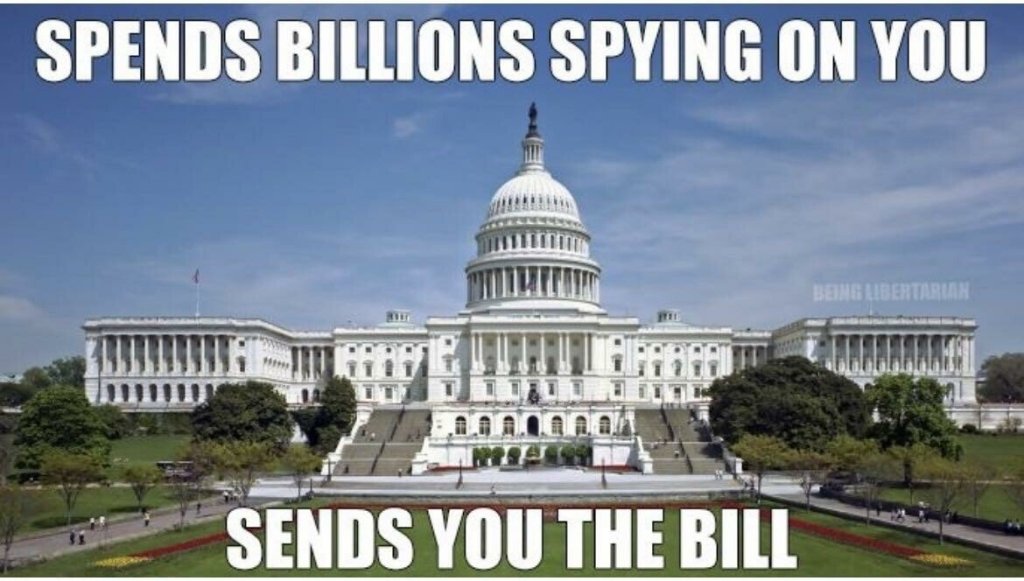
When we talk about NSA spying, most people’s eyes glaze over. They just don’t think it will have any impact on them. After all, the surveillance agency only spies on foreigners and terrorists, right? And if some Americans’ data ends up in NSA databases in the process, well, that doesn’t really matter. It’s the price we pay for security.

But in fact, federal surveillance and the investigative practices it fosters undermines and subverts the fundamental rule of law in the United States.

State and local law enforcement agencies use the reams of data the NSA collects to prosecute Americans. Most of these cases have nothing to do with terrorism or national security. In fact, the vast majority relate to the so-called “war on drugs.” In the process, these state and local cops shred due process, obliterate the Fourth Amendment and make a mockery out of the “rule of law.”

Using a secretive process known as “parallel construction,” police build cases on illegally obtained, warrantless data collected by the NSA and other federal agencies without anybody ever knowing. These investigations take place in complete secrecy with no judicial oversight. Oftentimes, suspects and defense attornies have no idea how police obtained information.

Former NSA technical director William Binney called parallel construction “the most threatening situation to our constitutional republic since the Civil War.”

Keep reading

The NSA’s Inspector General Opens Investigation Into Allegations of Illegal Spying on Tucker Carlson

The independent watchdog agency which investigates potential wrongdoing by the National Security Agency (NSA) announced on Tuesday morning that it has opened an investigation into “recent allegations that the NSA improperly targeted the communications of a member of the U.S. news media.” Though the oversight unit, the NSA’s Office of the Inspector General, did not specify the journalist in question, the statement leaves no doubt that the investigation pertains to news reports that the identity of Fox News host Tucker Carlson had been improperly “unmasked” and illegally revealed within the intelligence community.

The NSA’s Inspector General, Robert P. Storch, is a long-time Executive Branch functionary. He was first appointed to this position by President Obama in 2016 but failed to receive Senate confirmation. He was then re-appointed by President Trump in 2018 and the Senate then confirmed him. A widely respected bureaucrat in Washington, he also previously served as deputy Inspector General in Obama’s Justice Department, and, prior to that, was a federal prosecutor. It is, to put it mildly, difficult to imagine him opening an investigation into frivolous allegations.

The scandal began when Carlson announced on his show in late June that he had heard from a source inside the government that the NSA was in possession of his communications, as proven by their knowledge of what he was doing. The NSA then issued a meaningless non-denial denial, insisting that the Fox host “has never been an intelligence target of the Agency.” Even Fox’s critics acknowledge the irrelevance of that claim: there are many ways for the NSA to spy on an American citizen without having them be a formal “target” of the agency. In a follow-up interview on Fox, Carlson said he was told by a second source that the NSA had discovered his attempts to interview Russian President Vladimir Putin and viewed leaking of that information as potentially damaging to his reputation.

Corporate media outlets largely sided with the NSA, mocking Carlson for being conspiratorial and even accusing him of fabricating a story. One might think that journalists would have more interest in finding out whether the NSA was abusing their powers to discredit a journalist than cheering the security state for partisan reasons, but one would be wrong. Disdain for Carlson’s claims were widespread in media circles.

But Carlson’s concerns appeared to be at least partially corroborated when Axios’ Jonathan Swan reported that “U.S. government officials learned about Carlson’s efforts to secure the Putin interview.” Though Swan emphasized that none of this meant that the NSA was targeting Carlson for surveillance or even that his communications had been “incidentally” collected — meaning that the NSA read his emails or heard his conversations because he was communicating with one of their targets — their knowledge of Carlson’s activities raised the question of whether Carlson’s identity had been “unmasked” by the agency. As Swan wrote:

In order to know that the texts and emails were Carlson’s, a U.S. government official would likely have to request his identity be unmasked, something that’s only permitted if the unmasking is necessary to understand the intelligence.

When the NSA learns about the communications or activities of an American citizen without having a warrant from the FISA court to spy on that person, they are required by law to engage in “minimization” efforts to protect the privacy of that citizen. In particular, when preparing reports involving such spying, they are required to conceal — to “mask” — the identity of the American about whom they learned information, referring to them only by a generic title sufficient to describe their work or status without revealing their specific identity (e.g., “an American journalist” or “a business executive”).

Keep reading

NSA Reveals in FOIA Response that the FBI Involved in “Improper Surveillance” of 16,000 Americans

Then on January 6, after one million Trump supporters rallied with President Trump at the Ellipse outside the White House, some 900 individuals went inside the US Capitol. Over 400 have since been arrested, including those who were waved into the US Capitol by the police standing at the exits.

Since January, the Deep State and Democrats will not release videotapes to Republican lawmakers from January 6th inside or outside the US Capitol.

Earlier this week Revolver News published an important piece on the “unindicted co-conspirators” in the Jan. 6 attack who were never charged by the DOJ or FBI for their part in the violence on Jan. 6.

The “unindicted co-conspirators” were frequently the most violent and leaders of the assault on the US Capitol. They are also likely FBI informants.

Keep reading