
Let that sink in…

Ricketts held a press conference this week to rail against a bill that would only make marijuana legal if it were recommended by a health care practitioner, come in oil form, pills, or tinctures. Additionally, the legislation would not make smoking marijuana, even in the privacy of a patient’s home, legal.
Ricketts said the legalization movement is “big industry” trying to skirt federal regulations at the state level.
Researchers in Austria’s Klagenfurt Clinic are reporting promising results from CBD trials on Covid-19 ICU patients that show reduced inflammation and quicker recovery times.
Cannabidiol or CBD oil was used as part of the overall course of treatment for Covid-19 patients in the hospital’s ICU over the course of three weeks.
Rudolf Likar, head of intensive care medicine at the clinic, started by administering a dose of 200 milligrams of CBD per day which later increased to 300 milligrams.
“We have seen that the inflammation parameters in the blood go down and people leave the hospital faster than the comparison group,” Likar said. “CBD supports the immune system.”
Researchers in Canada have conducted a study suggesting that novel Cannabis sativa extracts may decrease levels of the host cell receptor that severe acute respiratory syndrome coronavirus 2 (SARS-CoV-2) uses to gain viral entry to target tissues.
SARS-CoV-2 is the agent responsible for the current coronavirus disease 2019 (COVID-19) pandemic that continues to sweep the globe threatening public health and the worldwide economy.
The team – from the University of Lethbridge and Pathway Rx Inc., Lethbridge – developed hundreds of new C. sativa cultivars and tested 23 extracts in artificial 3D human models of the oral, airway and intestinal tissues.
As recently reported in the journal Aging, 13 of the extracts downregulated expression of the SARS-CoV-2 host cell receptor angiotensin-converting enzyme 2 (ACE2).
“The observed down-regulation of ACE2 gene expression by several tested extracts of new C. sativa cultivars is a novel and crucial finding,” say the researchers.
“While our most effective extracts require further large-scale validation, our study is important for future analyses of the effects of medical cannabis on COVID-19,” write Olga Kovalchuk and colleagues.
Two Canadian researchers think that a special strain of cannabis might potentially be a valuable tool in the fight against COVID-19.
The researchers, Olga and Igor Kovalchuck have reportedly been developing and testing a novel cannabis strain for years, except with the goal of creating a strain that helps to combat cancer and inflammation. When the pandemic hit, the duo started to focus their efforts on how the strain might be used to help fight COVID-19.
The duo’s work was published in an April issue of the online medical journal Preprints.
“Similar to other respiratory pathogens, SARS-CoV2 is transmitted through respiratory droplets, with potential for aerosol and contact spread. It uses receptor-mediated entry into the human host via angiotensin-converting enzyme II (ACE2) that is expressed in lung tissue, as well as oral and nasal mucosa, kidney, testes, and the gastrointestinal tract,” reads the study. “Modulation of ACE2 levels in these gateway tissues may prove a plausible strategy for decreasing disease susceptibility.”
After looking at the research done on cannabis and COVID by other scientists, they were able to determine that cannabis, a special strain in particular, could potentially block COVID-19 from entering a person’s body to begin with.
It all comes down to our body’s ACE2 receptors, which works sort of like doorways into our bodies for the virus. In the case of the Kovalchuck’s work, cannabis would be used to decrease the level of ACE2 gene expression, essentially temporarily closing the doors to the virus.
Cannabis is most often sold in eighths of an ounce, which can be rolled into about seven joints. An eighth of Gorilla Glue 4 marijuana sells for $35 in California. It’s $40 in Maine. It costs $58 in Pennsylvania.
In Colorado, a full ounce of average weed often sells to consumers for $190. In Pennsylvania, the price is closer to $500. Some especially rapacious growers charge $600.
“The patient community is always outraged about the prices,” said Luke Shultz, a member of the state’s medical marijuana advisory board. “I’m not sure where the price should be. But we’d sure like to see it lower.”
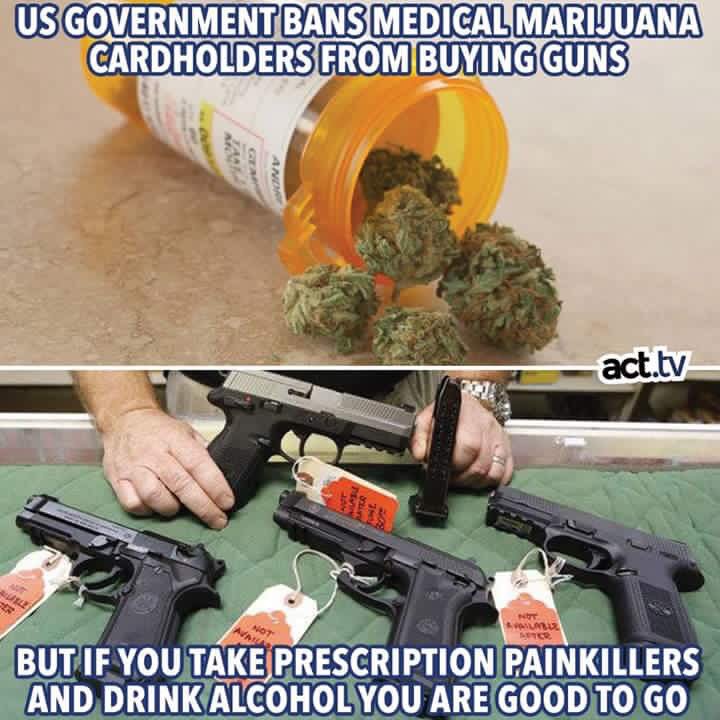
In the United States, cannabis is legal for recreational use in 11 states while 33 other states allow some form of medical use. One would think that with this widespread legalization, which seems to be speeding up, that police officers would start concentrating their efforts elsewhere and arrest actual criminals who hurt people — not kidnap and cage innocent people for using a plant. Sadly, however, the incentives for arresting cannabis users are too addictive and the police state marches on, laying waste to all the lives it touches along the way.
Despite a massive number of anecdotal accounts coupled with an equally massive amount of research on the medical benefits of using cannabis as medicine, most states in the “land of the free” still kidnap and cage people for using it.
Sadly, in the land of the free, realizing the true benefits of cannabis is limited by the plant’s schedule 1 classification by the federal government. As cops continue to kidnap and cage people for cannabis, this plant’s life-saving potential is hindered. This seems especially egregious knowing the plant’s promise for alleviating the horrific opioid epidemic we are currently facing along with its numerous other potential treatments.
The good news is that most people now see cannabis prohibition for the tyrannical horse manure that it is and are willing to disobey. After all, most positive change comes — not in the form of begging politicians — but when good people choose to disobey bad laws.
This disobedience seems to be spreading too — all the way to Congress, aparently.

 Hellbound and Down
You must be logged in to post a comment.