
Hydroxychloroquine (HCQ) has been shown to be at least somewhat effective in treating COVID 19 patients. Recently FDA and CDC warnings of fatal cardiac toxicity from Torsade de Pointes (TDP) arrhythmia from HCQ use have been made, notwithstanding the long safe HCQ use for lupus and rheumatoid arthritis. This has resulted in restricted access of HCQ for COVID 19 treatment. We hypothesized that HCQ and azithromycin have not been reported to cause significant acute cardiac arrhythmic mortality.
Tag: hydroxychloroquine
Doctors Pen Open Letter To Fauci Regarding The Use Of Hydroxychloroquine for Treating COVID-19
Since the start of the pandemic, physicians have used hydroxychloroquine to treat symptomatic COVID-19 infections, as well as for prophylaxis. Initial results were mixed as indications and doses were explored to maximize outcomes and minimize risks. What emerged was that hydroxychloroquine appeared to work best when coupled with azithromycin. In fact, it was the President of the United States who recommended to you publicly at the beginning of the pandemic, in early March, that you should consider early treatment with hydroxychloroquine and a “Z-Pack.” Additional studies showed that patients did not seem to benefit when COVID-19 infections were treated with hydroxychloroquine late in the course of the illness, typically in a hospital setting, but treatment was consistently effective, even in high-risk patients, when hydroxychloroquine was given in a “cocktail” with azithromycin and, critically, zinc in the first 5 to 7 days after the onset of symptoms. The outcomes are, in fact, dramatic.
Hydroxychloroquine works in high-risk patients, and saying otherwise is dangerous
As of Wednesday, some 165,000 people in the United States have died from COVID-19. I have made the case in the American Journal of Epidemiology and in Newsweek that people who have a medical need to be treated can be treated early and successfully with hydroxychloroquine, zinc, and antibiotics such as azithromycin or doxycycline. I have also argued that these drugs are safe and have made that case privately to the Food and Drug Administration.
The pushback has been furious. Dr. Anthony Fauci has implied that I am incompetent, notwithstanding my hundreds of highly regarded, methodologically relevant publications in peer-reviewed scientific literature. A group of my Yale colleagues has publicly intimated that I am a zealot who is perpetrating a dangerous hoax and conspiracy theory. I have been attacked in news articles by journalists who, ignorant of the full picture, have spun hit pieces from cherry-picked sources.
These personal attacks are a dangerous distraction from the real issue of hydroxychloroquine’s effectiveness, which is solidly grounded in both substantial evidence and appropriate medical decision-making logic. Much of the evidence is presented in my articles.
To date, there are no studies whatsoever, published or in pre-print, that provide scientific evidence against the treatment approach for high-risk outpatients that I have described. None. Assertions to the contrary, whether by Fauci, the FDA, or anyone else, are without foundation. They constitute misleading and toxic disinformation.
JAIL FAUCI: US Has Almost 30 Times More COVID-19 Deaths per Population than Third-World Countries that Promoted Early HCQ Use
The latest international testing of hydroxychloroquine treatment of coronavirus shows countries that had early use of the drug had a 79% lower mortality rate than countries that banned the use of the safe malaria drug.
This means that Dr. Fauci, Dr. Birx, the CDC, the liberal fake news media and the tech giants have been pushing a lie that has had deadly consequences!
America has lost (reportedly) over 150,000 lives.
NYC Councilman Paul Vallone credits Hydroxychloroquine for COVID-19 recovery
A Democratic New York City Councilman says hydroxychloroquine saved his life after a near-fatal run-in with COVID-19 in March.
Paul Vallone, who represents northeast Queens, took the drug along with a standard flu Z-pack, and came back from the brink almost immediately.
“I couldn’t breathe, very weak, couldn’t get out of bed. My doctor prescribed it. My pharmacy had it. Took it that day and within two to three days I was able to breathe,” Vallone told The Post. “Within a week I was back on my feet.”
Though Vallone went public with his coronavirus diagnosis in an April 1 Twitter post, saying he was experiencing “mild symptoms,” his actual condition was considerably more severe. Vallone’s initial prognosis was particularly grim, as he also suffers from sarcoidosis, an auto-immune disease that attacks his lungs.
“We were in panic mode when I went down because I didn’t have a lot of immune response,” he said. “I needed something to stay alive.”
Hydroxychloroquine “worked for me.”
Veteran Virologist Slams Mainstream Media’s “Misinformation” About An Effective COVID Treatment
To a media unrelentingly hostile to Donald Trump, this meant that the president could be portrayed as recklessly promoting the use of a “dangerous” drug. Ignoring the refutation of the VA study in its May 15 article, the Washington Post cited a Brazil study published on April 24 in which a COVID trial using chloroquine (a related but different drug than hydroxychloroquine) was stopped because 11 patients treated with it died. The reporters never mentioned another problem with that study: The Brazilian doctors were giving their patients lethal cumulative doses of the drug.
On and on it has gone since then, in a circle of self-reinforcing commentary. Following the news that Trump was taking the drug himself, opinion hosts on cable news channels launched continual attacks on both hydroxychloroquine and the president. “This will kill you!” Fox News Channel’s Neil Cavuto exclaimed. “The president of the United States just acknowledge that he is taking hydroxychloroquine, a drug that [was] meant really to treat malaria and lupus.”
Washington Post reporters Ariana Cha and Laurie McGinley were back again on May 22, with a new article shouting out the new supposed news:
“Antimalarial drug touted by President Trump is linked to increased risk of death in coronavirus patients, study says.”
The media uproar this time was based on a large study just published in the Lancet. There was just one problem. The Lancet paper was fraudulent and it was quickly retracted.
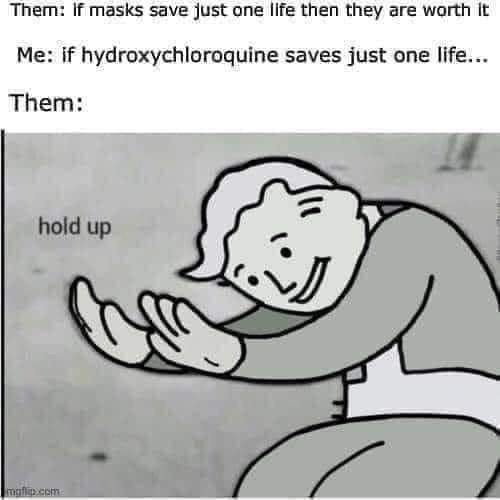
Just one life…
Your pharmacist is more powerful than your doctor…

Hydroxychloroquine lowers Covid-19 death rate, study finds
The anti-malaria drug hydroxychloroquine helped lower the death rate in Covid-19 patients in the most recent study of the drug conducted by Henry Ford Health System.
Cardiologist Dr. William O’Neill, a medical director at the Henry Ford Health System in Detroit, Michigan, first spoke with “Full Measure” about the study while it was underway in May. The findings have just been published in the peer-reviewed International Journal of Infectious Diseases.
The large scale analysis examined 2,541 patients who had been hospitalized in six hospitals between March 10 and May 2, 2020.
More than twenty-six percent (26.4%) of patients who did not receive hydroxychloroquine died. Nearly seventy-four percent (73.6%) survived.
But among those who received hydroxychloroquine: 13% died and 87% survived.
One suggested concern flagged in previous studies of hydroxychloroquine did not materialize in the Henry Ford Health System Study: heart-related adverse events.
The positive results compared to some other studies of hydroxychoroquine could be attributed, in part, to the timing of treatment say the study’s scientists. Ninety-one percent (91%) of the patients in the study were given hydroxychloroquine within 48 hours of admission.
Repurposing Drugs in Oncology (ReDO)—chloroquine and hydroxychloroquine as anti-cancer agents
Chloroquine (CQ) and hydroxychloroquine (HCQ) are well-known 4-aminoquinoline antimalarial agents. Scientific evidence also supports the use of CQ and HCQ in the treatment of cancer. Overall, preclinical studies support CQ and HCQ use in anti-cancer therapy, especially in combination with conventional anti-cancer treatments since they are able to sensitise tumour cells to a variety of drugs, potentiating the therapeutic activity. Thus far, clinical results are mostly in favour of the repurposing of CQ. However, over 30 clinical studies are still evaluating the activity of both CQ and HCQ in different cancer types and in combination with various standard treatments. Interestingly, CQ and HCQ exert effects both on cancer cells and on the tumour microenvironment. In addition to inhibition of the autophagic flux, which is the most studied anti-cancer effect of CQ and HCQ, these drugs affect the Toll-like receptor 9, p53 and CXCR4-CXCL12 pathway in cancer cells. In the tumour stroma, CQ was shown to affect the tumour vasculature, cancer-associated fibroblasts and the immune system. The evidence reviewed in this paper indicates that both CQ and HCQ deserve further clinical investigations in several cancer types. Special attention about the drug (CQ versus HCQ), the dose and the schedule of administration should be taken in the design of new trials.
 Hellbound and Down
You must be logged in to post a comment.