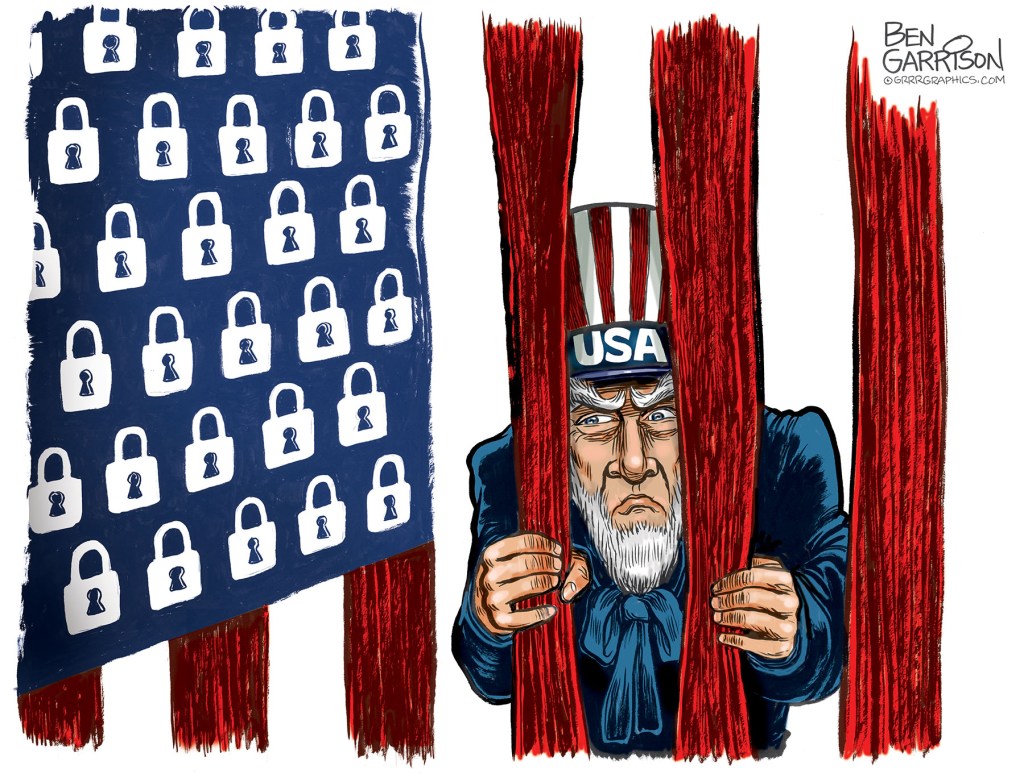
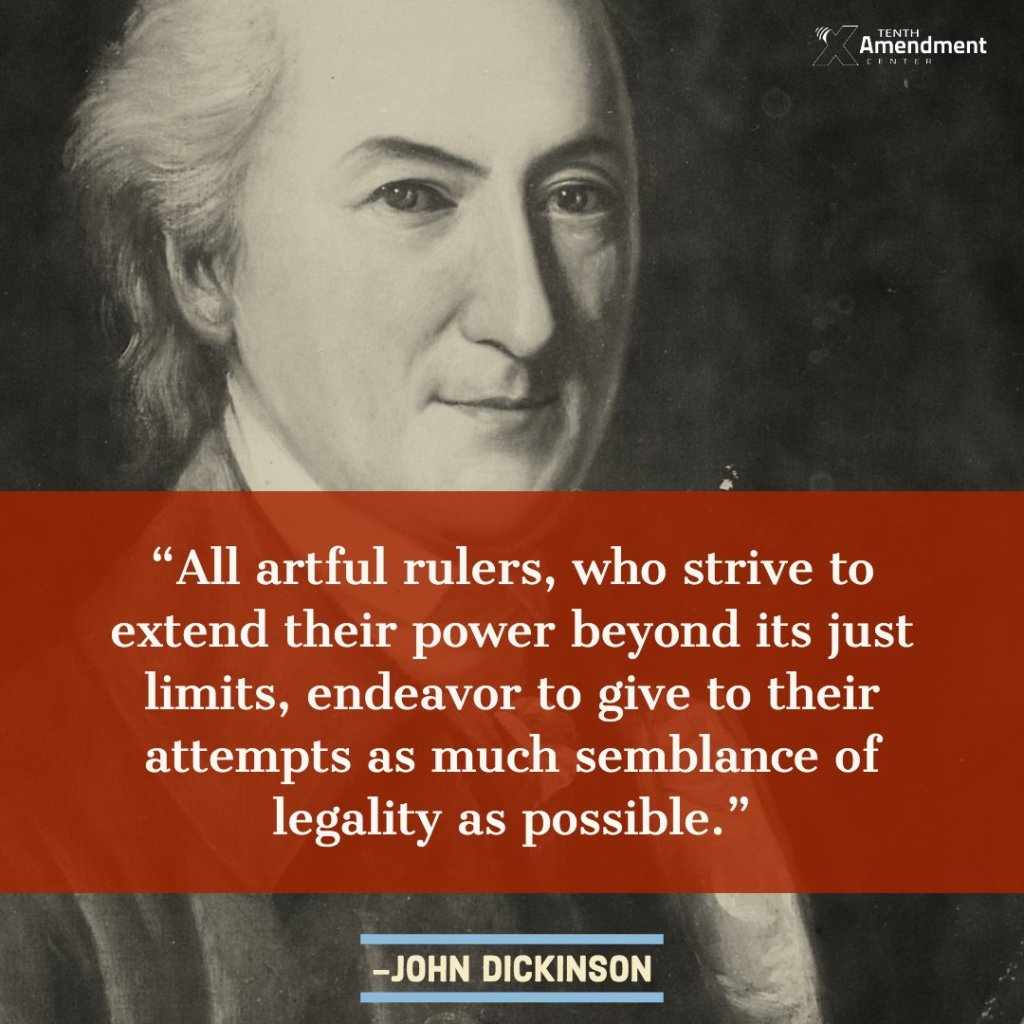
11 of the Most Memorable Acts of Civil Disobedience in History

Civil disobedience” evokes a range of reactions when people hear the term. Some instinctively wince, regarding it as anti-social or subversive.

Others, like me, want to know more before we judge. What is prompting someone to engage in it? Who will be affected and how? What does the “disobedient” person hope to accomplish? Are there alternative actions that might be more effective?

One of my earliest memories from childhood was an act of civil disobedience. My family resided near Beaver Falls, Pennsylvania, about 11 miles from the Ohio border town of Negley. At the time, Pennsylvania prohibited the unauthorized introduction and sale of milk from Ohio. On many a Saturday in the late 1950s and early 1960s, my father and I would drive over to Negley and fill the back seat of our car with good, cheap milk. During the drive back home, he would caution me to “keep it covered and don’t say anything if the cops pull us over.”

For me, milk smuggling was a thrill ride. It was downright exciting to evade a stupid law while keeping an eye out for a cop who might have nothing better to do than bust a couple of notorious dairy dealers. I know my dad made a few bucks when he re-sold the milk to happy neighbors. We never had any regrets or pangs of conscience for committing this victimless crime. We were simply supporting a cause that even Abraham Lincoln may have endorsed when he said, “The best way to get a bad law repealed is to enforce it strictly.”

Government officials hate civil disobedience because it’s a disgruntled citizen’s way of thumbing his nose. If we’re unhappy with laws or policies that are stupid, destructive, corrupt, counterproductive, unconstitutional, or in other ways indefensible, they advise us to do the “democratic” thing—which means hope for the best in a future election, stand in line to be condescended to at some boring public hearing, or just shut up.

My go-to expert on the issue is not a politician or a preacher or an academic. It’s Henry David Thoreau, who famously asked, “Must the citizen ever for a moment, or in the least degree, resign his conscience to the legislator? Why has every man a conscience then? I think that we should be men first, and subjects afterward.”

If the choice is obedience or conscience, I try my best to pick conscience.

Historically, civil disobedience—the refusal to comply with a law or command of a political authority—is exceedingly common. Sometimes it is quiet and largely unnoticeable. Other times it is boisterous and public. For an act to be one of civil disobedience, it must be accompanied by principled or philosophical objections to a law or command (to exclude such acts as simple theft, fraud, and the like).

Some political theorists argue that to qualify as civil disobedience, an act must be peaceful; others allow for violence in their definition of the term. Revolutions are certainly acts of disobedience, though because they tend to be accompanied by violence they often aren’t very “civil.” In any event, the indefensible violence this week in Washington should not blind us to the very honorable history of genuine civil disobedience and its loftier motivations.

Here’s a short list of what I call “great moments in civil disobedience.” There’s no particular order other than chronological, and I wouldn’t even claim these are all among the “top” examples in history. They are, at the least, interesting food for thought. See how many of them you could endorse.

Keep reading

COVID-19: The Emergence of the Pandemic Industrial Complex

If official numbers are to be believed, the United States is one of the worst hit countries in terms of COVID-19 infections and deaths. According to the US Center for Disease Control and Prevention (CDC), at the time of writing, there are supposedly 19 million COVID-19 cases with an alleged 300,000+ deaths suggesting between a 1-2% chance of dying from COVID-19 if infected by it. 

However, these numbers are problematic – even before questioning the validity of the statistics themselves leading to them.

For example – asymptomatic cases will likely go both untested and unreported, meaning many more people are actually being infected by COVID-19, exhibiting no symptoms, receiving no treatment, and most certainly not making it into the CDC’s “cases” statistics.

This means that your chances of being infected by COVID-19 and dying are actually much, much less than the often touted claim of 1-2%. Only those who exhibit severe enough symptoms to be tested and/or treated will make it into the statistics of “cases.”

In terms of framing any pandemic, an exaggeration of the lethality of the virus becomes a fundamental issue. If this information by itself is carelessly or dishonestly presented to the public without mention of the many more people likely being infected and exhibiting no symptoms at all, panic can, and clearly has been spread across society and the world, enabling extreme policies to glide through approval, beginning the process of disfigurement society now suffers today.

This was a fact highlighted by the work of Dr. John Ioannidis who, even at the onset of COVID-19, attempted to raise the alarm about needlessly stoking public hysteria, the folly of driving public health policy without proper data, and the catastrophic impact it would have – and is now clearly having – on society if this trend isn’t reversed.

Keep reading

When There Wasn’t Enough Hand Sanitizer, Distilleries Stepped Up. Now They’re Facing $14,060 FDA Fees.

For many American craft distillers, 2020 was already one of their worst years ever. The COVID-19-related closure of tasting rooms and cocktail bars, loss of tourism, and inability to offer in-store sampling slashed their sales revenue and cut them off from their customers. Then this week, just as it seemed they’d made it through the worst of a terrible year, the Food and Drug Administration (FDA) had one more surprise in store: The agency delivered notice to distilleries that had produced hand sanitizer in the early days of the pandemic that they now owe an unexpected fee to the government of more than $14,000.

“I was in literal disbelief when I read it yesterday,” says Aaron Bergh, president and distiller at Calwise Spirits in Paso Robles, California. “I had to confirm with my attorney this morning that it’s true.” The surprise fee caught distillers completely off guard, throwing the already suffering industry into confusion.

Keep reading

Disabled child removed by police from AMC theater for failing to wear a mask

A video recorded in Jacksonville, N.C. appears to show the manager of an AMC movie theater refusing to allow a reportedly disabled child from entering the theater without a mask, and calling the police to escort her distraught family from the scene.

The child, who was in a stroller at the time of the incident, is reportedly non-verbal and has a condition that precludes her use of a mask or face shield. The child’s family members were all wearing masks.

Police officers were ultimately asked to escort the upset family from the theater. 

The Jacksonville, N.C. Police Department and the AMC Theatres chain did not immediately respond to requests for comment.

Public health policy surrounding the use of masks on toddlers and children has become a subject of controversy over the last several months. Throughout the pandemic, there have been countless stories of families being thrown off flights or having flights canceled altogether because a baby was failing to don the required facial covering.

Keep reading

Towns Are Banning Sledding Because Parents Sue When Kids Get Hurt

A friend who was noodling around the AccuWeather Inc. website today found this depressing item: “Why Have Midwestern Towns Banned a Beloved Winter Pastime?

The article, which seems like it might just sit in a slush pile on the site’s news desk and await recycling every snow season, discusses a few horrible sledding injury lawsuits that drained the coffers of Omaha, Nebraska and Sioux City, Iowa.

“According to a study from The Center for Injury Research and Policy (CIRP) at Nationwide Children’s Hospital, more than 20,000 Americans younger than age 19 receive treatment for sledding-related injuries each year,” notes the article.

Keep reading

Payback: Montana DPHHS Kidnaps Grandkids of Republican DPHHS Critic

Child advocates across the country recognize Montana Department of Health and Human Services as among the worst in the nation for confiscating children, often without court orders or probable cause. Entire rallies have been held through the state for several years, with citizens protesting the heavy-handed actions of DPHHS for illegally taking parents from their children. One of those advocates demanding DPHHS child-confiscation reform is running for Montana House District 82. Her campaign’s tagline is, “Treasuring Family and Community” and she is an outspoken critic of DPHHS for stealing children from their parents without just cause.

Debbie Westlake isn’t alone in her concerns. Many Montana lawmakers have noted the epidemic of childhood confiscation that happens in far higher numbers here than in other surrounding states like Wyoming, Idaho, North Dakota, and South Dakota. In fact, Montana ranks per capita as the state with the second highest number of children being stolen from their parents, only behind West Virginia. More than 16 children out of 100 are stolen and never returned.

Westlake, in particular, has focused much of her campaign on ending the child-stealing tendencies of DPHHS and announced her candidacy while advocating against their human rights abuses. Rep. Randy Garcia warned in that very episode on Excellence in Voting Radio that DPHHS goes out of their way to punish their political opponents. And for Westlake, today was payback by DPHHS for criticizing their kidnapping policy.

Westlake’s sad saga, which includes DPHHS wrongfully stealing her child, landed the story at the prominent news network The Blaze, just last year. The story was surreal; Westlake was admitted and then released from the hospital when hospital workers notified DPHHS that there was something amiss. The state then stole Westlake’s 4-year-old son for no apparent reason. According to DPHHS later, they just wanted to make sure that Westlake had a backup plan for the child’s care in case she got sick again (so they stole him from a childcare facility while Westlake was recovering at home).

Westlake did nothing wrong. The health problems that landed her in the hospital was a routine and ordinary illness that many Americans face, not substance abuse or suicidal thoughts. It was a physical ailment. And yet, the judge terminated her parental rights and gave the child out for adoption to another set of parents. The miscarriage of justice made national news.

Now that Westlake is running for office to curb the draconian powers of Montana’s DPHHS, they have struck back, confiscating her grandchildren.

Keep reading