Police Bodycam Footage Is Going Behind a Paywall

Ohio Gov. Mike DeWine signed into law on Thursday changes to the state’s public records statute that allow law enforcement agencies to charge hundreds of dollars for body camera footage. Though such videos are central to watchdog reporting and police oversight, Ohio opted to join a handful of states that have made it easier for cops to put a steep price tag on transparency.

“Public bodies should be in the business of making it easier — not harder — for the public and the press to access important government records like body worn camera footage,” said Gunita Singh, an attorney at the Reporters Committee for Freedom of the Press. “There’s no need to impose vast sums of money onto requesters doing their part to foster transparency and accountability.”

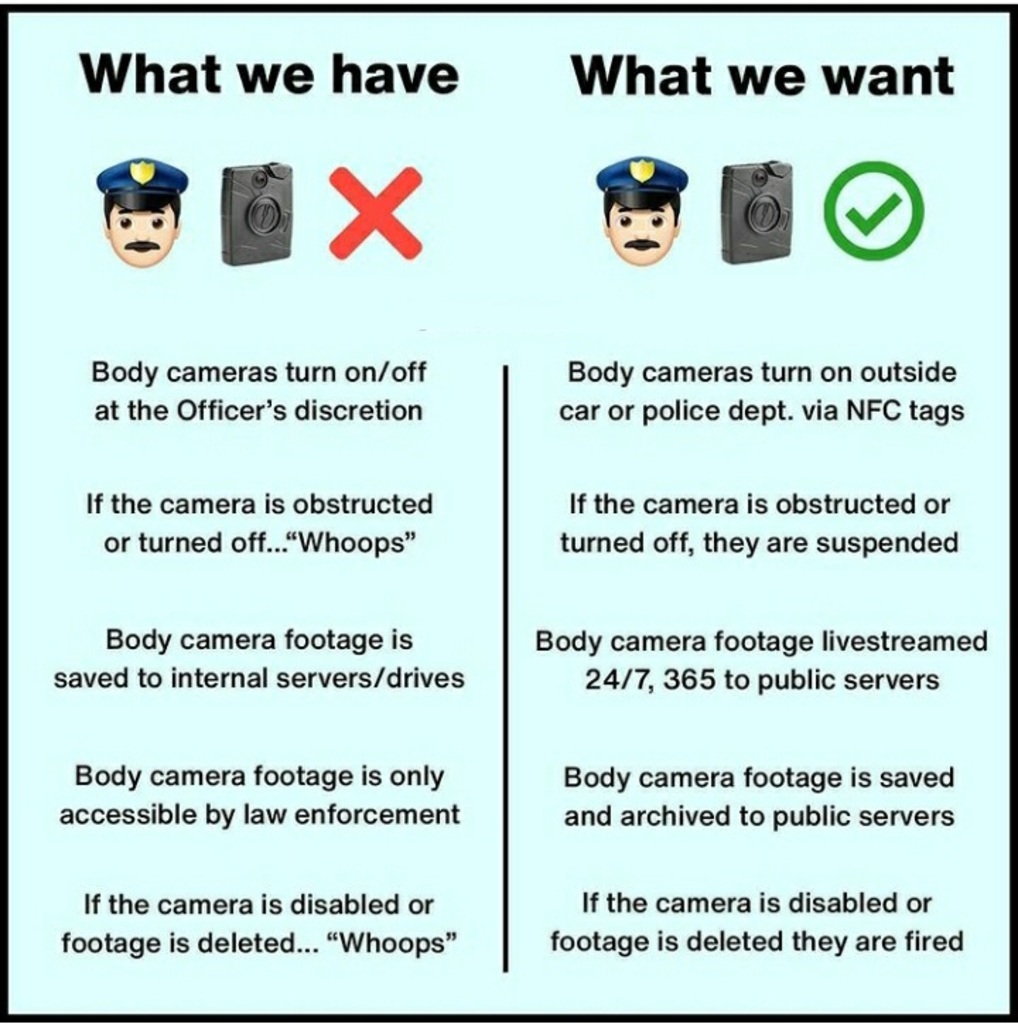
Over the past decade, more law enforcement agencies have deployed body cameras — and the footage they provide has become central to covering cops and stemming police brutality. At the same time, law enforcement agencies and police unions have begun complaining about the time and expense of turning these videos over to the public when requested. Some states have responded by authorizing fees for processing footage: In 2023, Arizona passed a law allowing charges up to $46 “per video-hour reviewed.” In 2016, Indiana authorized fees as high as $150 per video.

Keep reading

Bodycam of mistaken identity police raid that terrorized innocent family will not be made public

A judge in North Carolina said Raleigh police don’t have to release body camera video to the general public of a raid with guns drawn at a wrong house that left a husband, his then-pregnant wife and 11-month-old son traumatized.

In his decision, Wake County Superior Court Judge Matthew Houston noted the delay between the 2021 raid at Amir Abboud’s home and the hearing this week. The judge said that even though the plaintiffs allege something noteworthy about the underlying circumstance of the warrant, the execution of the warrant itself was not noteworthy. Abboud and his lawyers received the video but sought its release to the general public “for purposes of emotional recovery, accountability, transparency, and policy advocacy.”

Abboud’s lawyers said they were shocked.

“We think it’s clear that there is a compelling public interest in this matter,” the lawyers from Emancipate North Carolina, an advocacy group that opposes mass incarceration, said in a statement. “At least 10 personnel from media outlets were present during the hearing, and numerous outlets have been reporting on the issue. We believe this to be a blow to transparency and accountability to the public.”

Media representatives for Raleigh declined to comment.

Court documents spell out how it all happened on April 7, 2021, when Abboud returned home from work to his then-pregnant wife and their 11-month-old son.

Abboud was making coffee when Raleigh Police Department officers in military-style gear executing a “Quick Knock” warrant busted open the front door with a battering ram, pointing their AR-style rifles at the couple and their screaming 11-month-old son, the lawsuit alleges. The couple was not suspected of criminal activity — the raid was based on “erroneous police work” and a case of mistaken identity, court documents said.

Officers handcuffed Abboud and separated him from his family, taking him outside for questioning, the lawsuit alleges.

Keep reading

Group pushes for change in how police use body camera footage in officer shooting probes

An influential policing think tank is pushing law enforcement agencies to change how they handle body camera footage after police shootings, saying officers should not be able to review video before making their first statements to investigators.

The Police Executive Research Forum changed its position in a report released Friday, nearly 10 years after the group was first tapped by the Justice Department to write guidelines for agencies adopting body cameras.

The technology has swept the country’s police since. Now 79% of the country’s local police work in departments that use them. They’re in use in all cities of more than 1 million people, and Portland, Oregon, became the latest major city to adopt them in November.

“Having a body camera in your department is now expected,” said Chuck Wexler, the group’s executive director.

The technology has been key in cases like the death of Tyre Nichols, where body camera footage showed how he was brutally beaten by Memphis, Tennessee, police who are now facing criminal charges.

Still, research on whether body cameras reduce police use of force overall has been mixed. Half of the studies reviewed by the group showed officers with cameras tend to use force less often, but the rest of the studies showed no difference.

Friday’s report, an advance copy of which was provided exclusively to The Associated Press, also said departments should have clear policies on releasing video footage to the public. Of the 127 agencies it reviewed, only 14% had specific policies for releasing body camera footage of critical incidents.

The adoption of body cameras by police departments around the country increased sharply during the national outpouring of protest after the 2014 death of Michael Brown at the hands of police in Ferguson, Missouri.

“There was a lot of faith put in body cameras as a silver bullet to some of the problems that many police departments have,” said Jay Stanley, a senior policy analyst at the American Civil Liberties Union. “But a lot of that promise has not been fulfilled.”

Allowing officers to view body-camera footage before speaking to investigators can allow their stories to change to fit the video, either through lying or subconscious distortion of how they recall the event, he said.

“Policies like this one undercut the oversight function that the tool is supposed to play,” Stanley said.

Agencies have already been moving away from allowing viewing footage ahead of time, and the new recommendation could hasten that process, Wexler said. The research forum is now recommending a hybrid approach where officers give an early interview before watching the video during investigations of shootings or other uses of force, then come back and give more information.

Keep reading

Family Sues as Cop Caught on Body Cam Sexually Assaulting Their Dead Daughter, Sharing Video

 In one of the strangest and most disgusting cases TFTP has ever reported, late last year an LAPD cop was reportedly caught on his own body camera fondling and sexually assaulting a dead woman. Following an investigation into the video, the officer was arrested and charged with a felony. Now, the family of that woman is suing.

Officer David Rojas, 27, was charged with a felony violation of state safety codes, which prohibit “having sexual contact with human remains without authority,” according to a statement from the Los Angeles County district attorney’s office. His actions were recorded on his own body camera and then he shared it with his fellow cops to gloat in his disgusting behavior.

The lawsuit filed in Los Angeles Superior Court on Tuesday, alleges that Officer David Rojas sexually molested Elizabeth Baggett. It also alleges invasion of privacy, intentional infliction of emotional distress, negligence, mishandling of human remains and other offenses.

According to NBC, Gloria Allred, the attorney representing the Baggett family, called Rojas’ alleged behavior “mean, vile, base and contemptible.”

Keep reading