Memory Holin’, WHO-style…


The World Health Organization released a guidance memo on December 14th, warning that high cycle thresholds on PCR tests will result in false positives.
While this information is accurate, it has also been available for months, so we must ask: why are they reporting it now? Is it to make it appear the vaccine works?
The “gold standard” Sars-Cov-2 tests are based on polymerase chain reaction (PCR). PCR works by taking nucleotides – tiny fragments of DNA or RNA – and replicating them until they become something large enough to identify. The replication is done in cycles, with each cycle doubling the amount of genetic material. The number of cycles it takes to produce something identifiable is known as the “cycle threshold” or “CT value”. The higher the CT value, the less likely you are to be detecting anything significant.
This new WHO memo states that using a high CT value to test for the presence of Sars-Cov-2 will result in false-positive results.
Another speedbump has emerged in the drive to produce reliable COVID-19 therapeutics as a highly anticipated WHO drug trial called Solidarity found that Gilead’s COVID-19 treatment, remdesivir, had no substantial effect on a COVID-19 patient’s chances of survival. It also found that three other therapeutics were similarly ineffective.
The FT called the data a “significant blow” to efforts to find a drug that could help save late-stage COVID-19 patients. What’s more, none of the drugs “substantially affected mortality” or reduce the need to ventilate patients.
Other drugs examined in the trial included hydroxychloroquine, lopnavir and interferon regimes. All of them had “little effect” on hospitalized patients.
“We’ve got to follow the science,” we’re repeatedly told during the COVID-19 pandemic, usually by people arguing for the strict measures included in the broad category of “lockdowns.” But what happens when scientists disagree with one another and don’t adhere to one true faith in their recommendations for battling viral infection?
While there has been disagreement among scientists since COVID-19 appeared on the scene, opponents of the most restrictive measures have largely been sidelined. But now, insisting that “science” speaks with one voice is much harder, with a World Health Organization (WHO) official and the Great Barrington Declaration objecting to the pain inflicted by lockdowns and calling for less-draconian public health policies.
“We in the World Health Organization do not advocate lockdowns as the primary means of control of this virus,” David Nabarro, WHO special envoy for Covid-19, told Britain’s Spectator magazine last week. “The only time we believe a lockdown is justified is to buy you time to reorganize, regroup, rebalance your resources, protect your health workers who are exhausted, but by and large, we’d rather not do it.”
He pointed to the devastating worldwide elevation in rates of poverty and hunger as a result of restrictions imposed to fight the pandemic, saying that “lockdowns just have one consequence that we must never, ever belittle, and that is making poor people an awful lot poorer.”
The World Health Organization has finally confirmed what we (and many experts and studies) have been saying for months – the coronavirus is no more deadly or dangerous than seasonal flu.
The WHO’s top brass made this announcement during a special session of the WHO’s 34-member executive board on Monday October 5th, it’s just nobody seemed to really understand it.
In fact, they didn’t seem to completely understand it themselves.
The World Health Organization is collaborating with an analytics company to scan people’s social media conversations for “coronavirus misinformation;” something the WHO calls “social listening.”
The global health organization says that it’s not only fighting the pandemic but also the conversations people are having about it.
According to the WHO, there’s an “infodemic” – an overload and spread of misleading information, so much so that it decided that to tackle misinformation, it needs to employ various tools, including social listening, with machine learning monitoring.
“Countering fake news or rumors is actually only responding or mitigating when it’s too late,” said Tim Nguyen, a technology expert helping the WHO’s unit titled Information Network for Epidemics (EPI-WIN). “What we’ve put in place in the beginning of the pandemic is what we call a social listening approach.”
The company has been creepily scanning more than 1.6 million social media posts each week to monitor online conversation. It then uses machine learning to classify information into four topics; cause, illness, interventions, and treatments. The WHO’s aim is to learn the coronavirus topics that are gaining popularity so that it can then create its own content to counteract and attempt to change the narrative.
The WHO’s “social listening” goes beyond analyzing people’s conversations for content, it also tries to analyze their emotions. Through language analytics, the technology detects emotions such as sadness, acceptance, denial, and anxiety. With such insights, the WHO hopes to come up with effective strategies to adjust coronavirus narratives.
“What we’ve learned now, after two and a half months of doing this kind of analysis, is that there are recurring themes and topics that are coming back over and over again,” Nguyen explained. “What that means to us is that we need to re-push information at different times. People may not understand it the first time when we push it, but when the questions and issues come up later, it means it’s time to push it out again.”
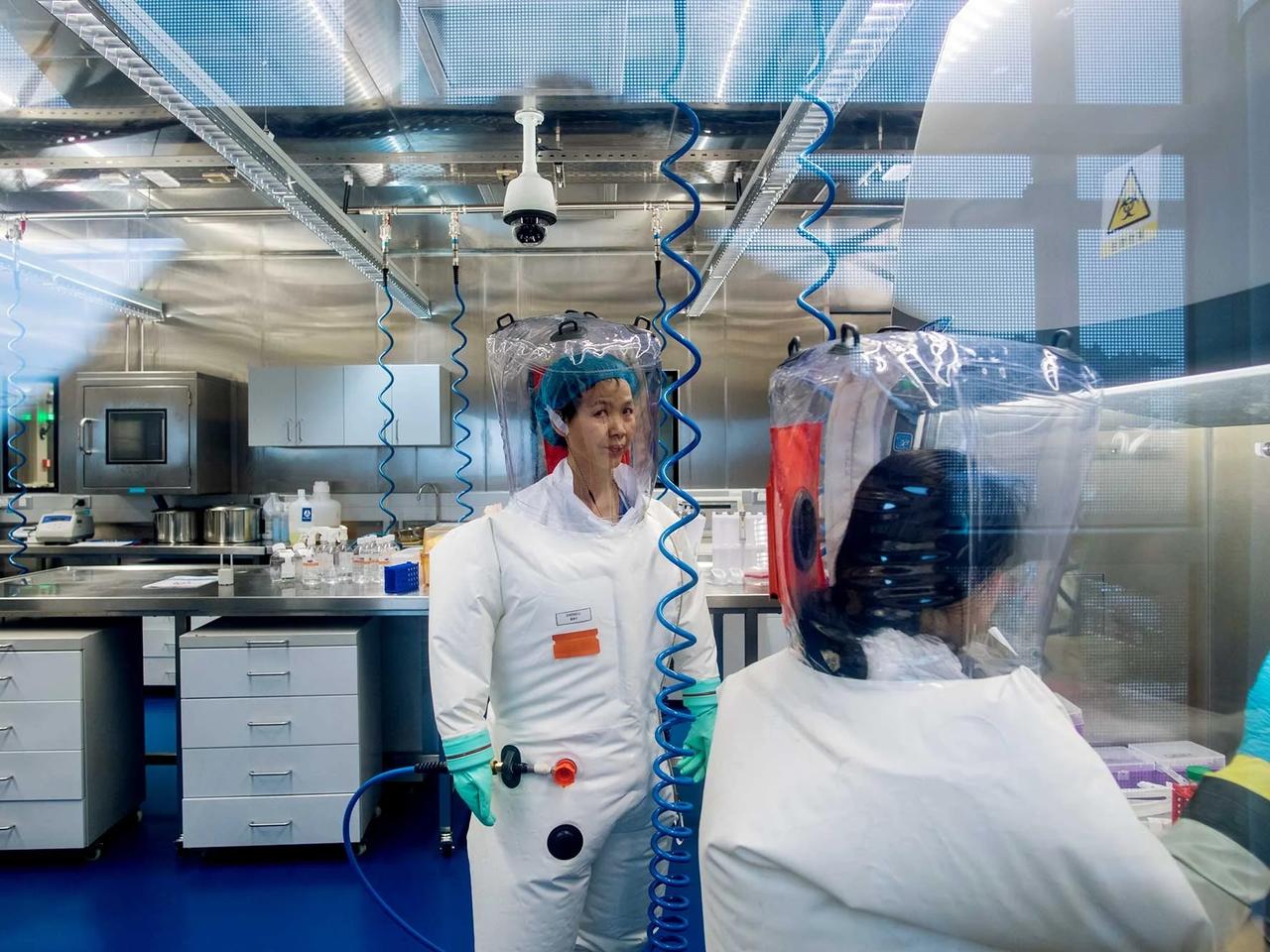
A delegation from the World Health Organization tasked with investigating the origins of COVID-19 failed to go to Wuhan, China -‘ground zero’ for the pandemic, and instead “sat in Beijing for three weeks” according to a senior US official, who told the Financial Times that Western governments are skeptical over China’s commitment to identifying the origins of the pandemic.
“Any chance of finding a smoking gun is now gone,” the official continued. Though we’re not sure what any team of investigators would find after China blocked international epidemiologists for eight months after the outbreak began.
Australian MP Dave Sharma told the Times: “The international community is right to have serious concerns about the rigour and independence of the WHO’s early response to this pandemic, and its seeming wish to avoid offending China.
“If this allegation is proven, it is another disturbing incident of the WHO — which is charged with safeguarding global public health — putting the political sensitivities of a member state above the public health interests of the world, in the critical early stages of this pandemic. We are all now bearing the immense costs of such a policy.”
The World Health Organization said Monday there may never be a magical cure for the coronavirus even as scientists and drugmakers across the globe race to find a safe and effective vaccine.
Scientists have made progress in identifying treatments that can help people with the most severe forms of Covid-19, and a number of vaccines are in late-stage trials, WHO Director-General Tedros Adhanom Ghebreyesus said during a press conference from the agency’s Geneva headquarters. “However, there is no silver bullet at the moment and there might never be.”
Tedros wasn’t asked about Russia’s claims that it will be ready to start mass inoculations in October.
There are no-FDA approved drugs for the coronavirus, which has infected more than 18 million people worldwide and killed at least 689,625, according to data compiled by Johns Hopkins University.
In May, the FDA granted antiviral drug remdesivir an emergency use authorization, allowing hospitals and doctors to use the drug on patients hospitalized with the disease even though the drug has not been formally approved by the agency. The FDA has also said it is looking at dexamethasone, a steroid already authorized in the U.K. for the treatment of Covid-19.
However, public health officials say there is no returning to “normal” until there’s a vaccine. There are more than 150 vaccines under development worldwide, according to the WHO. At least 25 are already in clinical trials. On Thursday, senior administration officials at the Department of Health and Human Services said drug companies Pfizer and Moderna, which both began a phase-three trial for their leading vaccine candidates last week, have already vaccinated “several hundred people” within the first few days.


You must be logged in to post a comment.