
The Fear…

The Federal Government and Yale are currently holding clinical trials on how best to persuade Americans into taking the Fauci-Gates COVID-19 vaccines.
The study is published at the government website on clinical trials.
The options they are studying include shame and anger techniques:
Other: Control message
Other: Baseline message
Other: Personal freedom message
Other: Economic freedom message
Other: Self-interest message
Other: Community interest message
Other: Economic benefit message
Other: Guilt message
Other: Embarrassment message
Other: Anger message
Other: Trust in science message
Other: Not bravery message
The World Health Organization said Monday there may never be a magical cure for the coronavirus even as scientists and drugmakers across the globe race to find a safe and effective vaccine.
Scientists have made progress in identifying treatments that can help people with the most severe forms of Covid-19, and a number of vaccines are in late-stage trials, WHO Director-General Tedros Adhanom Ghebreyesus said during a press conference from the agency’s Geneva headquarters. “However, there is no silver bullet at the moment and there might never be.”
Tedros wasn’t asked about Russia’s claims that it will be ready to start mass inoculations in October.
There are no-FDA approved drugs for the coronavirus, which has infected more than 18 million people worldwide and killed at least 689,625, according to data compiled by Johns Hopkins University.
In May, the FDA granted antiviral drug remdesivir an emergency use authorization, allowing hospitals and doctors to use the drug on patients hospitalized with the disease even though the drug has not been formally approved by the agency. The FDA has also said it is looking at dexamethasone, a steroid already authorized in the U.K. for the treatment of Covid-19.
However, public health officials say there is no returning to “normal” until there’s a vaccine. There are more than 150 vaccines under development worldwide, according to the WHO. At least 25 are already in clinical trials. On Thursday, senior administration officials at the Department of Health and Human Services said drug companies Pfizer and Moderna, which both began a phase-three trial for their leading vaccine candidates last week, have already vaccinated “several hundred people” within the first few days.


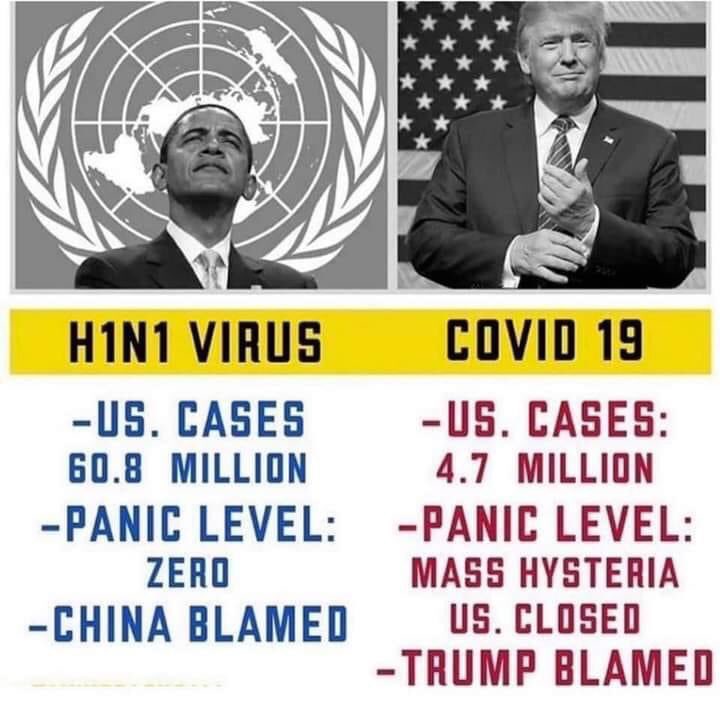
The Swine Flu Program was marred by a series of logistical problems ranging from the production of the wrong vaccine strain to a confrontation over liability protection to a temporal connection of the vaccine and a cluster of deaths among an elderly population in Pittsburgh. The most damning charge against the vaccination program was that the shots were correlated with an increase in the number of patients diagnosed with an obscure neurological disease known as Guillain–Barré syndrome (1).
Most people are more likely to wind up six feet under because of almost anything else under the sun other than COVID-19.
The CDC just came out with a report that should be earth-shattering to the narrative of the political class, yet it will go into the thick pile of vital data and information about the virus that is not getting out to the public. For the first time, the CDC has attempted to offer a real estimate of the overall death rate for COVID-19, and under its most likely scenario, the number is 0.26%. Officials estimate a 0.4% fatality rate among those who are symptomatic and project a 35% rate of asymptomatic cases among those infected, which drops the overall infection fatality rate (IFR) to just 0.26% — almost exactly where Stanford researchers pegged it a month ago.
Herd immunity is the only long-term solution to Covid-19 but the idea has wrongly become “taboo”, a leading scientist has said.
The concept currently “provokes hostility and controversy” but it must be revisited, according to Raj Bhopal, emeritus professor of public health at Edinburgh University.
In a new article published in the journal Public Health in Practice, he argues that the Covid-19 pandemic has put ministers in a “zugwang” which is a position in chess where every move is disadvantageous and where every plan must be examined “however unpalatable” it might be.

 Hellbound and Down
You must be logged in to post a comment.