Democrats to Vote on 8 Gun Control Measures

Democrats in the House Judiciary Committee will hold a vote on a gun control package Thursday which includes six gun control measures that would not have prevented the Uvalde attack.

The package is titled the “Protecting Our Kids Act.”

Punchbowl News reports that the package contains eight gun controls. Six of those gun controls would not have prevented the Uvalde attack.

Nadler’s spokesman confirmed the list of bills the House Judiciary Committee will consider under the broader “Protecting Our Kids Act.” They include:

  • The Raise the Age Act
  • Prevent Gun Trafficking Act
  • The Untraceable Firearms Act
  • Ethan’s Law
  • The Safe Guns, Safe Kids Act
  • The Kimberly Vaughan Firearm Safety Storage Act
  • Closing the Bump Stock Loophole Act
  • The Keep Americans Safe Act

Those six include background checks for “ghost guns,” gun storage requirements for homes with minors present, additional penalties for gun trafficking and straw purchases, a bump stock ban, and a requirement that existing bump stocks be registered under the auspices of the National Firearms Act.


Keep reading

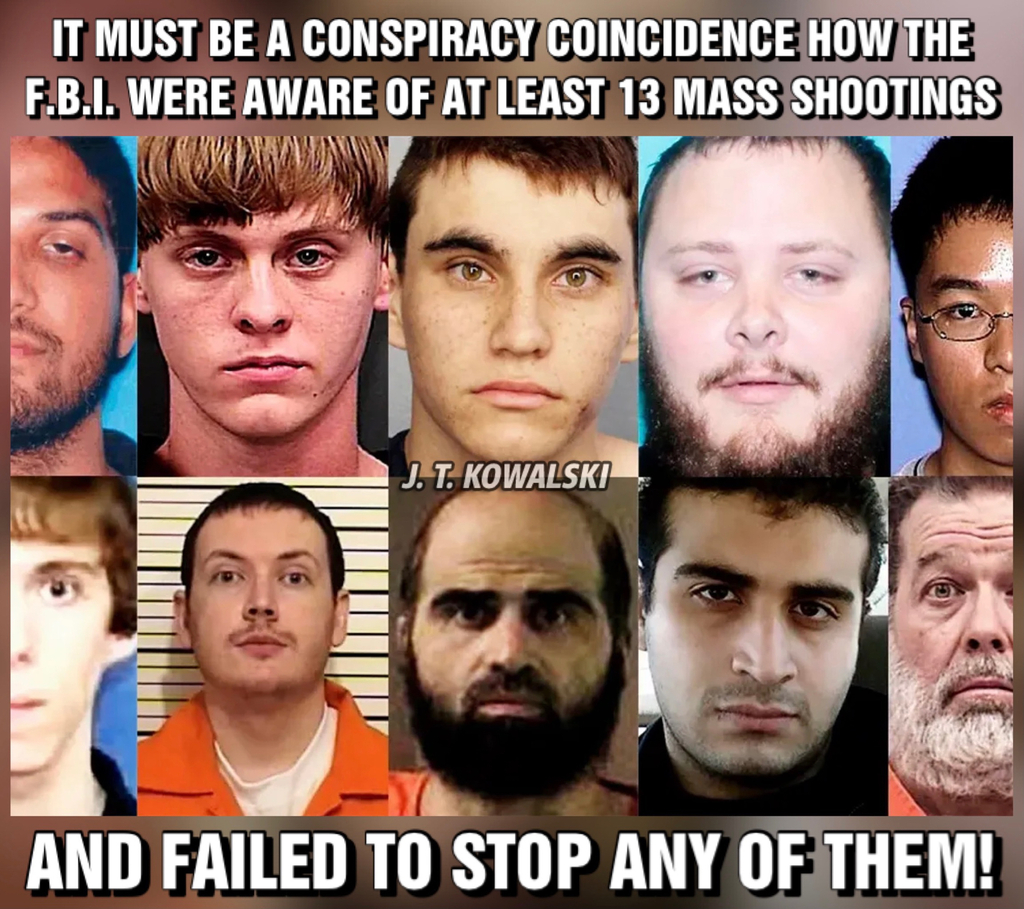
There Have Been 13 Mass School Shootings Since 1966, Not 27 This Year

For many people, the Uvalde, Texas, mass shooting—which claimed the lives of at least 19 children and two adults—seemed all the more horrible after they learned it was the 27th school shooting so far this year. That fact makes it harder to view Uvalde as any kind of isolated incident.

An NPR article highlighting this statistic has been shared frequently on social media. The headline, “27 school shootings have taken place so far this year,” probably gave many readers the impression that gun-related killings in schools have been especially high this year, even before Uvalde. Naturally, the prospect of 26 other previously unnoticed mass shooting events in schools should provoke alarm. It should also raise eyebrows.

The problem here is that three very differently defined terms are being used somewhat incautiously and interchangeably: school shootingmass shooting, and mass school shooting. Uvalde was a mass school shooting; the 26 previous tragedies at schools this year were not.

The difference is significant. Education Week, which tracks all school shootings, defines them as incidents in which a person other than the suspect suffers a bullet wound on school property. Many of the 26 previous shootings involved disputes between students in parking lots, or after athletic events, and all of them resulted in one or zero deaths. These deaths are still incredibly tragic, of course. But they are fundamentally unlike what happened in Uvalde.

Keep reading

America doesn’t actually lead the world in mass shootings

The claim that the US has by far the most mass public shootings in the world drives much of the gun-control debate. Many argue that America’s high rate of gun possession explains the high rate of mass shootings.

“The one thing we do know is that we have a pattern now of mass shootings in this country that has no parallel anywhere else in the world,” President Barack Obama warned us. To justify this claim and many other similar quotes, Obama’s administration cited a then-unpublished paper by criminologist Adam Lankford.

Lankford’s claim received coverage in hundreds of news stories all over the world. It still gets regular coverage. Purporting to cover all mass public shootings around the world from 1966 to 2012, Lankford claimed that the United States had 31 percent of public mass shooters despite having less than 5 percent of the population.

But this isn’t nearly correct. The whole episode should provide a cautionary tale of academic malpractice and how evidence is often cherry-picked and not questioned when it fits preconceived ideas.

Lankford’s study reported that over the 47 years there were 90 public mass shooters in the United States and 202 in the rest of world. Lankford hasn’t released his list of shootings or even the number of cases by country or year. We and others, both in academia and the media, have asked Lankford for his list, only to be declined. He has also declined to provide lists of the news sources and languages he used to compile his list of cases.

These omissions are important because Lankford’s entire conclusion would fall apart if he undercounted foreign cases due to lack of news coverage and language barriers.

Keep reading

‘School shooting’ definition has recently been changed to make it look like they are more frequent now

Uvalde was a mass school shooting; the 26 previous tragedies at schools this year were not,” Reason continues to report, continuing with the definition that at least three people have to be killed (in most cases, four) in order for an incident to officially be considered a mass shooting, according to the Gun Violence Archive itself.

Using this metric, there have only been a total 13 mass school shootings since 1966, going back to the infamous clock tower incident at the University of Austin on Aug 1 of that year.

Keep reading