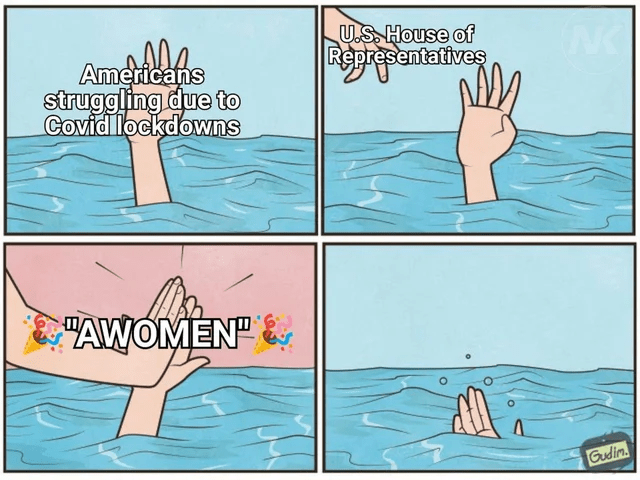
Yes, they really said ‘Awomen’ at the end of a prayer…

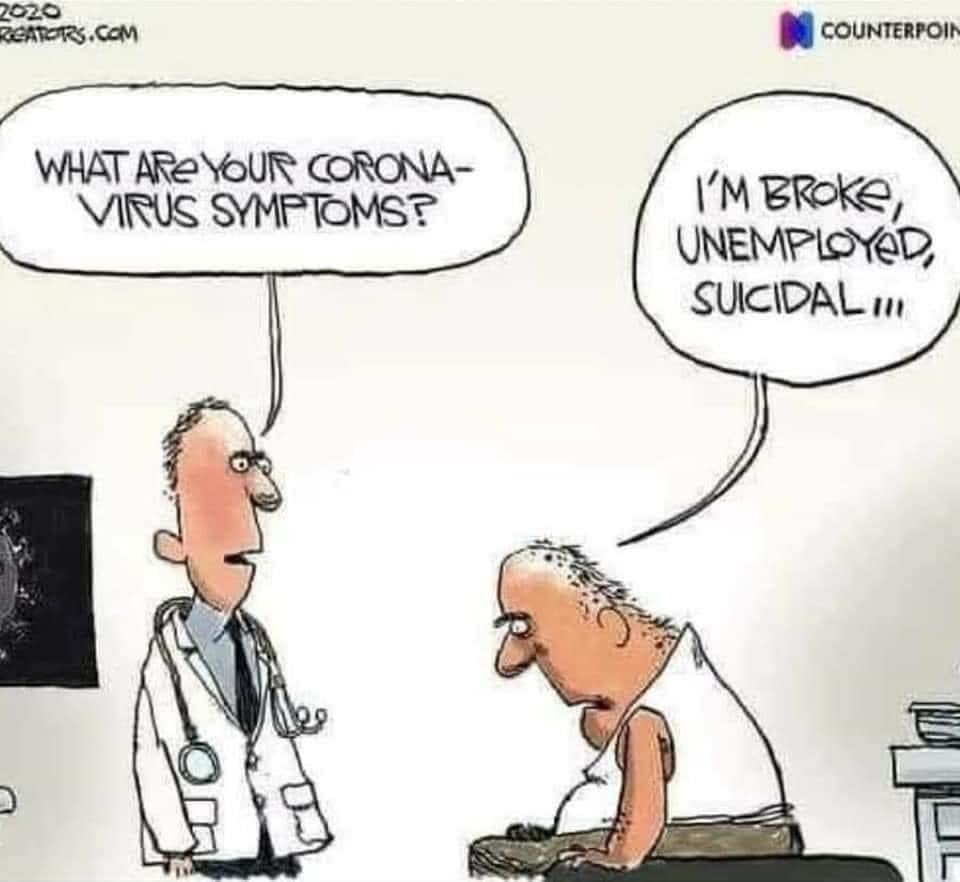
Lest you were hopeful that some semblance of normal life will return in 2021, either due to the development of vaccines or the pandemic fizzling out on its own, the New York Times and 700 epidemiologists have news for you. An article that appeared in the paper on December 4, 2020, entitled “How 700 Epidemiologists are Living Now, and What They Think is Next,” with the subheading “They are going to the grocery store again, but don’t see vaccines making life normal right away,” reveals that most in the profession, or at least the vast majority of those interviewed for the piece, believe that masks and some form of social distancing should continue for years, if not forever.
As an aside, I wonder how these scientists believe groceries arrive at their doorsteps, if not by another human being whose safety is, apparently, less worthy of consideration.
While a minority of epidemiologists interviewed for the article believe that “if highly effective vaccines were widely distributed, it would be safe for Americans to begin living more freely this summer,” these relative optimists are vastly outnumbered by those who think that life should not return to normal for many years, if ever. Indeed, only one third of the 700 plan to “return to more activities of daily life” once vaccinated. The others intend to severely restrict travel, gather only in small groups with close relatives, work from home at least part time, avoid crowded places, and wear a mask, all indefinitely, because they are concerned about the efficacy of a vaccine, as well as issues with respect to distribution and reluctance to get it.
One epidemiologist declares that “[b]eing in close proximity to people I don’t know will always feel less safe than it used to.”
I may not have a background in psychology or psychiatry, but I am fairly confident that before March of 2020, this mentality would have been recognized as some form of ailment of the mind warranting intervention. These epidemiologists implicitly embrace the principle that virus avoidance is a singularly important goal. If not life’s sole priority, it is certainly among its most crucial objectives.
This is a dogma that should be resoundingly rejected. As I (and many others) have written before, there is no reason to assign SARS-CoV-2 a special status as a killer virus, or to view it as significantly worse than many other of the world’s problems that typically go largely unnoticed by educated professionals in the developed world. Over the past year, around 1.5 million deaths worldwide have been attributed to SARS-Cov-2. On average, 1.35 million people die in traffic accidents, 1.7 million people die of AIDS, and 1.4 million of tuberculosis, each year (We know that the counter to this — that if we did not take extreme mitigation measures, the virus would spiral out of control and bodies would be falling in the streets — is not borne out by the reality).
It was always a possibility that Democrats would get too scared to halt a major Pentagon bill in order to help millions of Americans get $2,000 survival checks — in fact, as wewrote earlier this week, it was very likely that they would back down the moment any bad-faith critic so much as waved a flag and said “support the troops.”
And capitulation became even more likely when Clinton-era Treasury Secretary Larry Summers, corporate Democratic pundits and billionaire-owned elite media outlets began parroting a series of eerily similar let-them-eat-cake talking points against the survival checks — which McConnell promptly used to bludgeon proponents of the bipartisan initiative.
But even appreciating all of this — and also knowing that many Democratic leaders still cling to an outdated austerity ideology — the sheer scale of Wednesday’s Democratic surrender was truly a sight to behold. And it probably ended the chance for more immediate aid to millions of Americans facing eviction, starvation and bankruptcy.
A New York county executive was filmed shooting hockey pucks at a public skating rink with at least 10 others less than two weeks after his department of health temporarily shut down a separate ice rink for hosting a hockey scrimmage, according to the county’s comptroller.
Erie County Executive Mark Poloncarz, a Democrat, acknowledged Monday on Twitter that he “skated alone for the most part” at the Northtown Center at Amherst sports facility on Sunday morning. Poloncarz also posted a selfie he took on the ice rink dressed in black and not wearing full hockey equipment “to show me alone” that morning.
However, Erie County Comptroller Stefan Mychajliw, a Republican, told the Daily Caller News Foundation that he obtained and published video footage of Poloncarz sharing the ice and shooting hockey pucks at the sports facility Sunday morning with at least 10 other individuals. At multiple points in the video, an individual wearing all black and not wearing full hockey equipment is seen fist-bumping others on the ice rink.
“You see him giving everybody fist bumps and then he hops off the ice. That’s the county executive,” Mychajliw said of the individual in the video wearing all black.
Thanks in large part to Covid lockdowns, this year has left vast wreckage in its wake, with ten million jobs lost, more than 100,000 businesses and dozens of national chains bankrupted or closed. Up to 40 million people could face eviction in the coming months for failing to pay rent, and Americans report that their mental health is at record low levels. But the casualty list for 2020 must also include many of the political myths that shape Americans’ lives.
Perhaps the biggest myth to die this year was that Americans’ constitutional rights are safeguarded by the Bill of Rights. After the Covid-19 pandemic began, governors in state after state effectively placed scores of millions of citizens under house arrest – dictates that former Attorney General Bill Barr aptly compared to “the greatest intrusion on civil liberties” since the end of slavery. Politicians and government officials merely had to issue decrees, which were endlessly amended, in order to destroy citizens’ freedom of movement, freedom of association, and freedom of choice in daily life. Los Angeles earlier this month banned almost all walking and bicycling in the city, ordering four million people to “to remain in their homes” in a futile effort to banish a virus.

More evidence against the unexpected and unprecedented world and WHO response to the crisis in 2020 is provided in this 91-page 2019 WHO report entitled “Non-pharmaceutical public health measures for mitigating the risk and impact of epidemic and pandemic influenza”. The word “lockdown” (one form of a non-pharmaceutical intervention or NPI) does not appear in this report. Nor does the WHO report even recommend masks (a favourite 2020 NPI) in case of an epidemic, though it does advocate their use for symptomatic individuals.
On the effect of NPIs, the report stated: “The evidence base on the effectiveness of NPIs in community settings is limited, and the overall quality of evidence was very low for most interventions. There have been a number of high-quality randomised controlled trials (RCTs) demonstrating that personal protective measures such as hand hygiene and face masks have, at best, a small effect on influenza transmission, although higher compliance in a severe pandemic might improve effectiveness” (emphasis added). Yet, for COVID-19, NPIs were recommended in bundles by WHO and other experts.
As is universally acknowledged, the WHO is the apex body for advice and guidance for health problems. It houses leading epidemiological experts and before COVID, they were advocating policies reminiscent of earlier confrontations with viruses.
Given this history, it remains a mystery as to why the world entered into a lockdown. In my paper, I report the result of various studies on the effectiveness of lockdowns; except for a few, most of these studies report that the lockdowns were highly successful in saving hundreds of thousands of lives. Since the average death rate from COVID is 2.5 per cent, these results imply that somewhere between 10 to 20 million less infections resulted from this unnatural experiment.


 Hellbound and Down
You must be logged in to post a comment.