
Sweden started ringing the alarm bell more than 20 years ago, calling for a ban on the weedkilling chemical paraquat in 2004. One by one, dozens of other countries did the same as evidence of paraquat risks to human health mounted. Even the Chinese government, which owns the longtime paraquat maker Syngenta, halted domestic use of the pesticide a decade ago after conducting its own studies on paraquat safety and finding troubling results.
In the US, two states – Vermont and California – have recently also banned paraquat, citing risks that include an association between paraquat and Parkinson’s disease shown in years of scientific research. And California regulators announced in August that paraquat makers voluntarily agreed to stop selling the chemical after the state identified health concerns in connection with its use in new research. Several federal lawmakers have pushed for a nationwide ban.
Yet amid the global cloud of concern, the US Environmental Protection Agency (EPA) continues to greenlight paraquat use on millions of acres, and has downplayed scientific findings linking paraquat to Parkinson’s, an incurable brain disease. The agency said in June it would hold a round table over the summer to re-examine the “safety challenges” associated with paraquat. But no such event has yet been held or scheduled.
Now, clues to how and why the US remains one of the world’s last large markets for widespread paraquat use are coming to light through troves of internal Syngenta records recently revealed through litigation.
The records show that as paraquat markets around the world started crumbling over concerns for public health, Syngenta, a Swiss-headquartered multinational, fought to keep a tight hold on the US market, where use of paraquat nearly tripled between 2000 and 2018, a time period when dozens of other countries were banning paraquat.
Internal corporate records, depositions and other records show that before and during this time frame, Syngenta did not share certain internal data and other information with the EPA regarding paraquat health effects and risks despite federal legal requirements for companies to report information about “unreasonable adverse effects” of their products.
Among the data not shared by Syngenta were analyses of how quickly the chemical could permeate untreated clothing; how fast it could absorb into an applicator’s skin and bloodstream. The company also did not share some information about how mixing paraquat with surfactants increases the chemical’s absorption. Surfactants are additives commonly used by farm workers to help herbicides overcome the waxy, water-repellent surface of their leaves. Certain information demonstrating dire risks to the brain from exposure was also not shared with the EPA.
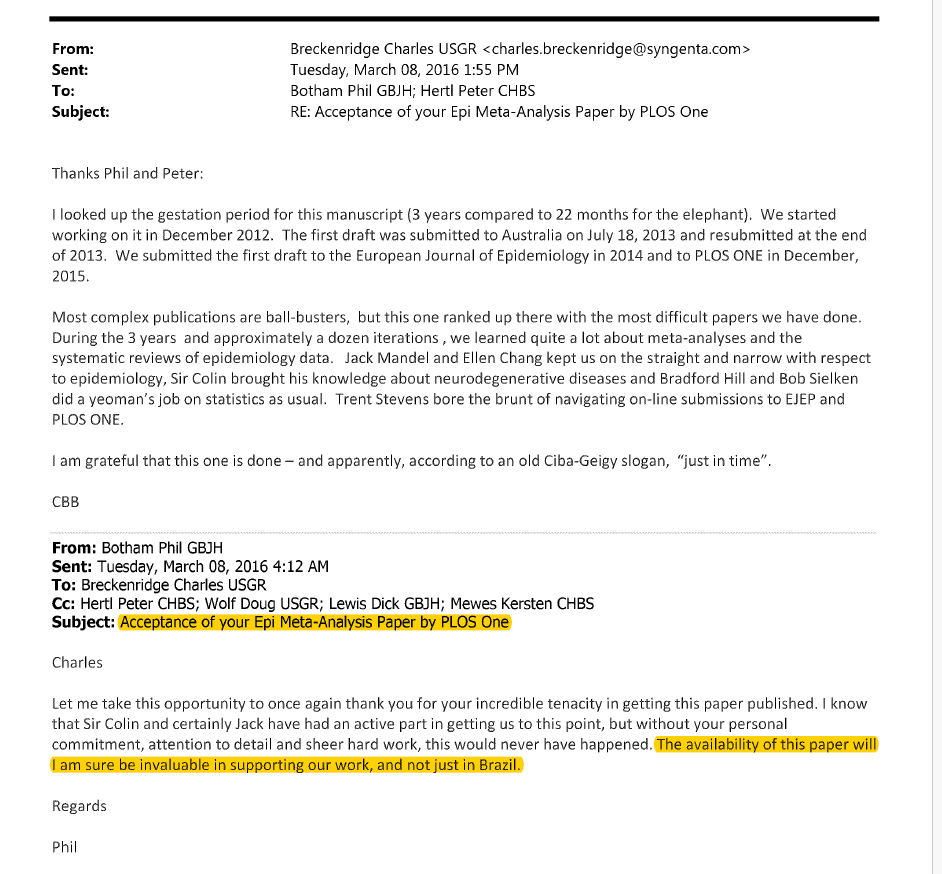
In contrast, the company focused on developing and promoting science showing paraquat safety that it could share with regulators, including one published in 2016 that company insiders noted would be “invaluable in supporting our work”.


You must be logged in to post a comment.