
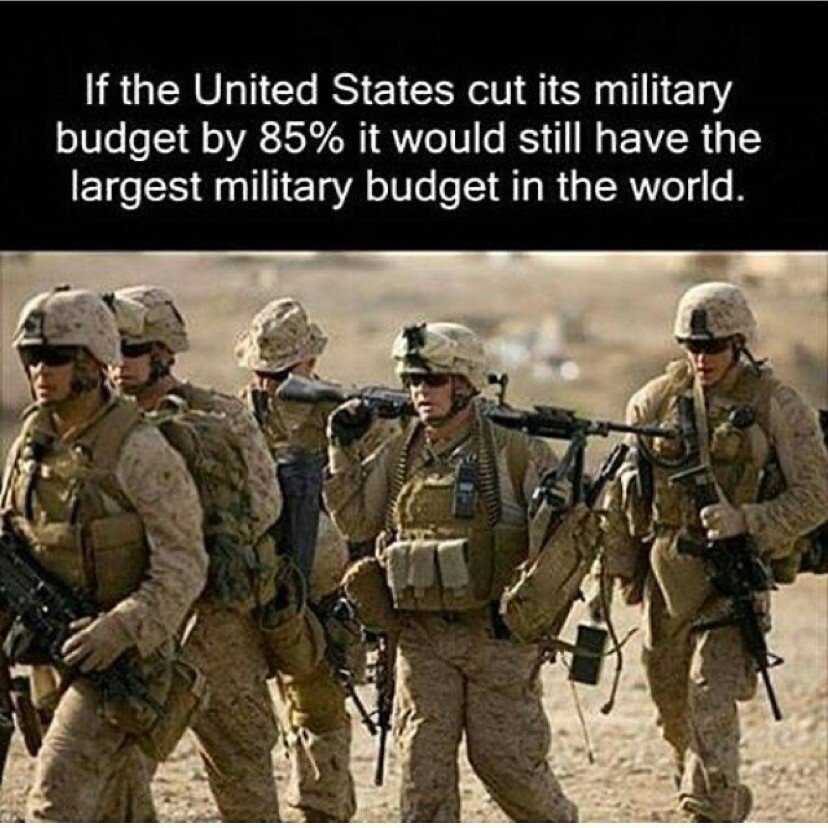
Paraphrasing Thomas Jefferson, the natural progress of things is for prices to yield and for quality to gain ground. Technology is what enables this natural progress. Do televisions cost more now than they did in the early ‘90s? What about mobile phones? Same answer for both questions: both are better and less expensive today than they were in the early ‘90s, which is why one will conclude that something is awry when reading headlines like “Global Military Spending Has Almost Doubled Since the Early ‘90s.”
Why has military spending almost doubled since the early ‘90s? Arguably for the same reason hospital services have: government intervention. Those who ‘serve’ in government endlessly tax the present because they arrogantly claim to know what the future should be rather than allow the future to unfold via voluntary exchange between producers and consumers. Against all reason and historical precedent, they claim that, in order to stay safe, ‘defense’ spending must increase. But that’s like claiming that, in order for eggs to contain yolks, the cost of raising chickens must necessarily outpace the rate of inflation.
“But but but” the unthinking screech, “the world is much more dangerous today!” Perhaps, but is warfare immune from technological advance? No, as Jefferson’s actual quote helps explain: “The natural progress of things is for liberty to yield and government to gain ground.” The world’s danger stems from governments’ interventions. Wars aren’t cheap; governments don’t engage in them for fun. The people would rather not fight, but instead of consulting with the people, governments conscript them. Increased military spending is inversely proportional to market forces – the will of the people.
Military spending has almost doubled because the government that allegedly serves us trades our present liberty for its imagined, grotesque future. Weapons manufacturing is one of the most regulated – if not the most regulated – industries in the “land of the free,” and that regulation paves the way for the most perverse incentive imaginable: though the maiming, killing, and destruction of “them” and their cities equates to the decimation of their economy, “our” business relies on it.
But work divided – not obliterated – is what enables the natural progress of things. And when the number and duration of wars are unknown, and when that uncertainty is combined with the fact that war – at least its initial phase – is entirely devoid of market forces, weapons manufacturers can charge whatever they like, considering the governments that purchase their products spend their citizens’ money and not their own. Governments have only what they’ve taken from the people they claim to serve, and they spend that money in the same way they obtained it: without consent.
 Hellbound and Down
You must be logged in to post a comment.