After the Capitol riots of January 6th, the War on Terror came home, and “domestic extremists” stepped into the role enemy combatants played before. George Bush once launched an all-out campaign to pacify any safe haven for trrrsts, promising to “smoke ‘em out of their holes.” The new campaign is aimed at stamping out areas for surveillance-proof communication, which CNN security analyst and former DHS official Juliette Kayyem described as any online network “that lets [domestic extremists] talk amongst themselves.”
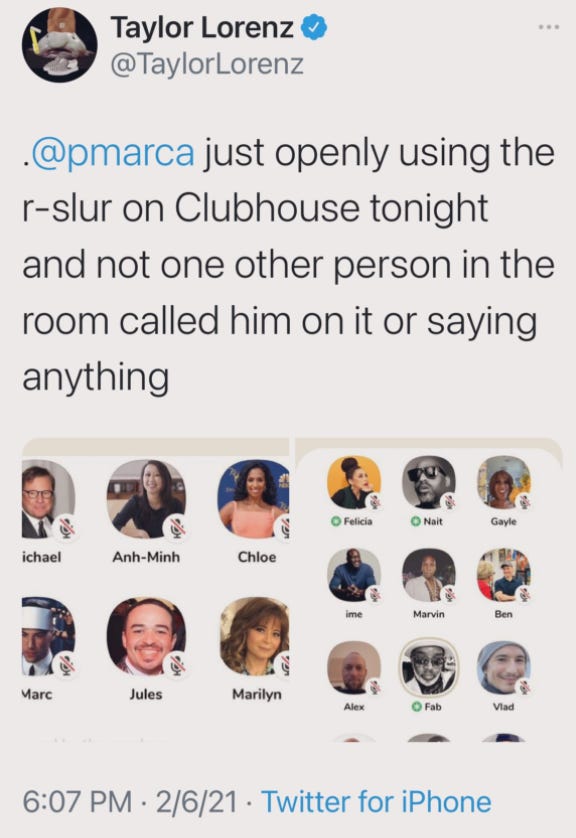
Reporters pledged assistance, snooping for evidence of wrongness in digital rather than geographical “hidey holes.” We’ve seen The Guardian warning about the perils of podcasts, ProPublica arguing that Apple’s lax speech environment contributed to the January 6th riot, and reporters from The Verge and Vice and The New York Times listening in to Clubhouse chats in search of evidence of dangerous thought. In an inspired homage to the lunacy of the War on Terror years, a GQ writer even went on Twitter last week to chat with the author of George Bush’s “Axis of Evil” speech about imploring the “authorities” to use the “Fire in a Crowded Theater” argument to shut down Fox News.
Multiple outlets announced plans to track “extremists” in either open or implied cooperation with authorities. Frontline, ProPublica, and Berkley Journalism’s Investigative Reporting Program used “high-precision digital forensics” to uncover “evidence” about the Boogaloo Bois, and the Huffington Post worked with the “sedition hunters” at the Twitter activist group “Deep State Dogs” to help identify a suspect later arrested for tasering a Capitol police officer. One of the Huffington Post stories, from February, not only spoke to a willingness of the press to work with law enforcement, but impatience with the slowness of official procedure compared to “sleuthing communities”:
The FBI wants photos of Capitol insurrections to go viral, and has published images of more than 200 suspects. But what happens when online sleuthing communities identify suspects and then see weeks go by without any signs of action…? There are hundreds of suspects, thousands of hours of video, hundreds of thousands of tips, and millions of pieces of evidence… the FBI’s bureaucracy isn’t necessarily designed to keep organized.

 Hellbound and Down