
Related

Author: HP McLovincraft
Seeker of rabbit holes. Pessimist. Libertine. Contrarian. Your huckleberry. Possibly true tales of sanity-blasting horror also known as abject reality. Prepare yourself. Veteran of a thousand psychic wars. I have seen the fnords. Deplatformed on Tumblr and Twitter. View all posts by HP McLovincraft
 Hellbound and Down
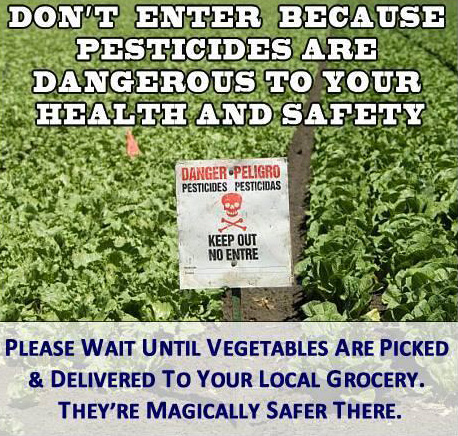
Pesticides are engineered to have a “shelf-life” when applied to crops. Environmentally conditions including rain, UV light, and heat break down the molecules and degrade the pesticides. There are a stringent set of label restrictions placed on every pesticide for every crop it may be applied to called the Pre-harvest interval, outlining the minimum time prior to harvest a pesticide may be applied to have sufficient time to safely breakdown within EPA tolerances for residual. No applications of long-lasting or persistent pesticides should be performed once the plant begins to produce exposed fruit. Furthermore, processing facilities and consumers should wash their fruits and veggies prior to consumption to further dilute and remove any pesticide residues, as well as contamination from harvest labor and pesticides used in storage and transport facilities for rodents and other pests.
LikeLike