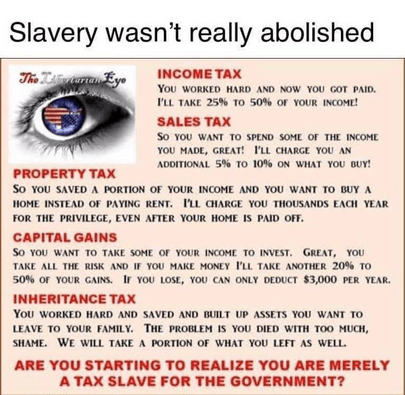
They Fell Behind on Their Property Taxes. So the Government Sold Their Homes—and Kept the Profits.

Geraldine Tyler is a 94-year-old woman spending the twilight of her life in retirement, as 94-year-olds typically do. But there isn’t much that’s typical about it.

Tyler has spent the last several years fighting the government from an assisted living facility after falling $2,300 behind on her property taxes. No one disputes that she owed a debt. What is in dispute is if the government acted constitutionally when, to collect that debt, it seized her home, sold it, and kept the profit.

If that sounds like robbery, it’s because, in some sense, it is. But it’s currently legal in at least 12 states across the country, so long as the government is doing the robbing.

In 2010, Tyler moved out of her Minneapolis condo, which she owned, in response to a series of local incidents that made her feel unsafe. That included a nearby shooting. She relocated to an apartment in a different neighborhood but struggled to afford both her rent and the property taxes on her condo, accruing that $2,300 sum.

The vast majority of what Tyler ended up owing, however, was not the property tax itself. It was the additional $13,000 in penalties, interests, and fees added by the government, upping her total to about $15,000—more than a 550 percent increase.

She didn’t have the $2,300, much less the $15,000. So the state foreclosed on the condo and sold it to satisfy the debt. That’s to be expected. What Tyler didn’t expect: After selling the property for $40,000, the government pocketed the remaining $25,000 instead of putting it back in Tyler’s hands. This despite no party claiming she owed anywhere near a $40,000 debt.

What the state took had little to do with the amount of debt itself. Had Tyler’s condo been valued at, say, $300,000, it would have proceeded the same way. The government would have just been quite a bit richer.

Which is what happened to Tawanda Hall of Oakland County, Michigan, when she, too, accrued a property tax debt. Hall, who lived in the house with her husband and children, set up a payment plan with the local authorities. She eventually fell $900 behind schedule. The total bill—after penalties, interests, and fees—came out to $22,642.

Not unlike Tyler, the government then seized the home, sold it to collect the debt, and kept the profit. Unlike Tyler, the Halls’ home was worth more than $300,000.

The state kept the change. It totaled more than $286,000.
Keep reading

Gov’t Steals Paraplegic Blind Woman’s Home, Leaves Her Homeless for Taxes She Already Paid

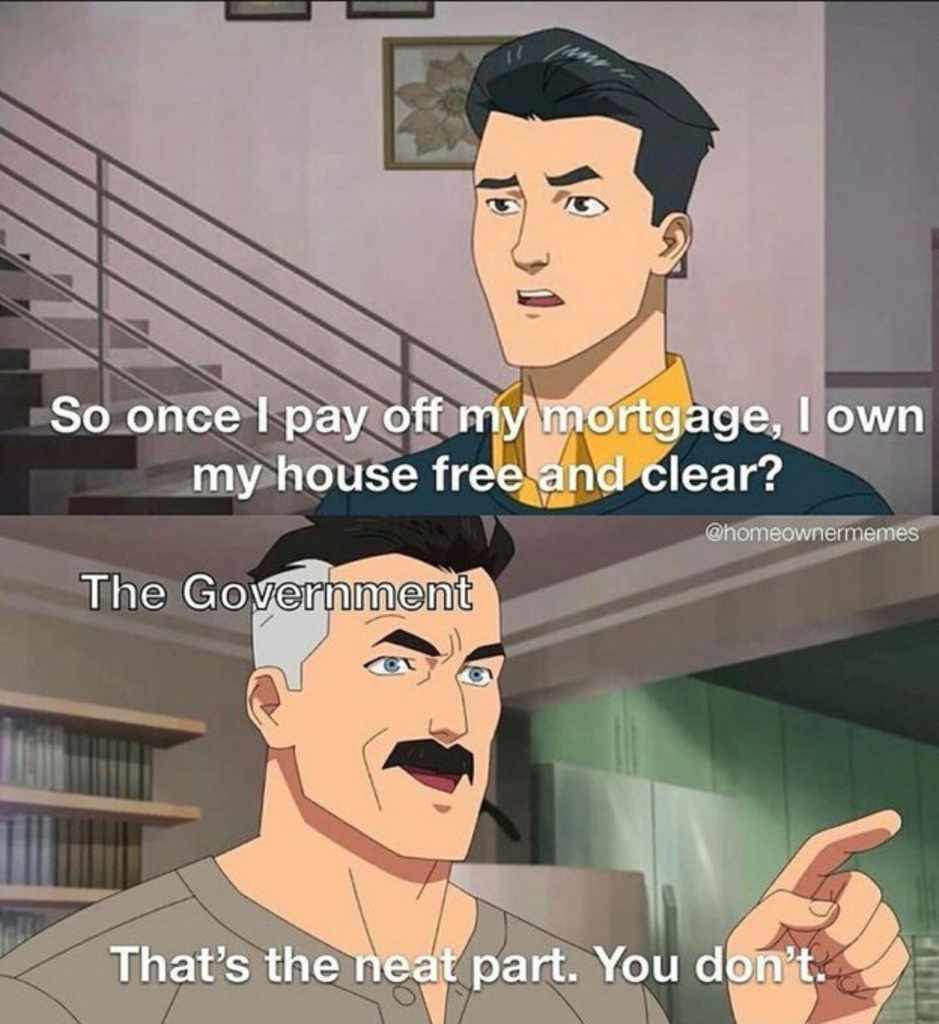
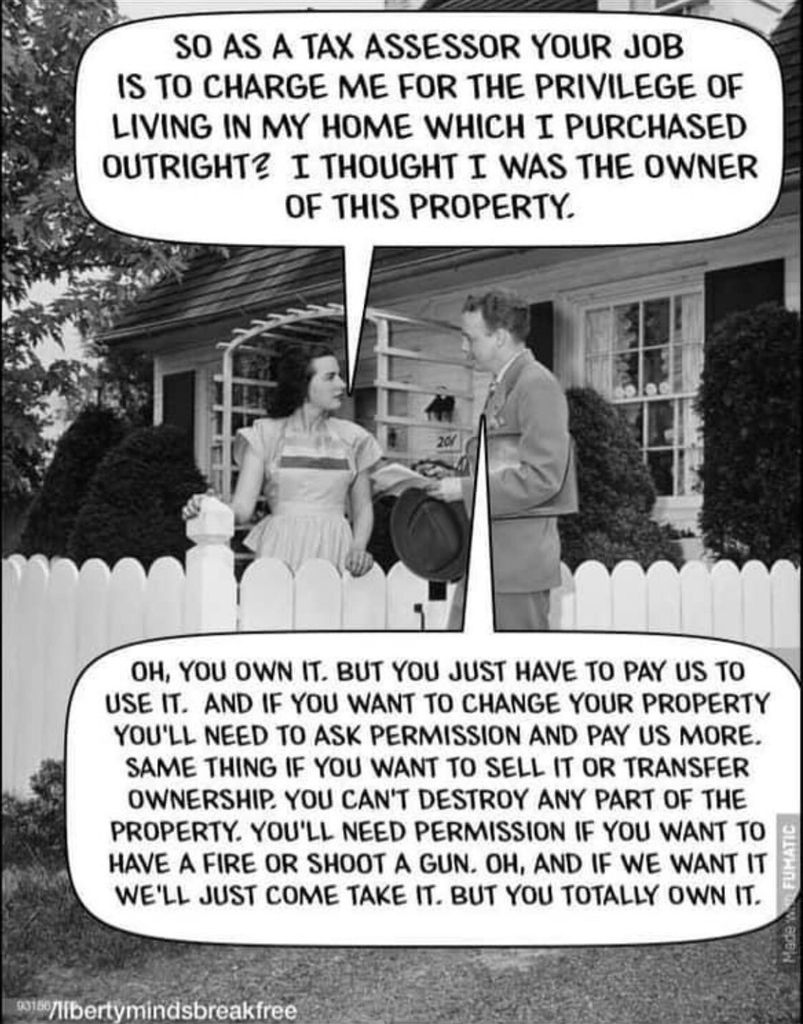
In the land of the free, even if you fully pay off your home loan to the bank, your property is never truly yours. Through property tax, states from coast to coast continue to charge you for land that you own. As the following case illustrates, even if you pay these taxes to the state — but they lose track of the payment — they can and will steal your home right out from under you. Paraplegic blind women in wheelchairs are no exception when it comes to the cruel and inhumane nature of the state.

Barbara Ryan, 57, did everything she was supposed to do. She paid off her $650,000 home in a cul-de-sac in South Charlotte and paid the state their share so they wouldn’t steal her home. But thanks to an “error” in the Mecklenburg County accounting system, armed agents of the state showed up to her home on Feb. 4, 2019, and threw this paraplegic, legally blind woman out on the street.

On that dark day, Mecklenburg County sheriff’s deputies, armed with a court order, showed up to Ryan’s home to tell her that she no longer owned it. Because she wasn’t fully dressed, was in a wheelchair, and is also legally blind, Ryan took longer than the deputies were willing to wait to open her door — so they started breaking windows and broke into her home.

After detaining her for several hours, these “hero” deputies then forcibly removed the woman from her home.

As deputies wheeled her from the home, half-dressed, another deputy threw a pair of pants that were several sizes too small at her, saying, “those or nothing.”

Deputies refused to allow her to grab anything else. As she rolled into the front yard, Ryan called multiple taxis in an attempt to go to the courthouse and straighten out this misunderstanding, and each time, the deputies would wave them on.

“You won’t need that where you’re going,” a deputy told Ryan before attempting to have her involuntarily committed to a state mental institution.

As she was not mentally ill, her commitment was unsuccessful and because the state stole her home, she had nowhere to go when she was released from the hold 2 days later. This legally blind paraplegic woman was left out on the street in the middle of the winter, forced to sleep in a parking garage to avoid freezing to death.

Since deputies had refused to allow her to grab clothes, a phone, money, credit cards, even socks and shoes before kicking her out — she had nothing. She would roll herself into an elevator in a parking garage to sleep for nearly two weeks as she tried every day to talk to someone to fix this mess.

She couldn’t go back home because the couple who bought the house from the county had already moved in.

When Ryan was finally able to talk to one of the thieves who stole her home, she was told she no longer owned it and it now belonged to a developer. The court had made a massive blunder and claimed that Ryan owed back taxes to Mecklenburg County. But she did not.

Keep reading

The State Took Her Home Because She Missed $900 in Property Taxes

Did you know that in some states, if you miss one tax payment, local politicians will take your home, sell it, and keep all the profits?

Really.

Tawanda Hall was behind on her taxes. She was on a payment plan but had missed $900. She didn’t expect Southfield, Michigan, to take her entire house because of that. It was worth $286,000 more than what she owed.

“I’m still in shock,” says Tawanda Hall in my new video. “They took my whole house, my whole family’s livelihood.”

John Bursch, a lawyer for the county, says while this practice may sound unfair (yes, it sure does), “It’s also unfair to force those who pay their taxes to subsidize those who don’t.”

“I pay taxes!” Hall responds. She works as a nursing assistant. “I lift people. I bathe people. I work hard.”

When Hall found out she was going to lose her home, she tried to pay off the debt.

“I went to the mayor’s office, I went down to the city county building,” she says. “They didn’t want our money. They said no.”

They wanted her house.

Keep reading

City of Detroit Displaces 100,000 Residents After Tax Error

Government incompetence caused 100,000 people in the city of Detroit to lose their homes. The city recently admitted that it overtaxed homes by over $600 million between 2010 and 2016, resulting in thousands of foreclosures. In the state of Michigan, property cannot be assessed at over 50% of its market value. Yet, Detroit managed to assess properties at up to 85% of their market value, resulting in over half a billion in illegal taxation.

Neither the state nor the city of Detroit has done anything to compensate the people who were forced out of their homes. Mayor Mike Duggan insists that state law prohibits his administration from helping residents by providing tax credits or cash compensation. Duggan not so generously proposed allocating $6 million in resources to help overtaxed citizens, many of whose lives have been ruined, but that represents only 1% of what the city collected in illegal taxes.

Keep reading

A 93-Year-Old Woman Couldn’t Pay Her $2,300 Tax Bill. The Government Sold Her Home and Kept the Money.

Whether or not Geraldine Tyler will live to see the resolution of her case remains unclear.

The 93-year-old left her Minneapolis condominium in 2010 after a nearby shooting and a disturbing encounter left her uneasy. But she was unable to finance both her new apartment and the property tax on her erstwhile condo, accruing $2,300 in debt.

Over the course of the next five years, the government raised that debt by over 550 percent, tacking on almost $13,000 in additional penalties, fines, and interest. And when Tyler couldn’t pay that, it seized her property, sold it for $40,000—and kept the profit.

Last month, a federal appeals court ruled that was OK.

“Tyler does not argue that the county lacked lawful authority to foreclose on her condominium to satisfy her delinquent tax debt,” wrote Judge Steven Colloton of the U.S. Court of Appeals for the 8th Circuit. “Rather, Tyler argues that the county’s retention of the surplus equity—the amount that exceeded her $15,000 tax debt—is an unconstitutional taking.”

Put more plainly, Tyler is not contesting that she failed to pay her property taxes, nor is she trying to evade responsibility for doing so. Her suit doesn’t seek the full $40,000 value of the condo but rather the excess proceeds that the government made from the sale of her property.

The court’s conclusion: She has no right to that cash.

Keep reading