
In his 1963 essay, “The Negro Revolution,” Murray Rothbard observes that by the 1930s and 1940s, American intellectuals had embraced two principles:
(1) all races and ethnic groups are intellectually and morally equal or identical, and (2) that therefore no one should be allowed to treat anyone else as if they were not equal, i.e., that the State should be used to compel absolute equality of treatment among the races.
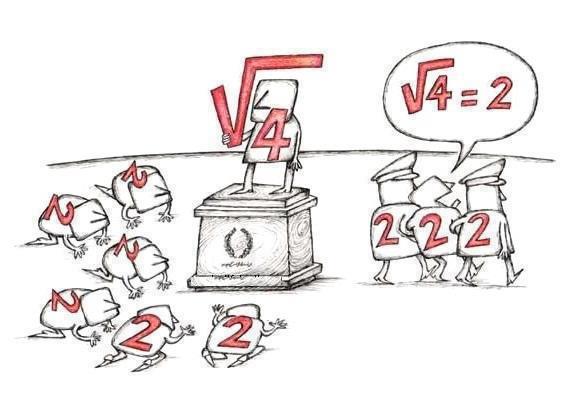
As Rothbard points out, the first principle is incorrect, and the second principle is a non sequitur. Even if all human beings were intellectually and morally equal, which they are not, it would not follow that the state should be used to compel equal treatment. Yet these principles have been harnessed for decades to justify federal enforcement of equality. The promotion of equality has, in turn, been depicted as the hallmark of patriotism, with the idea being promoted that equality is an American ideal. Writing in the New York Times in 2013, the economist Joseph Stiglitz depicts equal opportunity as America’s “national myth,” an essential component of America’s “creed.” He decried inequality as a threat to the American dream and an affront to the ideal of America as a land of opportunity:
Without substantial policy changes, our self-image, and the image we project to the world, will diminish – and so will our economic standing and stability. Inequality of outcomes and inequality of opportunity reinforce each other – and contribute to economic weakness, as Alan B. Krueger, a Princeton economist and the chairman of the White House Council of Economic Advisers, has emphasized. We have an economic, and not only moral, interest in saving the American dream.
Upholding the principle of equality is thus depicted as a component of patriotism. The idea that the state has an important role to play in enforcing equality is then said to follow. While state enforcement of equality in its modern form is rooted primarily in the civil rights regime, the antecedents of statist egalitarianism can be traced back to the Reconstruction era, when the federal government set out to “reconstruct” the South.
One of their stated priorities was to ensure that Southerners had “genuinely” accepted their defeat in the war, and to this end, they gave credence to propaganda that any Southern resistance to equal rights for black citizens should be construed as an attempt to reinstate slavery under a different guise. At first glance, it seems bizarre that the government would link attitudes towards racial equality to the outcome of the war, and this notion was indeed regarded with bewilderment and outrage in the South. First, the aim of the war, as they saw it, was to defend their independence. Further, their defeat was decisive – what more could be required by way of “accepting” the outcome, after the surrender of all Confederate armies and the soldiers’ return to their homes and to civilian life? The Confederate generals, in disbanding their armies, had emphasized to their men not only that the war was ended, but that they must do all they could to keep the peace and obey the law:
In his farewell address to his men at Gainesville, Alabama, on May 9, [Lt. General Nathan Bedford] Forrest stated: “I do not think it proper or necessary at this time to refer to causes which have reduced us to this extremity; nor is it now a matter of material consequence to us how such results were brought about. That we are beaten is a self-evident fact, and any further resistance on our part would justly be regarded as the very height of folly and rashness.”
He ended his address by advising his men to “Obey the laws, preserve your honor, and the Government to which you have surrendered can afford to be, and will be, magnanimous.”
 Hellbound and Down
You must be logged in to post a comment.